
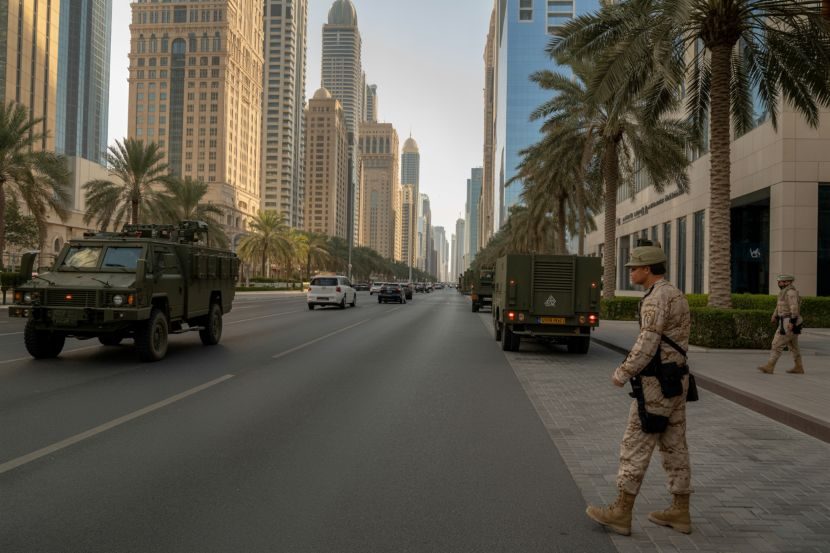
A ballistic missile intercepted over Abu Dhabi on March 26, 2026 sent debris falling onto Sweihan Street — and now the UK Foreign Office is telling British travellers to think twice before boarding a flight to the UAE.
The warning is significant. The UAE, home to two of the world’s busiest aviation hubs, is not a destination that typically appears on cautionary travel lists. But the missile strike, described as linked to rising regional tensions, has changed the calculus for thousands of travellers with upcoming trips to Dubai and Abu Dhabi.
The Foreign Office has made its position clear: only essential travel should be undertaken to the United Arab Emirates at this time. For anyone with a holiday, business trip, or layover planned, that guidance carries real weight.
What Happened in Abu Dhabi and Why It Changed Everything
The incident occurred when the UAE’s air defence systems successfully intercepted a ballistic missile targeting the capital. While the interception itself was successful, the falling debris landed on Sweihan Street in Abu Dhabi, causing damage and raising immediate alarm about civilian safety.
The attack is reported to be connected to escalating tensions in the broader region. It did not occur in isolation — the UAE had already been dealing with airspace disruptions in the period leading up to the strike, affecting both commercial and business aviation across Dubai and Abu Dhabi.
The Foreign Office responded by updating its travel advice, shifting the UAE into territory that now requires travellers to assess whether their journey is truly necessary. The language used — “essential travel only” — is a formal designation that insurers, airlines, and employers typically take seriously.
What the UK Foreign Office Travel Warning Actually Means
Travel advisories from the Foreign Office carry practical consequences beyond just advice. Here is what the current situation involves, based on confirmed information:
- Essential travel only: British nationals are advised to travel to the UAE only if their journey is strictly necessary.
- Volatile situation: The Foreign Office has stated the situation remains unstable, with potential for further incidents in the coming days.
- Airspace disruptions: The UAE experienced airspace closures prior to the missile strike, affecting flight operations at both Dubai and Abu Dhabi airports.
- Gradual flight resumption: The UAE government has begun the process of restoring flights to and from both major airports, though the situation continues to evolve.
- Security measures underway: UAE authorities are actively implementing measures to address ongoing security risks.
| Factor | Current Status |
|---|---|
| UK Foreign Office Travel Level | Essential travel only |
| Missile Interception | Successful — debris fell on Sweihan Street, Abu Dhabi |
| Airspace Status | Gradual resumption of flights underway |
| Security Situation | Described as volatile with risk of further incidents |
| UAE Government Response | Active measures being implemented |
Who This Affects — and How Badly
The UAE is one of the most visited destinations on the planet. Dubai alone attracts tens of millions of tourists annually, and Abu Dhabi draws significant numbers for both leisure and business. A Foreign Office warning at this level touches a wide range of people.
For leisure travellers, the immediate question is whether travel insurance remains valid under an “essential travel only” advisory. Many standard travel insurance policies become void or limited when the Foreign Office has issued such guidance — meaning a cancelled trip may not be refundable, and any incidents during travel may not be covered.
Business travellers face a different calculation. Some journeys may genuinely qualify as essential, but companies with duty-of-care obligations will need to weigh the reputational and legal risk of sending employees into an area flagged by the government.
For those already in the UAE, the advice is less clear-cut. The Foreign Office guidance is primarily aimed at those considering travel, not those already on the ground. However, travellers currently in Dubai or Abu Dhabi should stay informed through official channels and follow the guidance of local authorities.
The airspace disruptions that preceded the missile strike had already caused significant disruption to travel schedules. With flights now in the process of resuming, passengers face uncertainty about delays, cancellations, and rebooking options — on top of the broader security concerns.
What Happens Next for UAE-Bound Travellers
The UAE government has signalled that it is working to restore normal operations. The gradual resumption of flights to and from Dubai and Abu Dhabi is already underway, suggesting authorities are prioritising a return to stability. But the Foreign Office has been explicit that the situation could deteriorate further, and any improvement in the advisory level will depend on how events unfold on the ground.
For travellers with upcoming bookings, the priority right now is to contact airlines and accommodation providers directly to understand cancellation and rebooking options. Many carriers will offer flexibility when a government travel advisory has been formally issued.
Those who decide to travel against the Foreign Office advice should be fully aware that their travel insurance may be compromised, and they should register their presence with the British Embassy in the UAE so that consular assistance can reach them if needed.
The situation is developing. Anyone with travel to the UAE planned in the near term should check the Foreign Office travel advice page regularly for updates, as the guidance could change — in either direction — depending on what happens next in the region.
Frequently Asked Questions
What level of travel warning has the UK Foreign Office issued for the UAE?
The Foreign Office has advised that only essential travel should be undertaken to the United Arab Emirates following the missile strike on March 26, 2026.
Where did the missile debris land in Abu Dhabi?
Debris from the intercepted ballistic missile fell on Sweihan Street in Abu Dhabi after UAE air defence systems successfully intercepted the missile.
Are flights still operating to Dubai and Abu Dhabi?
Flights are in the process of gradually resuming at both Dubai and Abu Dhabi airports, though disruptions had already occurred due to earlier airspace closures.
Will my travel insurance be valid if I travel to the UAE now?
Many travel insurance policies are voided or limited when the Foreign Office has issued an essential travel only advisory — travellers should check their policy terms directly with their insurer before proceeding.
Is the security situation expected to improve soon?
The Foreign Office has described the situation as volatile and has warned there is potential for further incidents in the coming days, so no immediate resolution has been confirmed.
What should I do if I am already in the UAE?
Travellers currently in the UAE should monitor official Foreign Office guidance, follow instructions from local authorities, and consider registering with the British Embassy for consular support if needed.




Leave a Reply