
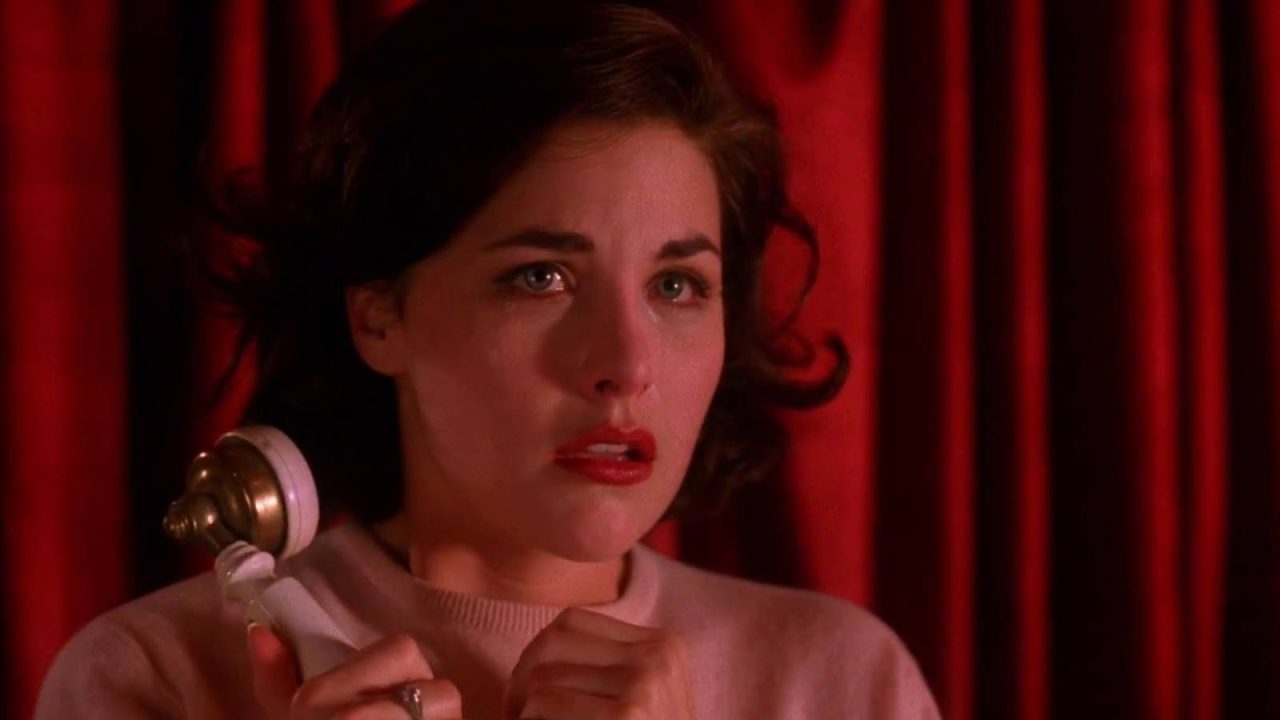
Thirty-six years after it first aired, Twin Peaks remains a television experience that genuinely defies easy explanation — and that is precisely why people are still talking about it. Created by David Lynch and Mark Frost, this supernatural soap opera wrapped itself around a small-town murder mystery and then kept spiraling outward into something far stranger, far darker, and far more surreal than almost anything television had attempted before or since.
The show debuted in 1990, and even by the standards of prestige television today, it holds a singular reputation: widely considered the most confusing TV show ever made. Not confusing in the way a complicated legal drama might be, where you just need to pay closer attention. Confusing in a way that seems almost intentional — a labyrinth where some corridors may simply not have exits.
What makes that legacy so remarkable is that audiences keep returning to it anyway. Decades on, fans are still piecing together its mysteries, still debating what it all means, and still finding new layers buried inside it.
What Twin Peaks Actually Is — And Why It Defies Description
At its surface, Twin Peaks begins as a murder mystery. A young woman named Laura Palmer is found dead, wrapped in plastic, on the shore of a small Pacific Northwest town. FBI Special Agent Dale Cooper arrives to investigate, and for a while the show functions — loosely — as a quirky, atmospheric crime drama with a memorable cast of eccentric small-town characters.
Then it doesn’t.
David Lynch and Mark Frost built something beneath the procedural framework that gradually overtook it entirely. The supernatural elements, the dream logic, the Red Room sequences, the backwards-talking dwarf — these weren’t decorations on a conventional story. They were the story, or at least half of it, and the two halves never quite resolved into a single coherent whole.
That tension between the grounded and the surreal is what has kept Twin Peaks so difficult to categorize. It is a soap opera. It is a horror show. It is a comedy. It is a meditation on grief and evil and Americana. It is sometimes all of those things within the same scene.
The Timeline That Still Leaves Viewers Spinning
Part of what makes Twin Peaks so enduringly confusing is that its story did not stay contained to a single format. What began as a television series expanded and transformed across multiple chapters over the decades, each one adding new layers to an already dense mythology.
| Chapter | Year | Format |
|---|---|---|
| Twin Peaks (Original Series) | 1990–1991 | Television — ABC |
| Twin Peaks: Fire Walk with Me | 1992 | Feature Film (Prequel) |
| Twin Peaks: The Return | 2017 | Television — Showtime (18 Parts) |
Each installment complicated the picture further. The original series raised questions it never fully answered. The 1992 film, Fire Walk with Me, divided audiences and critics sharply at the time of its release, though it has since been reappraised as one of Lynch’s most affecting works. And The Return in 2017 — arriving 26 years after the original — did not so much resolve the mythology as detonate it entirely, leaving longtime fans with even more questions than they started with.
Why the Confusion Is the Point
It would be easy to frame Twin Peaks as a puzzle with missing pieces — a show that failed to tie up its loose ends. But that reading misses something essential about what Lynch and Frost were actually doing.
Lynch has long worked in a mode that resists rational interpretation. His films and television work are built to operate on an emotional and subconscious level first, and an intellectual one second — if at all. The disorientation viewers feel watching Twin Peaks is not a bug. It is closer to the intended experience.
The show asks its audience to sit with uncertainty in a way that most television simply does not. Most crime dramas promise resolution. Twin Peaks promises atmosphere, dread, beauty, and strangeness — and delivers all of them — while making no guarantee that the central mystery will ever fully close.
That approach alienated some viewers, particularly during the original run when ratings fell sharply after the central mystery of Laura Palmer’s killer was resolved mid-series. But it also created one of the most devoted fan communities in television history, one that has spent 36 years and counting working through the show’s symbolism, its recurring imagery, and its unanswered questions.
The Legacy That Shaped Modern Television
It is difficult to overstate how much Twin Peaks changed what television was allowed to be. Before it arrived, the idea of a prime-time network drama built around surrealism, dream sequences, and deliberate narrative ambiguity was essentially unthinkable at scale.
The shows that followed in its wake — from The X-Files to Lost to The Leftovers to Severance — all carry its fingerprints to some degree. The idea that a television audience could be trusted to engage with mystery that might not resolve, with tone that shifts abruptly, with characters who behave in ways that don’t fully make sense — that became a viable creative philosophy in large part because of what Lynch and Frost built in that small Pacific Northwest town.
Three and a half decades on, no show has quite managed to be as strange, as beautiful, or as genuinely baffling as Twin Peaks. That is either its greatest limitation or its greatest achievement — and the fact that reasonable people still disagree on which tells you everything you need to know.
Frequently Asked Questions
Who created Twin Peaks?
Twin Peaks was created by David Lynch and Mark Frost. The series has been described as a supernatural soap opera built around a small-town murder mystery.
When did Twin Peaks first air?
The original Twin Peaks series aired in 1990 and ran through 1991 on ABC.
Is there more than one Twin Peaks series?
Yes. The story spans the original 1990–1991 television series, the 1992 prequel film Fire Walk with Me, and the 2017 revival series Twin Peaks: The Return, which aired on Showtime.
Why is Twin Peaks considered so confusing?
The show blends crime drama, surrealism, horror, and soap opera in ways that resist straightforward interpretation, and many of its central mysteries were never conventionally resolved across its original run or its revival.
Is Twin Peaks worth watching if you don’t like confusing shows?
That depends on your tolerance for ambiguity. The show is widely praised for its atmosphere, characters, and originality, but viewers expecting clear answers to its mysteries may find the experience frustrating.
Did Twin Peaks influence other television shows?
Widely considered one of the most influential television series ever made, Twin Peaks is credited with helping pave the way for ambitious, serialized, and tonally complex dramas that followed it in subsequent decades.

Leave a Reply