
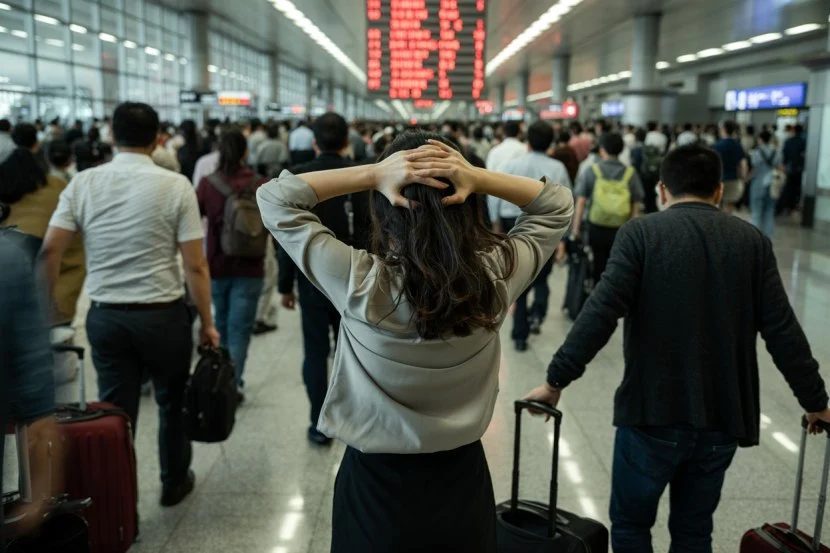
More than 200 flights across the United Arab Emirates were cancelled or delayed on March 20, 2026, leaving hundreds of passengers stranded at airports from Dubai to Fujairah in one of the region’s most significant single-day travel disruptions in recent memory.
The scale of the chaos stretched across four major UAE airports simultaneously, hitting some of the world’s busiest aviation hubs and affecting carriers that together serve millions of passengers every month. If you had a flight booked today — or are planning to travel through the UAE anytime soon — here is exactly what happened and what it means.
What Happened Across UAE Airports Today
The disruptions were sweeping in scope. Across Dubai International, Abu Dhabi International, Al Ain International, and Fujairah International airports, a combined total of 79 flights were cancelled and 125 flights were delayed — more than 200 affected services in a single day.
Dubai International bore the heaviest burden, recording 56 cancellations and 71 delays. As one of the world’s highest-traffic airports, even a fraction of that disruption ripples outward to connecting passengers across Europe, Asia, and Africa.
Abu Dhabi International followed with 13 cancellations and 47 delays, while Al Ain International saw 6 cancellations. Fujairah International, typically a quieter regional hub, recorded 4 cancellations and 7 delays — a significant hit for an airport of its size.
Which Airlines Were Hit the Hardest
The disruption did not spare any major carrier operating in the region. The airlines confirmed to have been affected include some of the most prominent names in Middle Eastern and South Asian aviation.
| Airline | Cancellations | Delays |
|---|---|---|
| FlyDubai | 22 | 9 |
| Etihad Airways | — | 27 |
| Gulf Air | 12 | — |
| Pakistan International Airlines | 10 | — |
| Emirates | 6 | 48 |
| SpiceJet | 7 | — |
Emirates — the flagship carrier of Dubai and one of the largest airlines in the world — recorded 6 cancellations but a striking 48 delays, suggesting the airline was attempting to keep flights operational but struggling to maintain schedules. FlyDubai, by contrast, cancelled 22 services while delaying just 9, pointing to a different operational response to whatever conditions prompted the disruption.
Etihad Airways, Abu Dhabi’s national carrier, logged 27 delays with no cancellations reported, while Gulf Air cancelled 12 flights. Pakistan International Airlines cancelled 10 services — a significant number that would have left a large volume of travellers on routes between the UAE and Pakistan without alternatives at short notice.
What This Means for Passengers on the Ground
For the hundreds of travellers caught up in this disruption, the practical reality is a difficult one. Passengers facing cancellations are generally entitled to rebooking on the next available service or a full refund, depending on the airline’s conditions of carriage and the applicable consumer protection rules in the UAE.
Those experiencing delays — particularly the long delays that accompany a disruption of this scale — may be entitled to meals, refreshments, and accommodation depending on the length of the wait and the individual airline’s policies.
- Passengers on cancelled Emirates or FlyDubai flights should contact those carriers directly through their apps or airport desks for rebooking options.
- Etihad Airways passengers facing delays at Abu Dhabi International should monitor the airline’s official channels for updated departure times.
- Gulf Air and Pakistan International Airlines travellers with cancelled services should seek guidance from airline representatives at the relevant airport.
- SpiceJet passengers affected by cancellations should check with the carrier regarding rebooking and refund eligibility.
Travellers connecting through UAE airports to onward destinations face a compounding problem — a missed connection can cascade into a multi-day disruption, especially on long-haul routes where the next available seat may not be for 24 hours or more.
The Airports That Felt It Most
Dubai International’s numbers are the ones that stand out. With 56 cancellations and 71 delays in a single day, the airport — which regularly handles more than 200,000 passengers daily under normal operations — would have been dealing with a significant backlog of stranded travellers, rerouted luggage, and overwhelmed customer service desks.
Abu Dhabi International’s 47 delays are also notable. A high delay count relative to cancellations typically means airlines are trying to operate flights but cannot hold to their scheduled times — which often results in passengers sitting on aircraft or waiting at gates for extended periods with limited information.
Al Ain and Fujairah, while smaller in scale, serve travellers who often have fewer alternative options. A cancellation at Fujairah International, for example, may leave passengers with no realistic same-day alternative without travelling to a larger hub first.
What Travellers Should Do Right Now
If you have an upcoming flight through any UAE airport in the near term, there are practical steps worth taking regardless of whether your specific service has been affected.
- Check your airline’s app or website for real-time flight status updates before heading to the airport.
- Ensure your contact details are up to date with your airline so you receive any notification of changes directly.
- If your flight is cancelled, ask your airline explicitly about rebooking options, meal vouchers, and — if the delay extends overnight — accommodation.
- Travel insurance holders should review their policy for coverage related to flight cancellations and significant delays.
- Allow significantly more time than usual when travelling through Dubai International, given the scale of disruption recorded today.
The cause of the disruptions has not been confirmed in available reporting. Whether the cancellations and delays stemmed from weather conditions, operational factors, air traffic control issues, or a combination of causes had not been officially detailed at the time of publication.
Frequently Asked Questions
How many flights were cancelled and delayed across the UAE on March 20, 2026?
A total of 79 flights were cancelled and 125 were delayed across four UAE airports — Dubai International, Abu Dhabi International, Al Ain International, and Fujairah International.
Which airline had the most cancellations?
FlyDubai recorded the highest number of cancellations at 22, followed by Gulf Air with 12 and Pakistan International Airlines with 10.
Which airline had the most delays?
Emirates recorded the most delays with 48, followed by Etihad Airways with 27 delays reported on the day.
Which airport was most affected by the disruptions?
Dubai International was the hardest hit, recording 56 cancellations and 71 delays in a single day.
What caused the UAE flight cancellations and delays?
The specific cause of the disruptions has not been confirmed in available reporting at the time of publication.
What should affected passengers do if their flight was cancelled?
Passengers should contact their airline directly for rebooking or refund options, and check whether they are entitled to meal vouchers or accommodation depending on the length of the disruption.



Leave a Reply