
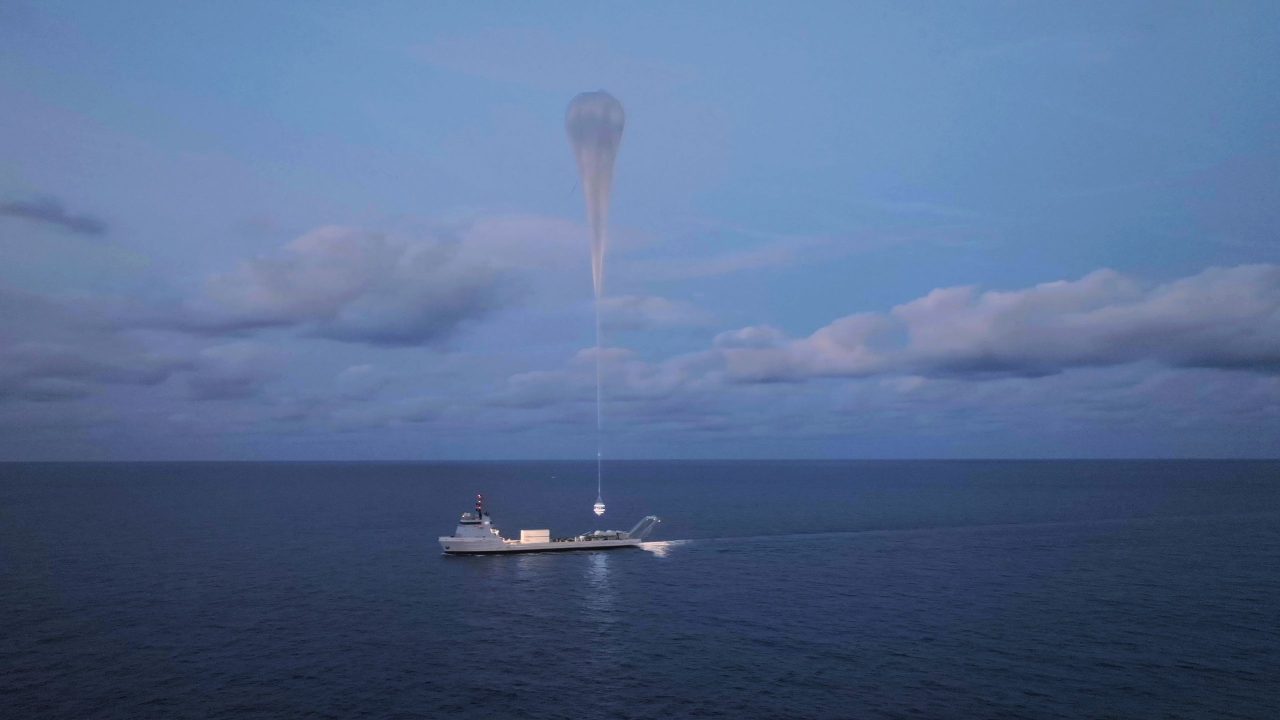
What if reaching the edge of space required no rocket, no g-force, and no astronaut training — just a pressurized capsule, a hydrogen balloon, and a ship sailing toward clear skies? That is exactly the premise behind one of the most quietly radical developments in modern travel.
Space Perspective’s MS Voyager, a 294-foot vessel officially recognized as the world’s first “Marine Spaceport,” is rewriting the rules of how humans access the stratosphere. And it is doing so not with fire and noise, but with the gentle lift of a balloon over open water.
As we move through 2026, near-space tourism is no longer a theoretical concept. It is a vessel with a name, a home on the Atlantic, and a mission to let ordinary people experience the view that has forever changed the astronauts lucky enough to see it.
What MS Voyager Actually Is — and Why It Matters
MS Voyager is operated by Space Perspective, and it functions as a mobile launch platform for the company’s pressurized Spaceship Neptune capsule. The capsule is lifted into the stratosphere by a hydrogen-filled SpaceBalloon™ — no rocket propulsion, no extreme physical demands on passengers.
The goal is to deliver what space explorers call the Overview Effect: the profound, often life-altering shift in perspective that comes from seeing Earth from the blackness of near-space. It is a view that has historically been reserved for professional astronauts. Space Perspective is working to change that.
What makes MS Voyager distinct from any previous space tourism effort is its mobility. A traditional spaceport is a fixed location — locked to one patch of ground, one climate, one set of weather patterns. MS Voyager moves. That single fact changes everything about how launches can be planned and executed.
The Ocean Advantage: Chasing Perfect Weather Across the Atlantic
Weather is the enemy of every launch operation. Fixed land-based spaceports are at the mercy of whatever conditions exist above them on any given day. Storms, cloud cover, and restricted windows can delay launches for days or weeks.
MS Voyager sidesteps this problem through Dynamic Positioning — the ship’s ability to navigate toward optimal launch conditions rather than waiting for good weather to arrive overhead. If a storm is building over one area, the vessel moves. The launch window follows the ship, not the calendar.
This is more than a logistical convenience. It is a structural advantage that could make near-space tourism significantly more reliable and commercially viable than land-locked alternatives. For passengers who have booked a journey of a lifetime, the difference between “delayed indefinitely” and “we sailed to clearer skies” is enormous.
How the Spaceship Neptune Experience Compares to Traditional Space Access
| Feature | Traditional Rocket Launch | Space Perspective / Spaceship Neptune |
|---|---|---|
| Launch Platform | Fixed land-based spaceport | MS Voyager — mobile marine spaceport |
| Propulsion | Rocket engines | Hydrogen-filled SpaceBalloon™ |
| Physical Demands | Intense g-forces, astronaut training required | Pressurized capsule, no extreme physical strain |
| Weather Flexibility | Limited — fixed launch location | High — ship repositions for optimal conditions |
| Experience Goal | Varies by mission | The Overview Effect — seeing Earth from near-space |
| Launch Environment | Land | Open Atlantic Ocean |
The contrast is striking. Where traditional space access demands physical sacrifice and years of preparation, the Spaceship Neptune model is designed to be accessible — an experience defined by wonder rather than endurance.
Who This Opens the Door For
The significance of removing physical barriers from space access cannot be overstated. Rocket launches subject passengers to powerful g-forces that require medical screening, physical conditioning, and extensive preparation. Not everyone qualifies. Many people who deeply want to see Earth from above have simply been excluded by biology or age.
A balloon-lifted, pressurized capsule changes that calculus. The journey becomes less about physical fitness and more about curiosity and a willingness to look at the planet from a perspective almost no human has ever had.
Supporters of this model argue that democratizing access to the Overview Effect could have meaningful cultural and psychological ripple effects — that people who see Earth as a single, borderless object suspended in darkness tend to return with a changed relationship to it. Whether that proves true at scale remains to be seen, but the premise is one that has resonated with early interest in the program.
For the travel industry specifically, MS Voyager represents a new category entirely. It is not a cruise. It is not a conventional space mission. It sits in its own lane — ultra-premium, experiential, and unlike anything currently on the market.
What Comes Next for Near-Space Tourism
Space Perspective’s work with MS Voyager places it at the leading edge of a broader shift in how the travel and aerospace industries are beginning to overlap. The concept of a marine spaceport — a ship that can position itself anywhere on the ocean for an optimal launch — is one that did not exist in any commercial form before this vessel.
The company’s use of hydrogen as the lifting agent for its SpaceBalloon™, combined with a pressurized capsule designed for passenger comfort rather than mission endurance, suggests a deliberate philosophy: that access to space should feel like travel, not survival.
As 2026 continues, the broader near-space tourism sector is watching closely. MS Voyager is not just a ship. It is a proof of concept — evidence that the infrastructure of space access can be reimagined from the water up, and that the experience of seeing Earth from the stratosphere may one day be as bookable as a transatlantic flight.
Frequently Asked Questions
What is MS Voyager?
MS Voyager is a 294-foot vessel operated by Space Perspective, recognized as the world’s first Marine Spaceport. It serves as a mobile launch platform for the Spaceship Neptune pressurized capsule.
How does Spaceship Neptune reach near-space?
The Spaceship Neptune capsule is lifted into the stratosphere using a hydrogen-filled SpaceBalloon™, with no rocket propulsion involved.
Why does Space Perspective launch from the ocean?
Launching from a ship allows Space Perspective to use Dynamic Positioning — moving the vessel to find ideal weather conditions rather than being fixed to one location on land.
Do passengers need astronaut training to fly on Spaceship Neptune?
Based on the design philosophy described, the pressurized capsule is intended to avoid the extreme physical demands of rocket launches, though specific passenger requirements have not been detailed in the available source material.
What is the Overview Effect?
The Overview Effect is the term used to describe the profound shift in perspective — often described as life-changing — that comes from seeing Earth as a whole from the blackness of space.



Leave a Reply