
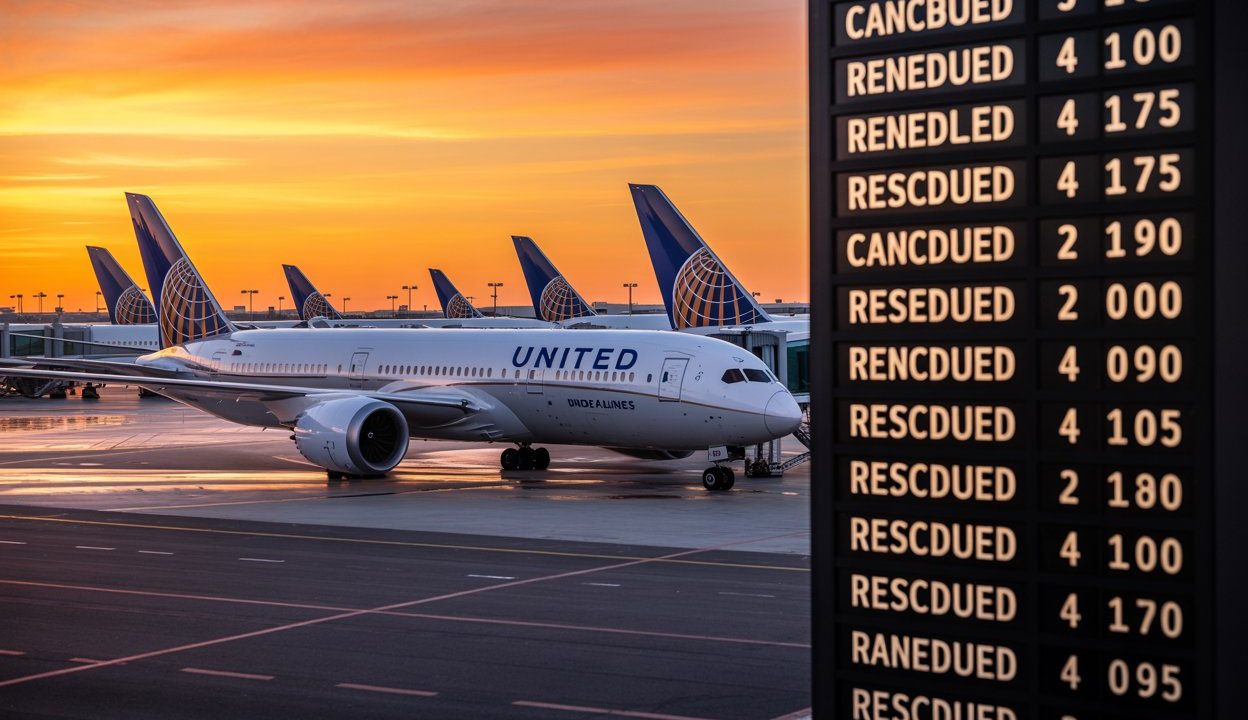
An estimated $11 billion in additional annual costs — that’s what United Airlines is staring down as conflict in the Middle East sends jet fuel prices toward levels the industry hasn’t seen in decades. In response, the Chicago-based carrier is making a significant move: cutting 5% of its scheduled flights across the second and third quarters of 2026.
For travelers with summer plans, that number matters. A 5% reduction across a major carrier’s full schedule translates to thousands of fewer available seats during one of the busiest travel periods of the year. And with oil potentially heading toward $175 per barrel, according to United’s own CEO, this may not be the last adjustment the airline makes.
Here’s what’s happening, who it affects, and what you should expect if you’re flying United this summer.
Why United Airlines Is Cutting Flights This Summer
The short answer: fuel costs have surged dramatically, driven by the ongoing conflict involving Iran and its ripple effects across global energy markets. Jet fuel is an airline’s single largest operating expense in most years, and when oil prices spike, carriers have limited options — raise ticket prices, reduce flying, or absorb losses. United is choosing the middle path.
United CEO Scott Kirby has warned publicly that oil could reach $175 per barrel — a figure that, if realized, would represent a catastrophic increase in operating costs for every airline in the world. At that level, United estimates the fuel bill alone could add roughly $11 billion to its annual expenses.
That kind of financial pressure forces hard choices. Rather than simply pass every dollar onto passengers through higher fares, United is reducing the number of flights it operates, particularly during windows where demand is lower and the cost of flying an underbooked plane becomes harder to justify.
Which Flights and Routes Are Being Cut
United isn’t cutting randomly. The reductions are being targeted at specific types of flying where the cost-to-revenue ratio is least favorable right now.
- Off-peak flying — red-eye flights and midweek departures are among the first to go
- Chicago O’Hare capacity — United’s primary hub will see reduced operations
- Tel Aviv and Dubai service — both routes remain suspended, a continuation of earlier disruptions linked to regional instability
The logic is straightforward: red-eye and midweek flights typically carry fewer passengers than peak-time departures. When fuel costs are this high, operating a half-empty plane overnight becomes a money-losing proposition. Consolidating passengers onto fewer, fuller flights helps the airline manage its margins.
| Detail | Confirmed Information |
|---|---|
| Capacity reduction | 5% of scheduled flights |
| Affected period | Q2 and Q3 2026 (spring through summer) |
| Primary hub affected | Chicago O’Hare |
| Flight types targeted | Red-eye and midweek flights |
| Suspended international routes | Tel Aviv and Dubai |
| Projected additional annual fuel cost | ~$11 billion |
| Oil price concern cited by CEO | Up to $175 per barrel |
| Long-term aircraft orders | Maintained — no cancellations planned |
| Target for full capacity restoration | Fall 2026 |
What This Means for Travelers This Summer
If you’re planning to fly United between now and September, the practical impact depends heavily on when and where you’re going. Travelers on popular peak-time routes — weekend departures, morning business flights, major vacation corridors — are likely to see less disruption than those who prefer off-peak options.
But there are real concerns worth keeping in mind:
- Fewer seat options overall mean less flexibility if you need to rebook or change plans
- Midweek and red-eye travelers face the highest chance of seeing their preferred flights reduced or eliminated
- Anyone with bookings through Chicago O’Hare should monitor their itineraries closely, as that hub is specifically named in the capacity reductions
- International travelers to the Middle East should note that Tel Aviv and Dubai service remains suspended with no confirmed restart date
Fuel surcharges are also a possibility on the horizon. Airlines under sustained cost pressure often look to recover expenses through ancillary fees and fare adjustments, even when they’re simultaneously reducing capacity.
The Part of This Story That’s Easy to Miss
Despite the cuts, United is not canceling its long-term aircraft orders. That’s a deliberate and telling signal. Airlines that expect a prolonged downturn typically freeze or cancel fleet expansion plans. The fact that United is preserving its future orders while trimming near-term flying suggests leadership views this as a temporary, manageable disruption — not a structural collapse in demand.
The airline has also indicated it plans to restore full capacity by fall 2026. That framing positions the summer cuts as a tactical retreat rather than a strategic reversal. Observers of the industry will recognize this pattern: airlines reduce flying when costs spike, then rebuild as conditions stabilize. United appears to be following that established playbook.
Still, the $11 billion figure is not a small number, and the volatility in energy markets tied to the Iran conflict shows no clear sign of immediate resolution. How accurately CEO Scott Kirby’s $175-per-barrel warning tracks against actual oil prices over the coming months will go a long way toward determining whether these cuts stay at 5% or deepen further.
What United Airlines Plans to Do Next
Based on what the airline has communicated, here’s the current trajectory:
- Q2 2026: 5% flight reductions take effect, targeting off-peak and midweek operations
- Q3 2026: Reductions continue through the summer season
- Fall 2026: United aims to restore full capacity as the airline moves past the peak summer cost period
- Long term: Aircraft orders remain in place, signaling confidence in eventual demand recovery
The suspension of Tel Aviv and Dubai service is treated as a separate, ongoing matter tied directly to regional security conditions rather than the fuel cost adjustment. No timeline for resuming those routes has been confirmed.
Frequently Asked Questions
How much is United Airlines cutting its flights?
United is reducing its scheduled flights by 5% across the second and third quarters of 2026.
Why is United cutting flights right now?
The cuts are driven by sharply rising jet fuel costs linked to the ongoing conflict involving Iran, which has disrupted global energy markets and pushed oil prices significantly higher.
Which United flights are most likely to be affected?
Red-eye flights, midweek departures, and operations at Chicago O’Hare are the primary targets of the reductions.
Will United resume flights to Tel Aviv and Dubai?
Those routes remain suspended as of the latest reporting. No confirmed restart date has been announced.
Is United canceling its future plane orders because of this?
No. United has stated it plans to maintain its long-term aircraft orders despite the near-term capacity cuts.
When does United expect to return to full capacity?
The airline has indicated it plans to restore full capacity by fall 2026, treating the summer reductions as a temporary measure.



Leave a Reply