
Over 63 million people from Canada, the United States, the United Kingdom, and Australia visit the European Union each year. Starting in 2026, not one of them will cross an EU border the same way again.
That number hit Marcus differently when he read it in a departure lounge in Toronto last autumn. He had been planning a three-week trip through Portugal, Spain, and France since 2023. He had the hotels booked, the rail passes purchased, the itinerary colour-coded in a spreadsheet. Then a friend mentioned something about fingerprints and face scans at the EU border, and Marcus started reading.
What he found unsettled him — not because it was dangerous, but because it was so quietly enormous.
The System Nobody Talked About
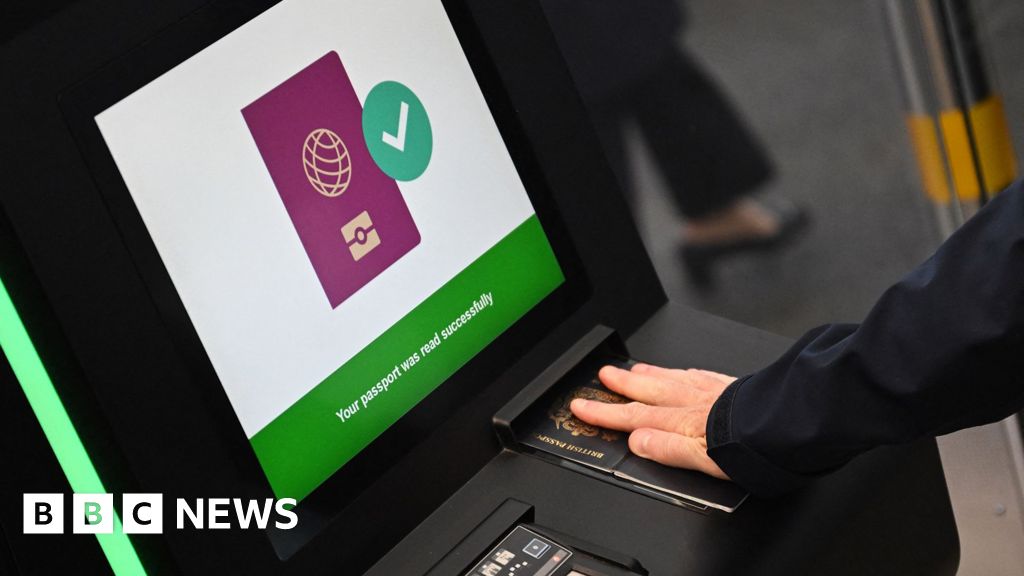
The European Union’s Entry/Exit System, known as EES, is one of the most significant overhauls of international border management in decades. The system is designed to fully track non-EU travellers using biometric data: fingerprints, facial images, and passport information recorded at the point of entry into any Schengen Area country.
Every traveller arriving from Canada, the United States, the United Kingdom, or Australia will be required to register their biometrics the first time they enter. Subsequent visits will involve a scan to match the traveller against their stored profile.
The EES also replaces the traditional passport stamp. For decades, a border officer flipping through your passport and pressing an ink stamp was the universal ritual of international travel. That ritual ends with EES. The stamp is gone. The biometric record takes its place.
Marcus had stamped pages going back fifteen years. He wasn’t sentimental about ink, exactly. But the stamps were a kind of physical memory — Lisbon 2018, Amsterdam 2016, Barcelona 2014. The new system keeps a digital record instead, stored in an EU database and tied to a traveller’s face and fingerprints.
| Country | EES Status | Biometrics Required | Visa-Free Access |
|---|---|---|---|
| Canada | Affected from 2026 | Yes | Yes (90 days) |
| United States | Affected from 2026 | Yes | Yes (90 days) |
| United Kingdom | Affected from 2026 | Yes | Yes (90 days) |
| Australia | Affected from 2026 | Yes | Yes (90 days) |
| EU Member States | Exempt | No | Unrestricted |
Why the EU Built This System
The EU’s motivation is straightforward: the Schengen Area has long struggled to track overstays. Under the old passport stamp system, it was genuinely difficult to confirm whether a traveller had left within their 90-day visa-free window. Border officers stamped on entry. Exit stamps were inconsistent. The data was fragmented across 26 countries.
EES closes that gap. The system automatically calculates how long a traveller has been in the Schengen Area and flags anyone who has exceeded the 90-day limit. It also records every entry and exit point, building a comprehensive travel history for each non-EU visitor.
For most travellers, this is a minor inconvenience at most. For those who have casually stretched their stays in the past, it is a significant shift. The EU is not changing the rules. It is, for the first time, building the infrastructure to enforce them consistently.
The Morning Marcus Arrived in Lisbon
Marcus landed at Lisbon Humberto Delgado Airport on a Tuesday in March 2026. He had read about EES. He thought he was prepared. He was not fully prepared for the queue.
The biometric registration process for first-time EES travellers takes longer than a standard passport check. Travellers must have their fingerprints scanned and a facial photograph taken. The hardware at some border points was still being calibrated in the early weeks of the system’s rollout. The line Marcus stood in moved slowly for the first 40 minutes, then faster once additional kiosks opened.
When he finally reached the scanner, the process itself took under two minutes. His fingerprints were read. His face was photographed. His passport was scanned. A green light appeared. He walked through.
“It felt less like crossing a border and more like checking into a very serious hotel. Efficient, a little cold, and oddly permanent.”
— Marcus, Canadian traveller, Lisbon 2026
He retrieved his bag and stepped into the arrivals hall. The city was exactly as he remembered. The light was still golden. The trams still ran. The pastéis de nata were still warm at the café near his hotel.
But something had shifted in the transaction of arrival. He was now in a database. His face and fingerprints were stored in an EU system, tied to every future visit he would ever make to any Schengen country. That felt different from a stamp.
The Broader Picture for Four Nations
Canada, the United States, the United Kingdom, and Australia share something beyond the EES requirement. They are four of the most frequent sources of non-EU tourism in the Schengen Area. They are also four countries with deep, overlapping security and intelligence relationships.
The UK left the EU in 2020. Its citizens now travel to the Schengen Area as third-country nationals, subject to the same rules as Canadians and Australians. The EES requirement is one tangible consequence of that status change, playing out at border queues across Europe every day.
For Britons who remember travelling freely across European borders before Brexit, the biometric scan carries an emotional charge that goes beyond inconvenience. For Canadians and Australians, who never had frictionless EU access to begin with, the change is more procedural than symbolic.
What Travellers Are Actually Experiencing
Reports from the early weeks of EES implementation describe a mixed picture. At major international airports with high non-EU passenger volumes — Amsterdam Schiphol, Paris Charles de Gaulle, Frankfurt — the infrastructure was largely in place and queues, while longer than before, were moving. At smaller land border crossings and some regional airports, the rollout was slower.
Travel industry groups representing tour operators in Canada and Australia noted that some travellers were caught off guard by the additional processing time, particularly at busy crossings during peak hours. The recommendation from most operators was simple: arrive earlier than you think you need to.
The Feeling That Stays With You
Marcus spent three weeks in Portugal, Spain, and France. He crossed two internal Schengen borders by train, which required no additional scanning. He exited through Paris, where his biometric data was read at the departure gate and his visit was formally closed in the EU system.
He came home with 2,400 photographs, a notebook full of observations, and a quiet unease he couldn’t entirely explain. The trip was everything he had hoped for. The food, the light, the architecture, the slowness of afternoons in small towns. None of that had changed.
What had changed was the feeling of being a visitor. He was no longer just a person passing through with a stamped passport. He was a data point in a continental security architecture, his biometrics stored in servers he would never see, in a jurisdiction he did not live in.
He doesn’t regret going. He is already planning to return. But he thinks about it differently now — the way you think differently about a place once you understand how it sees you.
Sixty-three million travellers a year are about to have that same thought, standing in the same queues, pressing their fingers to the same glass.



Leave a Reply