
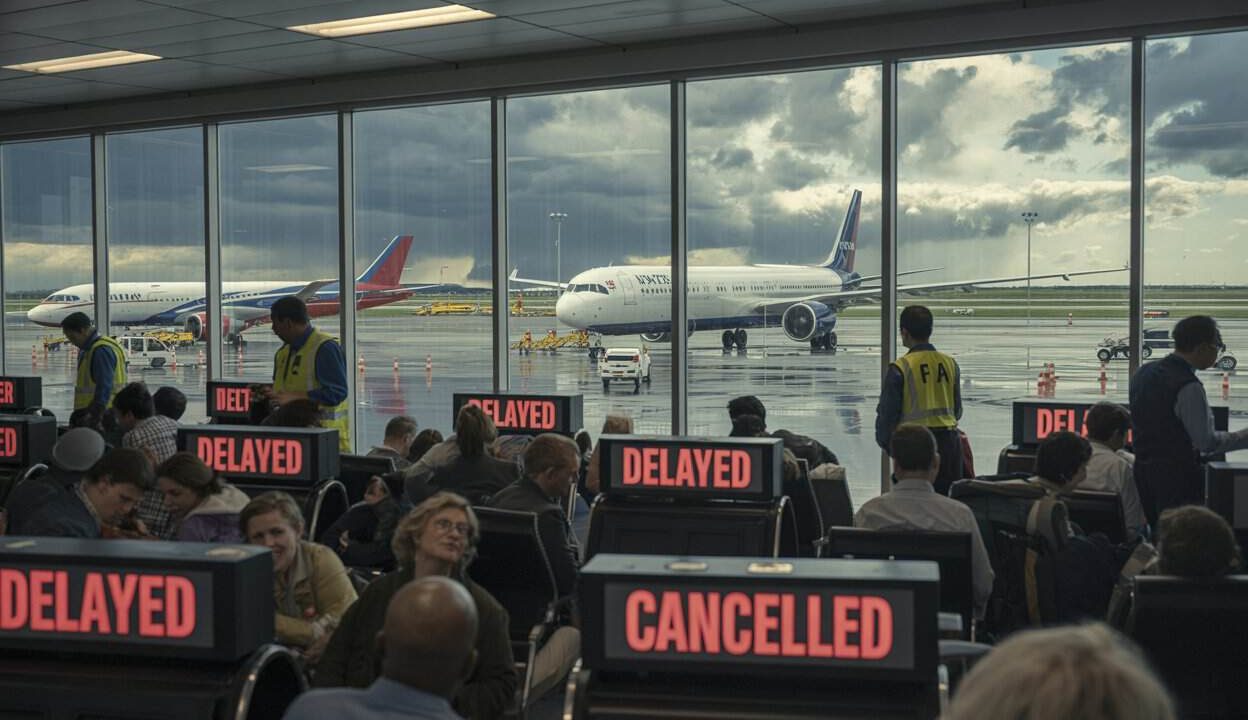
Flying in the United States is getting more expensive, more complicated, and — for many passengers — more frustrating. Across the country’s biggest carriers, a convergence of rising fares, operational delays, and tightening federal oversight is reshaping what air travel looks like in 2026.
Airlines including United, American, JetBlue, Alaska, and Southwest are all navigating a turbulent moment. Fares are climbing, delays are spreading across major hub airports, and the Federal Aviation Administration is tightening its grip on safety compliance. For everyday travelers, the effects are already being felt at the booking screen and the departure gate.
The pressure isn’t coming from just one direction. Airlines are simultaneously pushing for growth and profitability while regulators are demanding higher safety standards — and passengers are caught in the middle of both forces.
What Is Actually Happening Across US Airlines Right Now
The US airline industry is dealing with several overlapping pressures at once. United Airlines is among the carriers pushing fares higher, a move that reflects both increased demand and the airline’s focus on revenue growth. At the same time, American Airlines is facing scrutiny from the FAA, with federal regulators applying crackdowns that are forcing operational adjustments.
Delays are not isolated incidents — they are spreading across major hub airports and affecting passengers on multiple carriers. JetBlue, Alaska Airlines, and Southwest are all part of a broader system under stress, where staffing, air traffic control capacity, and aging infrastructure contribute to a pattern of disruption that has become harder to ignore.
The FAA’s increased enforcement posture signals that the agency is not willing to let safety compliance slide, even as airlines argue they are managing complex operations under difficult conditions. Critics of the airlines argue that the push for profitability has come at the cost of reliability and passenger experience.
The Airlines in the Headlines and What They’re Facing
| Airline | Key Issue | Passenger Impact |
|---|---|---|
| United Airlines | Pushing fares higher amid expansion | Higher ticket costs for travelers on key routes |
| American Airlines | FAA crackdowns and safety scrutiny | Operational disruptions and potential schedule changes |
| JetBlue | Delays spreading across operations | Increased wait times and connection risks |
| Alaska Airlines | System-wide delay pressures | Disrupted itineraries at affected hub airports |
| Southwest Airlines | Operational chaos and reliability concerns | Reduced passenger confidence in on-time performance |
What the table above makes clear is that no single airline is isolated from these pressures. The problems are systemic, touching budget carriers and legacy airlines alike. Travelers booking with any of these carriers should factor in a higher likelihood of disruption when planning trips in the current environment.
Why FAA Crackdowns Are Changing the Rules for Airlines
The Federal Aviation Administration’s heightened enforcement activity is one of the more significant developments shaping the industry right now. When the FAA tightens safety rules, airlines face real operational consequences — inspections take longer, certain aircraft may be grounded for compliance checks, and scheduling becomes harder to maintain.
For American Airlines specifically, FAA attention means added pressure on an already complex operation. Regulators enforcing stricter standards is generally good news for passenger safety in the long run, but in the short term it can translate directly into delays and cancellations as airlines work to meet compliance requirements.
Supporters of stronger federal oversight argue that the crackdowns are overdue, pointing to a period of rapid post-pandemic expansion during which some safety processes were stretched thin. Critics within the industry contend that increased regulatory burden adds cost and complexity without always producing proportional safety gains.
How Rising Fares and Delays Hit Travelers Hardest
For passengers, the double pressure of higher fares and more frequent delays creates a difficult situation. You are paying more for a ticket and, in many cases, still facing a real chance of arriving late — or not at the gate you expected.
Hub airports are where delays tend to compound most severely. A delay at a major connecting hub can ripple outward, affecting dozens of downstream flights and stranding passengers who had nothing to do with the original disruption. This is not a new phenomenon, but it becomes significantly more painful when ticket prices have already risen.
Passenger confidence is measurably affected by this combination. When reliability drops and costs rise simultaneously, travelers begin rethinking their booking habits — some shifting to alternative routes, others considering driving or rail for shorter distances.
What Comes Next for US Air Travel
The trajectory for the coming months depends heavily on two variables: how aggressively the FAA continues its enforcement actions, and whether airlines can stabilize operations while managing fare levels that passengers are willing to absorb.
If FAA crackdowns intensify, airlines may face additional schedule cuts or capacity reductions as they work through compliance requirements. That could paradoxically drive fares even higher by reducing available seats on popular routes.
On the delay front, the path forward likely involves longer-term investment in air traffic control infrastructure and airline staffing — neither of which produces quick fixes. Travelers planning summer or fall trips should build in extra buffer time and monitor their bookings closely for changes.
The broader question is whether the current turbulence represents a temporary adjustment or a more fundamental shift in how US airlines operate and price their services. Given the scale of the pressures involved — regulatory, operational, and economic — a quick return to the smoother conditions of recent years seems unlikely.
Frequently Asked Questions
Which airlines are most affected by the current disruptions?
United, American, JetBlue, Alaska, and Southwest are all identified as dealing with significant pressures, including rising fares, delays, and regulatory scrutiny.
Why is the FAA cracking down on airlines right now?
The FAA is tightening safety rules and enforcement across the industry, with American Airlines among the carriers facing direct scrutiny. The specific reasons behind each action have not been fully detailed in confirmed reporting.
Are fares going to keep rising?
United is actively pushing fares higher, and if FAA compliance actions reduce available capacity industry-wide, upward pressure on ticket prices across carriers could continue.
How are delays spreading across airports?
Delays are concentrating at major hub airports and creating ripple effects across connecting flights, impacting passengers on multiple carriers beyond the one originally delayed.
What can travelers do to protect themselves?
Building extra time into itineraries, monitoring bookings for schedule changes, and considering travel insurance are practical steps given the current environment. This has not been officially recommended by any carrier in confirmed statements.
Is passenger confidence in US airlines actually dropping?
The combination of rising fares and increased delays is confirmed to be shaking passenger confidence, though specific survey data or figures have not been confirmed in available reporting.

Leave a Reply