
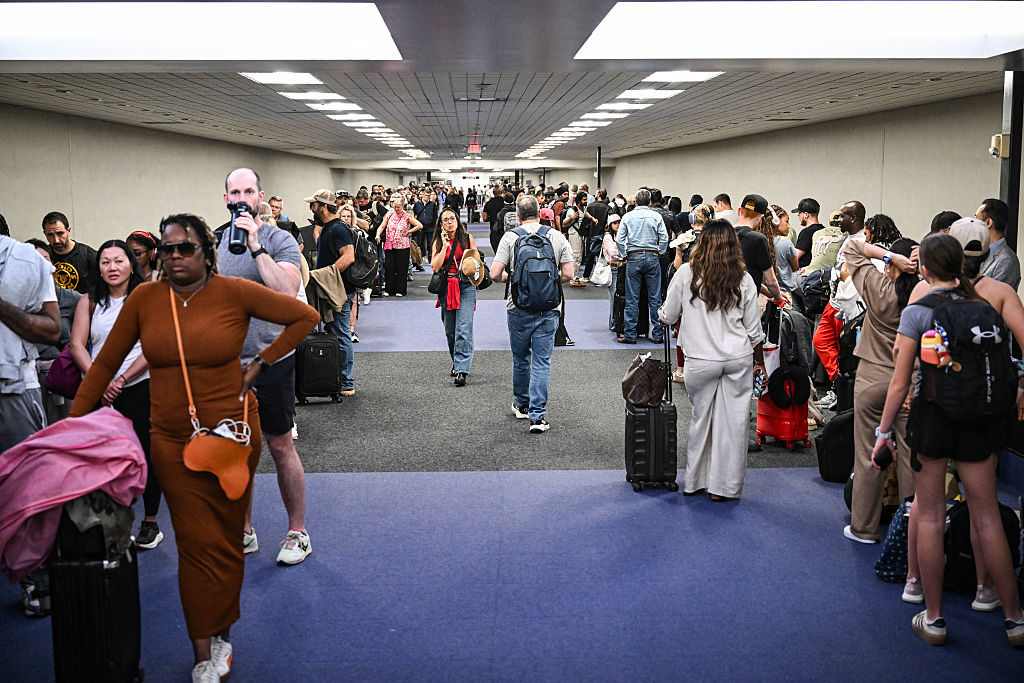
More than 360 TSA employees have resigned since the federal government shutdown left airport security workers without pay — and if you’re flying soon, the consequences are already showing up in the lines you’re standing in.
Wait times of two to three hours have been reported at major airports during peak travel periods. The TSA’s national absentee rate has climbed to roughly 10 percent, a figure that tells only part of the story. The other part is the workers who haven’t called out — they’ve simply quit.
For travelers, this isn’t an abstract policy problem. It’s the difference between catching your flight and missing it.
Why TSA Staffing Has Reached a Breaking Point
Under federal law, TSA employees are classified as essential personnel. That means they are legally required to report to work even when the government shuts down and paychecks stop coming. They show up. They screen passengers. They just don’t get paid for it.
That arrangement has always been controversial, but it becomes genuinely unsustainable when shutdowns stretch on. Workers have bills, rent, and families. When the financial strain becomes too much, some call out sick. Others resign entirely. Both outcomes leave fewer screeners available at security checkpoints across the country.
The result is a compounding problem: fewer staff means longer lines, longer lines mean more frustrated travelers, and the workers who do show up face a more stressful environment — which only accelerates further departures.
The TSA Staffing Crisis by the Numbers
The available data paints a clear picture of how serious the situation has become. Here’s what has been reported:
| Metric | Current Status |
|---|---|
| National TSA absentee rate | Approximately 10% |
| TSA employee resignations | Over 360 |
| Reported peak wait times | 2 to 3 hours |
| Cause of staffing shortage | Ongoing federal government shutdown |
| Legal status of TSA workers | Classified as essential personnel — required to work without pay |
These numbers reflect a national picture, but the impact is not evenly distributed. Some airports are feeling the pressure far more intensely than others.
Which Airports Are Being Hit Hardest
Not every airport is equally exposed. Larger hub airports — which process significantly more passengers per day and rely on larger TSA workforces — tend to absorb staffing shortfalls much more visibly.
George Bush Intercontinental Airport (IAH) in Houston has been specifically identified as one of the airports where a significant number of TSA workers have departed. As one of the busiest airports in the southern United States, IAH handles a high volume of connecting and international passengers, making any staffing gap particularly disruptive.
- Large hub airports face the highest exposure to staffing gaps
- George Bush Intercontinental (IAH) has been specifically affected
- Peak travel periods amplify wait times further at understaffed checkpoints
- Travelers connecting through major hubs face the greatest risk of delays cascading into missed flights
Smaller regional airports, which typically operate with leaner TSA teams to begin with, face a different kind of vulnerability — even a small number of resignations can meaningfully reduce screening capacity.
What This Means for Anyone Flying Right Now
If you have a flight coming up, this situation has direct practical implications. The two-to-three-hour wait times being reported aren’t worst-case projections — they’re what travelers have already experienced during busy periods.
Advocates for travelers and aviation industry observers have noted that arriving earlier than usual is now a genuine necessity rather than cautious advice. The standard recommendation of arriving two hours before a domestic flight may no longer provide enough buffer at heavily affected airports.
There’s also a ripple effect worth understanding. When security lines back up, gates get crowded, boarding becomes chaotic, and even passengers who cleared security on time can find themselves caught in the downstream confusion. Airlines have limited ability to hold departures indefinitely, which means the consequences of a slow checkpoint can extend well beyond the checkpoint itself.
Private screening programs have entered the conversation as a potential partial solution. Experts have pointed to these programs as a way to introduce more stability and efficiency into airport security operations, particularly during periods when the federal workforce is under strain. Advocates argue that broader use of private screening could help insulate airports from the kind of disruption that government shutdowns create.
The Broader Debate This Crisis Is Forcing
The current situation has renewed a long-running debate about whether essential government workers should ever be required to work without pay — and what the systemic consequences are when they do.
Critics of the existing framework contend that compelling workers to show up without compensation is both ethically problematic and operationally counterproductive. High resignation rates during shutdowns effectively punish the public with the very service disruptions the essential-worker designation was meant to prevent.
Supporters of privatizing more airport security functions argue that the current crisis demonstrates exactly why relying solely on a federal workforce creates fragility. Private screening programs, they suggest, are not subject to the same funding interruptions and could provide more consistent staffing levels regardless of what happens in Washington.
Neither side of that debate resolves the immediate problem for travelers who have flights this week. But the outcome of these discussions will shape how American airports handle the next shutdown — and there is little indication that government funding disputes are becoming less frequent.
Frequently Asked Questions
Why are TSA employees working without pay?
Federal law classifies TSA employees as essential personnel, which means they are legally required to continue working during a government shutdown even when their paychecks are not being issued.
How long are security wait times right now?
Travelers have reported wait times of two to three hours during peak periods at affected airports, according to available reporting on the current situation.
Which airports are most affected by TSA staffing shortages?
George Bush Intercontinental Airport (IAH) in Houston has been specifically identified as significantly affected, along with other large hub airports that rely on larger TSA workforces.
How many TSA workers have quit during the shutdown?
More than 360 TSA employees have resigned amid the financial strain caused by working without pay, contributing to a national absentee rate of approximately 10 percent.
What can travelers do to avoid missing their flights?
Given reported wait times of two to three hours, travelers are strongly advised to arrive significantly earlier than usual, particularly at major hub airports during peak travel periods.
Could private screening programs replace TSA workers?
Experts have advocated for broader use of private screening programs as a way to improve stability and efficiency, though no confirmed policy changes have been announced at this time.




Leave a Reply