
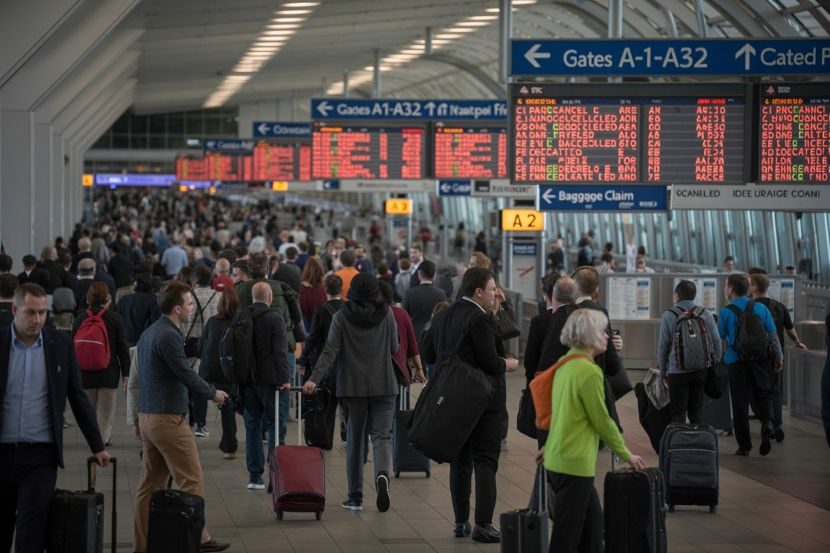
More than 1,000 flights were canceled across the United States in a single day this week, and another 4,200 were delayed — numbers that translate to tens of thousands of passengers stuck in terminals, scrambling to rebook, and watching their travel plans unravel in real time.
The culprit was a powerful storm system that tore through the eastern and central United States, hitting some of the country’s busiest air travel hubs with particular ferocity. According to flight tracking data from FlightAware, the disruptions were severe enough to push airports in Atlanta, Chicago, and New York into full crisis management mode.
If you have travel plans in the coming days — or if someone you know is trying to get somewhere — here’s what the situation actually looks like on the ground.
A Storm System That Didn’t Hold Back
Weather events disrupt flights regularly, but this storm was on a different scale. The combination of cancellations and delays — more than 5,200 total affected flights on Tuesday alone — reflects just how broadly the system spread across the country.
Major hub airports bore the brunt of it. Atlanta’s Hartsfield-Jackson, one of the busiest airports in the world by passenger volume, was among the hardest hit. Chicago and New York — both cities with multiple major airports — also saw significant disruption as the storm pushed through.
What makes hub disruptions particularly damaging is the ripple effect. When flights can’t depart from Atlanta or Chicago, connecting passengers across dozens of downstream cities miss their connections too. A storm in one region can functionally ground flights in cities hundreds of miles away that are seeing nothing but clear skies.
Flight Cancellations and Delays: What the Numbers Show
The scale of the disruption on Tuesday, based on FlightAware tracking data, breaks down like this:
| Disruption Type | Number of Flights Affected |
|---|---|
| Cancellations (U.S.) | Over 1,000 |
| Delays (U.S.) | Over 4,200 |
| Total Disrupted Flights | Over 5,200 |
The airports most visibly affected included:
- Atlanta (Hartsfield-Jackson) — one of the primary hubs experiencing major disruptions
- Chicago — a central U.S. hub caught directly in the storm’s path
- New York — eastern seaboard operations severely affected as the storm pushed through
Airlines were described as scrambling to adjust schedules, reposition aircraft, and rebook affected passengers — a logistical challenge that doesn’t resolve itself overnight even once the weather clears.
Why Storms Like This Create Problems That Last for Days
One thing that catches many travelers off guard is that the disruption doesn’t end when the storm does. Aircraft and crews end up out of position. A plane that was supposed to be in Atlanta for a Tuesday morning departure might not get there until Wednesday — and every flight scheduled on that aircraft gets pushed back as a result.
Airlines typically need 24 to 48 hours after a major weather event to fully restore normal operations, and during that recovery window, passengers who weren’t even flying on the day of the storm can find their flights canceled or significantly delayed.
The eastern and central U.S. were both in the storm’s impact zone, which meant there was no easy geographic workaround for airlines trying to reroute flights. When weather affects multiple major hubs simultaneously, the options for recovery narrow considerably.
What This Means If You’re Flying Soon
If you have a flight booked through any of the affected hubs — particularly Atlanta, Chicago, or New York — there are several practical steps worth taking right now.
- Check your airline’s app or website directly for the most current flight status rather than relying on third-party apps alone
- Look for travel waivers — most major airlines issue fee-free rebooking waivers during significant weather events, allowing passengers to change flights without penalty
- Get to the airport early if your flight is still showing as on time — gate changes and last-minute delays are common during recovery periods
- Have a backup plan ready, including alternative routing through different hub cities if possible
- Document everything — if you incur hotel or meal costs due to a cancellation, keep receipts, as some airlines offer compensation for weather-related stranding in certain circumstances
Passengers who were already stranded as of Tuesday faced the added challenge of finding accommodation near airports that were already stretched thin — hotels near major hubs tend to fill quickly when mass cancellations hit.
What Happens as Airlines Work to Recover
The recovery process from a disruption this large is methodical but slow. Airlines prioritize getting their aircraft and crews back into position first, which means some routes will see service restored before others. Passengers on high-frequency routes — those with multiple daily flights — generally have better odds of getting rebooked quickly than those on thinner routes with only one or two departures per day.
The storm’s effects were described as continuing into Tuesday, suggesting that full recovery could extend well into the middle of the week. Travelers planning to fly Wednesday or Thursday through any of the affected hubs should still monitor their flight status closely, as residual delays and cancellations often persist for 48 hours or more after the initial weather event passes.
Officials have noted that situations like this underscore the importance of travel insurance and flexible booking options, particularly during spring and winter months when severe weather systems are more common across the central and eastern United States.
Frequently Asked Questions
How many flights were canceled due to the storm?
According to FlightAware tracking data, more than 1,000 flights were canceled across the U.S. on Tuesday, with an additional 4,200 flights delayed.
Which airports were most affected by the disruptions?
The storm hit major hub airports hardest, with Atlanta, Chicago, and New York specifically identified as significantly affected.
Will flight disruptions continue after the storm passes?
Yes — airline recovery from large-scale weather events typically takes 24 to 48 hours or more after conditions improve, as aircraft and crews need to be repositioned across the network.
Can I rebook my flight without paying a fee if it was affected by the storm?
Most major airlines issue travel waivers during significant weather events that allow fee-free rebooking, but passengers should check directly with their airline for specific waiver policies.
Which parts of the U.S. were affected by this storm?
The storm impacted the eastern and central United States, according to the available reports, with conditions worsening across both regions on Tuesday.
Where can I track my flight status in real time?
FlightAware is one of the flight tracking services cited in reports on this disruption and provides real-time cancellation and delay data for U.S. flights.




Leave a Reply