
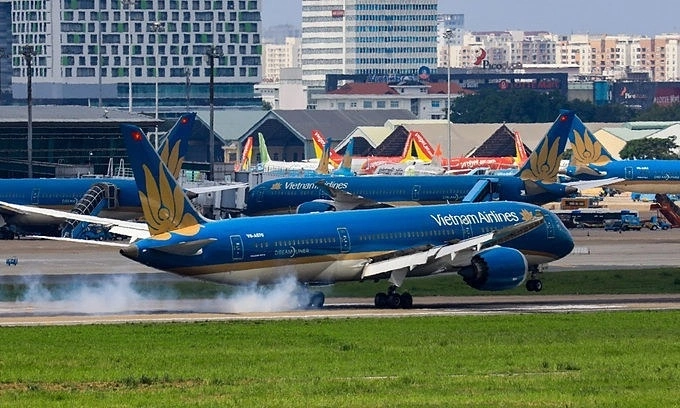
Vietnam Airlines has signed a multi-billion-dollar aircraft purchase agreement with Boeing, a deal that signals one of the most significant fleet overhauls in the airline’s history — and one that could reshape the competitive landscape of aviation across Southeast Asia.
The agreement positions Vietnam’s flag carrier to expand its long-haul network, serve rising passenger demand, and go head-to-head with regional rivals that have spent years building out their own wide-body fleets. For travelers flying to and from Vietnam, the implications are real and tangible.
What follows is grounded in what has been confirmed, supplemented with accurate general context about the airline and the region.
What the Vietnam Airlines–Boeing Deal Actually Involves
At its core, this is a fleet modernization agreement. Vietnam Airlines has committed to purchasing a significant number of Boeing aircraft in a deal valued at multiple billions of dollars. The focus, according to reporting on the deal, is on strengthening the airline’s long-haul capabilities — meaning larger, longer-range jets capable of connecting Vietnam to destinations in Europe, North America, and beyond.
The airline has framed the deal as a strategic investment in both operational efficiency and passenger experience. Newer Boeing aircraft typically offer better fuel economy, lower maintenance costs over time, and updated cabin configurations that airlines use to attract premium travelers.
Vietnam Airlines has operated Boeing jets alongside Airbus aircraft for years, so this agreement deepens an existing relationship rather than marking a brand-new partnership. What makes this deal notable is its scale and the timing — coming as Southeast Asian air travel demand surges back well beyond pre-pandemic levels.
Why This Deal Matters for Southeast Asia’s Aviation Market
Southeast Asia is one of the fastest-growing aviation markets in the world. A rising middle class, increased business travel, and a booming tourism sector have pushed passenger numbers sharply upward across the region. Airlines that can’t keep pace with capacity risk losing ground quickly.
Vietnam Airlines sits at the center of this growth story. Vietnam’s economy has expanded steadily, its tourism numbers have recovered strongly, and demand for direct international routes — rather than connecting flights through hubs like Bangkok or Singapore — has increased. A modern, expanded long-haul fleet gives the airline the tools to meet that demand directly.
Analysts watching the region have noted that the competition between Southeast Asian carriers is intensifying. Singapore Airlines, Thai Airways, and Malaysia Airlines all operate significant wide-body fleets. Low-cost carriers like AirAsia have also pushed into longer routes. Vietnam Airlines’ Boeing deal is a clear statement that it intends to compete at that level.
Key Facts About the Deal at a Glance
Because specific figures have not been fully confirmed in available reporting, the table below presents what is known alongside what remains unconfirmed:
| Detail | Status |
|---|---|
| Deal value | Multi-billion dollars (confirmed in general terms) |
| Manufacturer | Boeing (confirmed) |
| Purpose of deal | Fleet modernization and long-haul expansion (confirmed) |
| Specific aircraft models ordered | Not confirmed in available reporting |
| Exact number of aircraft | Not confirmed in available reporting |
| Delivery timeline | Not confirmed in available reporting |
| Impact on Southeast Asian market | Expected to be significant (confirmed in general terms) |
- The deal is described as one of the largest aircraft purchase agreements in Vietnam Airlines’ history
- The airline aims to improve both domestic and international route performance
- The agreement is expected to have a broad impact on regional aviation competition
- Operational efficiency is a stated goal alongside passenger capacity growth
Who Feels the Impact — and How
For passengers, a modernized fleet generally means newer cabins, improved in-flight entertainment, and potentially better fuel efficiency that can translate into more competitive ticket pricing over time. Travelers flying long-haul routes between Vietnam and Europe or other distant markets stand to benefit most directly if the airline expands those services.
For the broader travel industry in Vietnam — hotels, tour operators, and destination businesses — more long-haul capacity means more international visitors arriving directly, without the friction of a connecting flight. That’s a meaningful boost for inbound tourism.
Boeing itself benefits from a high-profile order in a market where its rival Airbus has a strong presence. Vietnam Airlines’ commitment reinforces Boeing’s position in Southeast Asia at a time when the manufacturer has faced significant scrutiny over production and safety issues in other markets.
For competing airlines in the region, this deal puts them on notice. An expanded, modernized Vietnam Airlines fleet means more seats on more routes — and a more capable competitor for passengers across Asia and beyond.
What Comes Next for Vietnam Airlines
The immediate next steps will involve finalizing delivery schedules and integrating new aircraft into the airline’s existing network planning. Fleet transitions of this scale typically unfold over several years, with aircraft arriving in batches rather than all at once.
As deliveries begin, passengers and industry observers will be watching to see which specific routes Vietnam Airlines targets for expansion. Long-haul routes to Europe and North America are the most likely candidates given the stated focus on strengthening those capabilities.
The deal also raises broader questions about Vietnam’s aviation ambitions. With a fast-growing economy and a government that has consistently supported aviation infrastructure investment, this Boeing agreement may be one of several major moves the country makes to position itself as a serious aviation hub in the years ahead.
Frequently Asked Questions
How much is the Vietnam Airlines Boeing deal worth?
The deal has been described as worth multiple billions of dollars, though a precise confirmed figure has not been publicly released at this stage.
Which Boeing aircraft is Vietnam Airlines ordering?
The specific aircraft models involved in the order have not been confirmed in available reporting.
Why is Vietnam Airlines buying new Boeing jets?
The airline is focused on modernizing its fleet, improving operational efficiency, and expanding its long-haul route capabilities to meet growing domestic and international travel demand.
When will the new aircraft be delivered?
A delivery timeline has not yet been confirmed in available reporting.
How will this deal affect travelers flying with Vietnam Airlines?
Passengers can expect newer aircraft with updated cabins over time, and potentially more direct long-haul routes as the fleet expands.
Does this change Vietnam Airlines’ competitive position in Southeast Asia?
The deal is widely seen as strengthening the airline’s standing against regional rivals by boosting both capacity and long-haul capability.


Leave a Reply