
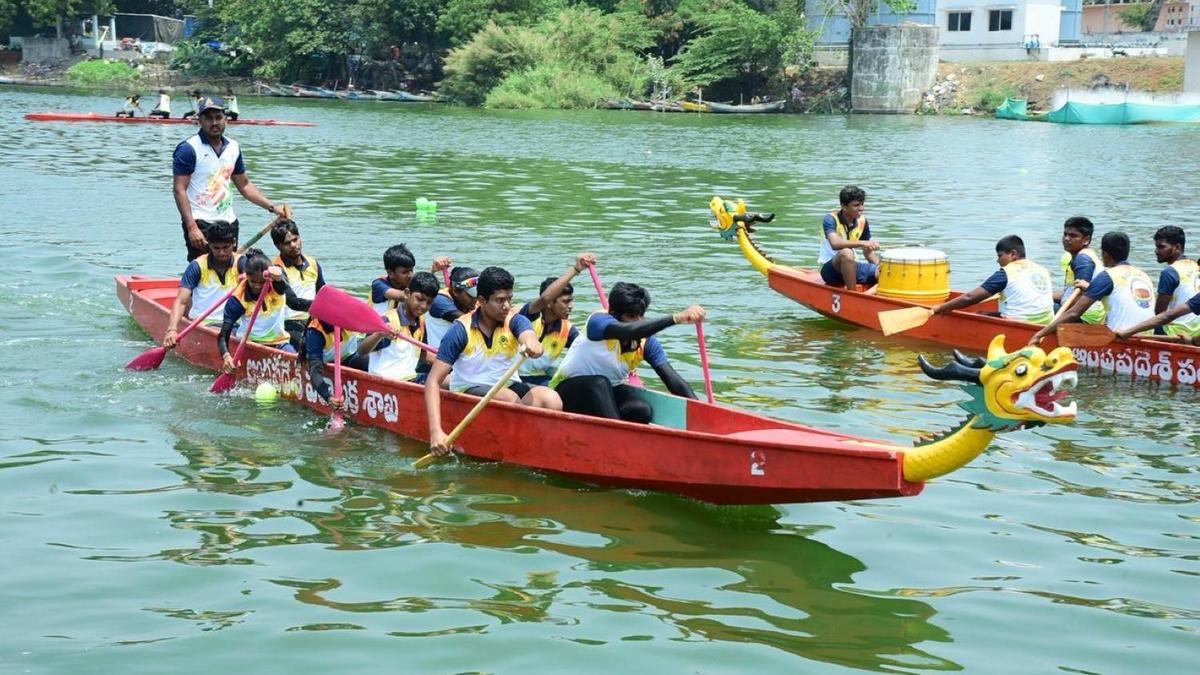
The window is open, and it won’t stay that way for long. As of April 13, 2026, Vijayawada is kicking off a two-day water sports festival that organizers say is the most ambitious aquatic event the city has hosted in years. Held at Punnami Ghat along the banks of the Krishna River, the festival signals a clear strategic shift: Andhra Pradesh is done being overlooked on India’s adventure tourism map.
If you’ve been waiting for a reason to visit Vijayawada beyond its famous temples and street food, this is it. The timing matters. India’s domestic adventure tourism sector is expanding rapidly, and states that move first tend to lock in brand recognition for years.
What the Punnami Ghat Festival Actually Involves
The festival is organized by the District Sports Authority of Vijayawada and centers on two flagship activities: jet skiing and kayaking. Both competitions take place directly on the Krishna River, one of India’s longest rivers and a body of water that has shaped this city’s identity for centuries.
Punnami Ghat is not a random choice of venue. It’s one of the most iconic riverside spaces in the city, known for religious festivals and community gatherings. Transforming it into a competitive water sports arena carries deliberate symbolism. It tells visitors and athletes alike that Vijayawada is layering new identities onto old foundations.
The District Collector addressed participating athletes directly, urging them to compete with both enthusiasm and a commitment to environmental protection. That dual emphasis, performance and stewardship, reflects a broader awareness that adventure tourism done carelessly can damage the very ecosystems it depends on.
| Activity | Venue | Format | Target Audience |
|---|---|---|---|
| Jet Skiing | Krishna River, Punnami Ghat | Competitive races | Youth athletes, thrill-seekers |
| Kayaking | Krishna River, Punnami Ghat | Competitive races | Youth athletes, outdoor enthusiasts |
Youth at the Center: Adventure Tourism’s Demographic Bet
The festival’s explicit focus on youth is not accidental. Indian tourism officials and state governments have increasingly recognized that the under-35 demographic drives adventure travel spending, word-of-mouth promotion, and social media visibility. A young person who kayaks on the Krishna River and posts about it reaches more potential visitors than most paid advertising campaigns.
Andhra Pradesh is making a calculated bet. By targeting youth enthusiasm now, the state is attempting to build a pipeline of repeat visitors and future tourism ambassadors. The strategy mirrors what Rishikesh did with white-water rafting, and what Ladakh achieved with motorcycle culture. Both destinations became synonymous with adventure by starting with grassroots events that built genuine community identity.
“Two-day water sports competitions in Vijayawada promote youth enthusiasm and tourism while emphasizing environmental protection.”
— The Hindu, reporting on the Vijayawada water sports event
The environmental protection angle embedded in the festival’s messaging also matters strategically. Younger travelers, particularly those engaged in outdoor sports, are highly attuned to ecological responsibility. Framing a water sports competition around conservation, rather than pure spectacle, gives the event credibility with an audience that could easily dismiss it as government-organized theater.
Vijayawada’s Larger Ambition Behind a Two-Day Event
It would be easy to look at this festival and see a local government keeping itself busy. That reading misses the context. McKinsey Quarterly once designated Vijayawada a Global City of the Future, projecting a GDP contribution of $17 billion by 2025. The city has been building infrastructure and ambition in parallel for years.
The Kanakadurga Flyover, one of the most technically complex bridge projects in the region, was completed in stages starting in 2015, crossing the same Krishna River that now hosts jet ski competitions. Vijayawada is a city comfortable with large, ambitious projects. The water sports festival fits that pattern.
Andhra Pradesh as a whole has been working to rebuild its tourism identity following years of political restructuring after the state bifurcation in 2014. Adventure tourism offers a path forward that doesn’t depend on historical monuments or pilgrimage circuits alone. It creates reasons to visit that didn’t previously exist.
What This Means for Travelers Planning a Trip to Andhra Pradesh
For travelers, the festival creates a specific and time-sensitive reason to visit Vijayawada. The city is well connected by rail and air, sitting roughly equidistant between Hyderabad and Chennai along the major transport corridor of South India. Getting there is not complicated.
| Activity | Skill Level | Venue | Competition Type | Thrill Factor | Suitable For |
|---|---|---|---|---|---|
| Jet Skiing | Intermediate–Advanced | Krishna River | Timed Race | Very High | Youth Athletes & Thrill-Seekers |
| Kayaking | Beginner–Intermediate | Krishna River | Endurance/Sprint Race | Moderate | Youth Athletes & Amateurs |
| River Rafting | Advanced | Krishna River | Team Challenge | High | Adventure Groups |
| Stand-Up Paddleboarding | Beginner | Krishna River Shallows | Balance Challenge | Low–Moderate | Families & Newcomers |
| Boat Racing | Intermediate | Punnami Ghat | Head-to-Head Sprint | High | Competitive Athletes |
Punnami Ghat itself is accessible from the city center in minutes. The riverside setting offers a striking backdrop, with the broad Krishna River flanked by hills and the city skyline. Even for visitors who don’t compete, the festival creates a spectator experience that’s genuinely rare in this part of the country.
The broader implication for Andhra Pradesh tourism is about sequencing. A successful water sports festival doesn’t just attract visitors for two days. It generates media coverage, social media content, and participant testimony that function as organic marketing for months afterward. The District Sports Authority understands this, even if it isn’t always stated explicitly in official communications.
Adventure tourism in India is growing faster than most conventional tourism segments. States that establish credible adventure credentials now are positioning themselves for a decade of compounding returns. Andhra Pradesh, with its coastline, rivers, and hills, has natural assets that remain largely underdeveloped for this purpose.
Forward: Will Vijayawada Make the Festival Annual?
The real test isn’t whether the festival succeeds this April. It’s whether Vijayawada institutionalizes it. A single event is a statement; an annual calendar fixture is a destination. Cities like Rishikesh and Coorg didn’t become adventure tourism landmarks from one good weekend. They built consistency over years.
The District Sports Authority’s involvement suggests a structural commitment rather than a one-off experiment. Government-organized events tend to have more staying power than private ventures in emerging tourism markets, particularly when they’re tied to youth development goals that align with state education and sports policy.
If the 2026 festival draws strong participation and media attention, the pressure to repeat and expand it will come from the participants themselves. Athletes who compete at Punnami Ghat this April will want to return. Spectators who see the event will want to compete next time. That feedback loop is how adventure tourism destinations are built.
Andhra Pradesh has spent years searching for a tourism identity distinct from its neighbors. The Krishna River has been here all along. Vijayawada just decided to race on it.


Leave a Reply