
▶ Read transcript
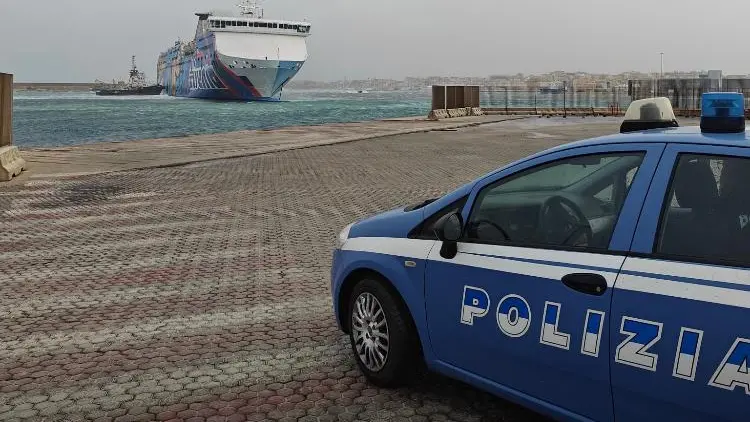
Here’s what you need to know about the Costa Smeralda’s unexpected detour in the Mediterranean. The Costa Cruises flagship was scheduled to dock at La Goulette, Tunisia’s main cruise port near Tunis, but never made it. Wind gusts exceeding 100 kilometers per hour made docking dangerously unsafe, so the ship was rerouted north to Cagliari, Sardinia instead. These weren’t ordinary breezes — the mistral is one of the most powerful wind systems in the Mediterranean, and earlier this year similar conditions snapped a ferry’s mooring lines clean at a Sardinian port. For passengers, the change hit hard. Some had booked private tours to the ancient ruins of Carthage, others had family meetings arranged. The emotional whiplash was real, even if the safety decision was the right one. Your takeaway: before any cruise, read your contract carefully. Most lines offer onboard credit or port fee refunds for weather-related missed stops, but the terms vary, so know what you’re entitled to before you sail.
Roughly 100 kilometers per hour. That is the wind speed that can snap a moored ship’s lines clean from the dock — and it is the same force that recently rewrote the travel plans of hundreds of passengers aboard one of the Mediterranean’s most recognizable cruise ships.
The Costa Smeralda, Costa Cruises’ flagship vessel, was scheduled to call at La Goulette, the main port serving Tunis, Tunisia. It never arrived. Instead, the ship turned north toward Cagliari, the sun-warmed capital of Sardinia, Italy. The reason was simple and non-negotiable: the sea had become too dangerous to dock safely.
For the passengers on board, that single decision compressed a cascade of emotions — disappointment, anxiety, curiosity, and eventually, reluctant acceptance — into a matter of hours.
La Goulette, Mistral Winds, and the Physics of a Port Closure
La Goulette sits at the entrance of the Lake of Tunis, a narrow channel connecting the capital to the Mediterranean. It is one of North Africa’s busiest cruise terminals, welcoming ships from across Europe each season. But its geography also makes it vulnerable. When the mistral — the powerful, cold wind that tears down from the northwest — reaches full strength, the port can become untenable for large vessels.
The mistral is not a casual weather event. Meteorologists track it as one of the most forceful regional wind systems in the Mediterranean basin. Gusts can exceed 100 km/h, and when they do, the consequences are immediate and physical. Earlier this year, strong winds at Porto Torres in Sardinia caused the moorings of the Tirrenia ferry Athara to snap entirely, according to reporting by Unione Sarda. That incident illustrated, in concrete terms, what these winds are capable of doing to a moored ship.
Costa Cruises made the call before the Costa Smeralda ever reached Tunisian waters. Passenger safety, the company confirmed, was the primary reason for the rerouting. There was no ambiguity in the decision.
| Detail | Original Plan | Actual Outcome |
|---|---|---|
| Port of Call | La Goulette, Tunisia | Cagliari, Sardinia, Italy |
| Reason for Change | N/A (scheduled stop) | Unsafe wind conditions |
| Sea Region | Tunisian waters, Mediterranean | Western Mediterranean, Sardinia |
| Decision Driver | Itinerary | Passenger safety |
| Cruise Line | Costa Cruises | Costa Cruises |
What Passengers Experienced When Tunisia Disappeared from the Screen
Imagine watching the ship’s navigation display in the atrium, a cup of espresso in hand, when the route line quietly shifts. The familiar arc toward North Africa straightens, bends north, and resolves into a new point: Cagliari. For many passengers, this was the first signal that something had changed.
Cruise itinerary changes are more common than most travelers realize. Weather, port congestion, and geopolitical conditions all factor into real-time routing decisions. But knowing that intellectually does not soften the immediate sting of losing a destination you have been anticipating, perhaps for months.
Some passengers had booked private shore excursions in Tunis. Others had planned to visit the ancient ruins of Carthage, just a short drive from La Goulette. A few had family connections to Tunisia and had arranged meetings that now could not happen. The ship’s announcement, however professionally delivered, landed differently for each person.
“Passengers aboard Costa Cruises’ Costa Smeralda will call in Sardinia instead of Tunisia due to weather conditions causing unsafe docking.”
— Cruise Hive, reporting on the rerouting
The ship continued its course. The sea, indifferent to itineraries, kept moving beneath the hull.
The Costa Smeralda’s History and Why This Ship Draws Attention
The Costa Smeralda is not just any vessel. Named after Sardinia’s famous Emerald Coast, the ship entered service for Costa Cruises on March 27, 2021, making its debut in the Western Mediterranean. It is one of the line’s largest and most technologically advanced ships, built to carry thousands of passengers across routes that link Italy, Spain, France, and North Africa.
The irony of a ship named for a Sardinian coastline being redirected to Sardinia is not lost on anyone who follows cruise culture. Cagliari, the island’s capital, is a city of layered history, Roman ruins, and a harbor that has welcomed ships for over two millennia. It is, by any measure, a worthy substitute. But substitutes carry a particular emotional weight when they replace something you had specifically chosen.
Cagliari as a Replacement: What Sardinia Offered Instead
Cagliari greeted the Costa Smeralda with its characteristic Mediterranean light, the kind that makes limestone buildings glow amber in the afternoon. The city’s historic Castello district rises above the port on a rocky hill, its medieval walls visible from the water. Below, the harbor is lined with cafes, fish markets, and the particular unhurried energy of a port city that has seen centuries of arrivals.
| Port | Location | Wind Vulnerability | Cruise Capacity | Accessibility | Typical Reroute Risk |
|---|---|---|---|---|---|
| La Goulette | Tunis, Tunisia | High — exposed to Mistral from northwest | Large — major North African cruise terminal | Narrow channel entry from Lake of Tunis | High during winter/spring Mistral season |
| Cagliari | Sardinia, Italy | Moderate — sheltered southern bay | Large — handles major cruise liners | Open harbor with multiple berths | Low — natural bay protection |
| Civitavecchia | Rome, Italy | Low — partially sheltered | Very Large — Rome's primary cruise gateway | Breakwater-protected deep harbor | Very Low |
| Palermo | Sicily, Italy | Moderate — exposed to southern swells | Large — busy Mediterranean hub | Semi-enclosed natural harbor | Low to Moderate |
| Valletta | Malta | Low — Grand Harbour is deeply sheltered | Medium — historic fortified harbor | Narrow entrance but well protected | Very Low |
For passengers willing to release their Tunisian expectations, Cagliari offered real rewards. The Museo Archeologico Nazionale holds one of the finest collections of Nuragic bronze figurines in the world. The beaches at Poetto stretch for eight kilometers just east of the city center. The food, anchored by local bottarga and fresh seafood, is specific to this island in ways that reward curiosity.
Not every passenger found the pivot easy. Some spent the day on the ship, processing the change rather than exploring. Others threw themselves into Cagliari with the particular intensity of people determined to salvage something from a disrupted plan. Both responses were reasonable. Neither was wrong.
What This Moment Reveals About Traveling in the Mediterranean
The Mediterranean is one of the world’s most heavily trafficked cruise regions, and it is also one of the most meteorologically unpredictable. The same sea that produces postcard-perfect sailing conditions in July can turn hostile with almost no warning when seasonal wind systems shift.
The mistral is a known quantity. Sailors, port authorities, and cruise lines have tracked it for centuries. But knowing a wind exists and being able to predict its precise timing and intensity are different things. When it arrives at full force, the response is not optional. Ships reroute. Ports close. Plans change.
What the Costa Smeralda incident captures is something broader than one ship’s detour. It is a reminder that the sea operates on its own schedule, entirely indifferent to the itineraries printed in cruise brochures or the shore excursions booked months in advance. Every Mediterranean voyage carries this implicit condition, whether passengers acknowledge it or not.
The passengers who arrived in Cagliari that day did not choose Sardinia. Sardinia chose them. And somewhere in that distinction, between the trip you planned and the trip you actually took, lies the unscripted part of travel that no booking confirmation can prepare you for — and that, years later, you often remember most clearly.
Frequently Asked Questions

You Might Also Like

Vijayawada’s Water Sports Festival Is Rewriting Adventure Tourism in AP
Vijayawada's two-day water sports festival at Punnami Ghat on the Krishna River is igniting adventure…
Cruise Visitors Are Finding Brunei Offers Far More Than Expected
One of Southeast Asia's smallest nations is quietly becoming one of its most talked-about cruise…
Colombia Just Crossed Five Million Air Passengers in a Single January
More than five million passengers flew through Colombian airports in January 2026 alone — and…
Leave a Reply