
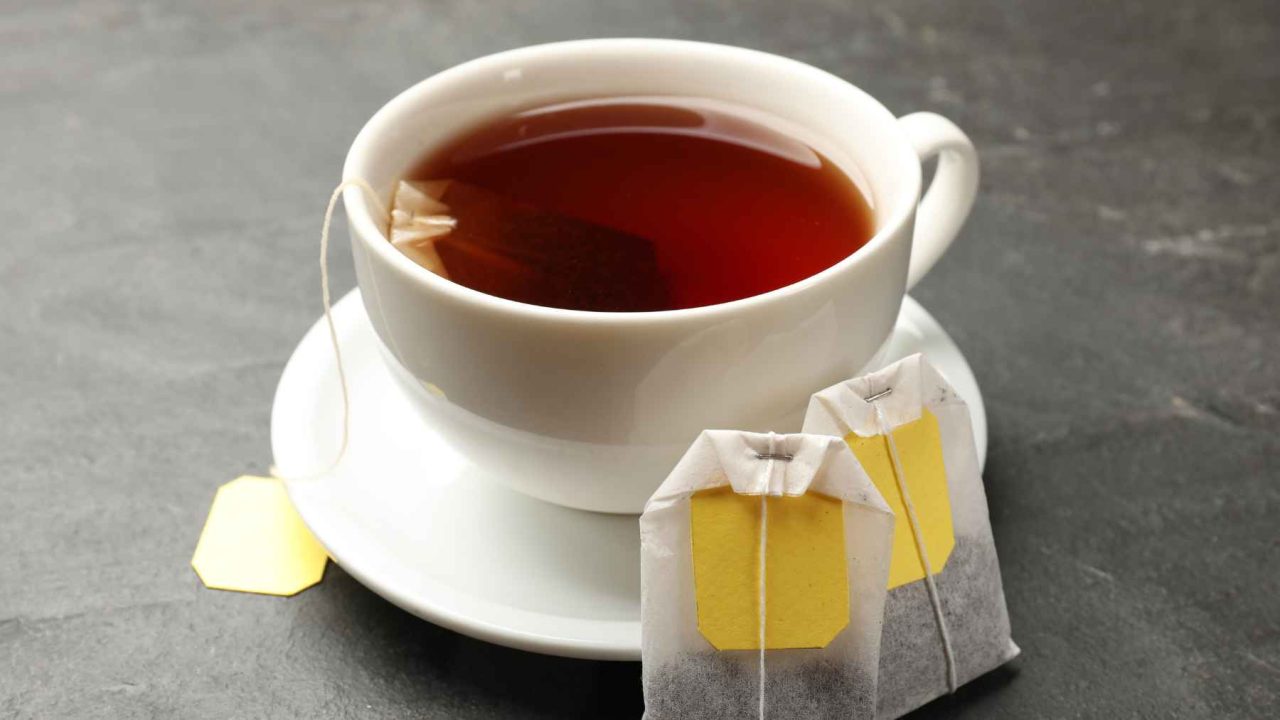
There is a narrow window between knowing something is safe and discovering it never was. For millions of tea drinkers, that window may have just closed.
On April 11, 2026, a review published in Food Chemistry delivered a finding that researchers had been circling for years. A single cup of tea, brewed the ordinary way with a tea bag and near-boiling water, may contain up to 14.7 billion microplastic and nanoplastic particles. Not hundreds. Not thousands. Billions, swallowed quietly with every sip.
This was not a fringe claim from an obscure lab. It was a systematic review, and its conclusion was specific: the tea bag itself is the most important contributor of microplastics among all common sources studied.
Why Plastic Tea Bags Release Over One Billion Particles Per Steep
Most people assume tea bags are made of paper. Many are. But a large share of commercial tea bags, especially the sleek pyramid-style bags marketed as “premium,” are constructed from plastic mesh materials. The two most common culprits are nylon and polyethylene terephthalate, better known as PET, the same polymer used in plastic bottles.
When these materials meet near-boiling water, they degrade. Heat accelerates the breakdown of polymer chains, and the result is a cascade of particles shed directly into your drink. Studies included in the review reported releases exceeding one billion particles per plastic tea bag during a single steep.
The size distinction matters enormously. Microplastics are defined as particles ranging from roughly 1 micrometer up to about 5 millimeters. Nanoplastics are smaller than 1 micrometer, which is 0.00004 inches. At that scale, particles do not simply pass through the body. They can penetrate cell walls and enter tissues in ways larger debris cannot.
The pyramid bags, which many consumers associate with higher quality tea, appear to be among the worst offenders. Their mesh-like plastic construction maximizes water flow through the bag, which is precisely what releases the most material into the brew.
| Tea Bag Type | Primary Material | Microplastic Risk Level |
|---|---|---|
| Pyramid / mesh bags | Nylon or PET plastic mesh | High — mesh structure maximizes particle release |
| Standard flat bags | Paper or plastic-cellulosic composite | Moderate — composite materials still shed particles |
| Biodegradable bags | Plant-based polymers (PLA, etc.) | Moderate — significant quantities still reported |
| Loose-leaf tea (strainer) | Metal or uncoated cloth | Lowest — no polymer bag involved |
The Biodegradable Bag Illusion and What “Compostable” Actually Means
Here is where the story takes a genuinely unsettling turn. Many consumers switched to biodegradable or plant-based tea bags specifically to avoid plastic exposure. The review suggests that instinct was reasonable but incomplete.
Significant quantities of microplastics were reported from plastic-cellulosic composite bags and from some bags marketed as biodegradable. The materials may break down in an industrial compost facility over time, but under the conditions of a hot brew, they still shed particles into the liquid.
“The review identifies the tea bag as the most important contributor of microplastics overall” among the sources examined in the Food Chemistry analysis.
— Food Chemistry review, April 11, 2026
The word “biodegradable” describes what happens to a material under specific disposal conditions. It says nothing about what the material does when submerged in 95-degree Celsius water for three to five minutes. Those are very different scenarios, and the research treats them as such.
What 14.7 Billion Particles Actually Means for the Human Body
Science rarely moves in clean lines from exposure to harm. Researchers are still working to understand exactly what billions of ingested microplastics and nanoplastics do inside the human body over months and years of daily exposure.
What is known is structural. Nanoplastics, those smaller than 1 micrometer, are physically capable of crossing biological barriers that larger particles cannot. They can penetrate cell membranes, move through the gut wall, and potentially accumulate in organs. Animal studies have linked microplastic exposure to inflammation, oxidative stress, and disruption of endocrine function, though direct causal evidence in humans is still developing.
The concern is not a single cup of tea. It is the accumulation. A person who drinks two cups of tea per day, every day, using plastic tea bags, is ingesting a staggering particle load over the course of a year, let alone a lifetime. The review published this month frames that accumulation as the central issue.
What makes this particularly difficult to act on is the invisibility of the exposure. Microplastics and nanoplastics have no taste, no smell, no texture. The tea looks and tastes exactly as it always has. Nothing signals that anything has changed.
Simple Switches That Reduce Plastic Particle Exposure During Brewing
The evidence does not require abandoning tea. It requires reconsidering the container.
Loose-leaf tea steeped in a stainless steel infuser or an uncoated cloth filter bypasses the plastic bag problem entirely. No polymer mesh, no PET sachet, no plastic-cellulosic composite. The tea itself contains no plastic. The only microplastic risk shifts to whatever vessel you brew in, which is a much smaller concern when using ceramic, glass, or steel.
Paper-only bags without plastic sealants or composite materials represent a lower-risk option if loose-leaf is not practical. The challenge is that packaging rarely specifies whether a bag contains PET or nylon components. When in doubt, brands that explicitly state “plastic-free” and provide material certifications are worth seeking out.
Temperature is also a variable. The particle release studies used near-boiling water, which is standard for black and herbal teas. Green and white teas brewed at lower temperatures (around 70 to 80 degrees Celsius) may generate lower release rates, though the review does not frame this as a primary mitigation strategy.
A Ritual That Billions Perform Without a Second Thought
Tea is the second most consumed beverage on Earth after water. Billions of cups are brewed daily, and a significant proportion of those involve a plastic-containing bag dropped into near-boiling water. The scale of potential exposure is not a niche concern.
The Food Chemistry review published this month does not claim that tea is dangerous or that anyone should stop drinking it. What it establishes, carefully and with accumulated data, is that the delivery mechanism for one of humanity’s oldest beverages has been quietly adding a massive synthetic payload to every cup.
The science on long-term health effects continues to develop. But the particle counts are not in question. They are real, they are large, and they arrive in a vessel most people associate with comfort and calm.
Sometimes the most disruptive findings hide inside the most familiar moments, and the kettle has been whistling for years.




Leave a Reply