
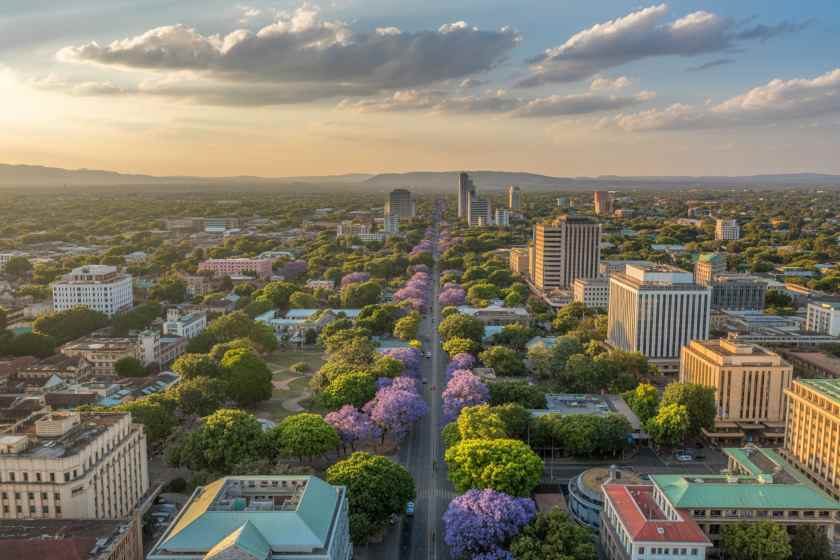
A landlocked country in the heart of sub-Saharan Africa is quietly reshaping how goods move — and how travelers arrive — across an entire region. Zambia, long recognized as a critical transit corridor connecting central Africa to coastal ports, is now accelerating infrastructure investments that could transform it into one of Southern Africa’s most important logistics and tourism hubs.
The country’s geographic position alone tells part of the story. Zambia shares borders with eight nations and sits at the crossroads of trade routes linking ports in Mozambique, Tanzania, Namibia, and Angola. For decades, that location made it essential for freight movement. Now, with ongoing and planned upgrades to road and rail systems, that same geography is being leveraged to attract tourists and business travelers in significant new ways.
What’s unfolding in Zambia isn’t just an infrastructure story — it’s a broader signal that landlocked nations can compete for regional influence when they invest strategically in connectivity.
Why Zambia’s Location Makes It Central to Southern African Trade
Being landlocked is typically seen as an economic disadvantage. No direct port access means higher shipping costs, longer transit times, and dependence on neighboring countries’ infrastructure. But Zambia has turned this constraint into a kind of leverage — by becoming the country that everyone moving goods through central and southern Africa has to pass through.
The trade corridors running through Zambia connect some of the continent’s busiest port cities to inland markets stretching from the Democratic Republic of Congo to Zimbabwe. That makes Zambia’s roads and rail lines not just a domestic concern but a regional priority. When Zambia upgrades its transport network, the benefits ripple outward to multiple economies.
Officials have noted that the country’s role as a transit hub has historically been underleveraged from a tourism standpoint. Travelers passing through Zambia en route to destinations like Victoria Falls or Kafue National Park often moved quickly across the country rather than stopping to explore. Better infrastructure changes that calculus — making Zambia a destination rather than a waypoint.
The Infrastructure Push: What’s Being Built and Why It Matters for Tourism
Zambia’s current investment push focuses on two core areas: road networks and rail systems. Both are being upgraded with an eye toward reducing travel times, improving safety, and increasing the volume of people and goods that can move efficiently across the country.
For tourists, the practical impact is direct. Better roads mean easier access to national parks, wildlife reserves, and cultural sites that were previously difficult to reach without specialized vehicles or significant travel time. Improved rail connections open up new possibilities for scenic overland travel — a growing segment of the tourism market that tends to attract longer-stay, higher-spending visitors.
The upgrades also benefit tourism professionals operating in the country. Tour operators, lodge owners, and hospitality businesses all depend on reliable transport links to get guests in and out efficiently. Infrastructure gaps have historically been one of the most common barriers to scaling tourism operations in sub-Saharan Africa, and Zambia is working to close those gaps.
| Connectivity Focus | Key Route / Link | Primary Benefit |
|---|---|---|
| Road Networks | Internal routes connecting major cities and parks | Faster, safer tourist and freight movement |
| Rail Systems | Regional corridors across Southern Africa | Expanded overland travel and cargo capacity |
| Trade Corridors | Links to ports in Mozambique, Tanzania, Namibia, Angola | Reduced transit costs for regional trade |
| International Connectivity | Gateways connecting central Africa to global markets | Increased business and leisure traveler arrivals |
What This Means for Travelers Planning a Southern Africa Trip
If you’re planning travel to Southern Africa, Zambia’s infrastructure trajectory is worth paying attention to. The country is home to some of the continent’s most celebrated natural attractions — including its share of Victoria Falls, Kafue National Park, and South Luangwa National Park — and improved transport links are making these destinations meaningfully more accessible.
For budget-conscious travelers, better roads and rail options can translate directly into lower ground transport costs and a wider range of accommodation choices beyond the luxury lodge market. For adventure travelers, improved infrastructure opens up remote areas that were previously accessible only to the most determined visitors.
Business travelers also stand to benefit. As Zambia cements its role as a logistics hub, the country is attracting increased investment and commercial activity — which typically drives improvements in hotels, conference facilities, and international air connections over time.
The dual focus on logistics and tourism isn’t accidental. Zambia’s planners appear to recognize that trade infrastructure and tourist infrastructure are largely the same thing: roads, bridges, and rail lines serve both freight trucks and safari vehicles. Building for one audience strengthens the offering for the other.
What Happens Next for Zambia’s Logistics and Tourism Ambitions
Zambia’s infrastructure push is described as a combination of ongoing and planned projects, meaning the transformation is still in progress. The country is not presenting a finished product but rather a trajectory — one that signals sustained government commitment to transport development over the coming years.
For the tourism sector specifically, the next phase likely involves translating improved physical connectivity into stronger international marketing and airlift development. Infrastructure alone doesn’t fill hotel rooms; awareness and direct flight routes matter just as much. Zambia will need to pair its ground-level improvements with a compelling pitch to international travelers who may not yet think of the country as a primary destination.
Regional cooperation will also play a role. Several of the trade corridors running through Zambia depend on coordinated investment across multiple countries. Progress on those shared routes will determine how quickly the full benefits of Zambia’s internal upgrades can be realized at a regional scale.
What’s clear is that the foundation is being laid. For a landlocked nation that has long served as a corridor for others, Zambia is increasingly building the infrastructure to become a destination in its own right.
Frequently Asked Questions
Why is Zambia considered important for Southern African trade?
Zambia sits at the crossroads of trade routes connecting ports in Mozambique, Tanzania, Namibia, and Angola, making it a critical transit point for goods moving between central Africa and the wider world.
How will Zambia’s transport upgrades affect tourism?
Improved roads and rail systems are expected to make national parks and tourist destinations more accessible, reduce travel times, and lower barriers for both budget and adventure travelers.
What types of infrastructure is Zambia investing in?
The country is focusing on upgrades to both road networks and rail systems, with the goal of improving connectivity within Zambia and across the broader Southern African region.
Which countries does Zambia’s trade network connect to?
Zambia’s transport corridors link to ports and markets in Mozambique, Tanzania, Namibia, and Angola, among other neighboring nations.
Are Zambia’s infrastructure projects already complete?
The projects are described as a mix of ongoing and planned developments, meaning the full transformation is still in progress rather than fully realized.
Who benefits most from Zambia’s infrastructure improvements?
Both tourists and business travelers stand to benefit, along with tourism professionals such as tour operators and lodge owners who depend on reliable transport links to run their operations effectively.


Leave a Reply