
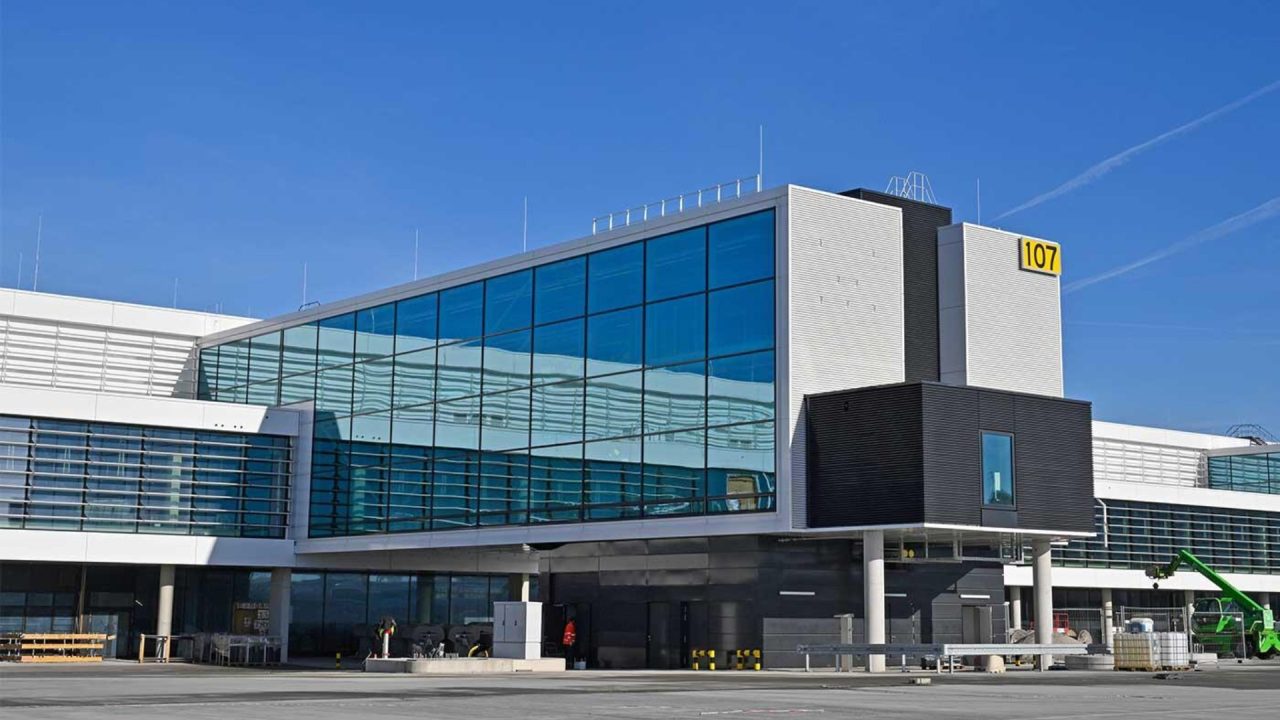
Have you ever stood in a crowded airport terminal, watching the departure board blur into a wall of delays, and wondered why no one planned for this? Someone, somewhere, clearly did not see the surge coming. Munich Airport did.
On April 13, 2025, Munich Airport officially opened its new Terminal 1 Pier, a project described as one of Bavaria’s largest infrastructure investments in recent memory. The timing is not accidental. Arab travel to Europe has been climbing steadily, and Munich positioned itself squarely at the center of that shift.
This is not just a story about concrete and glass. It is a story about who gets to move through the world comfortably, and how airports are quietly reshaping global tourism flows. Here are five reasons this expansion matters, ranked from significant to genuinely transformative.
The 6 Million Passenger Threshold That Changes Munich’s Ranking
Numbers matter in aviation. They determine which airlines commit routes, which lounges get built, and which airports get taken seriously as intercontinental hubs. Munich’s new Terminal 1 Pier adds capacity for up to 6 million additional passengers per year.
That figure is enormous in context. For comparison, many mid-size European airports handle fewer than 10 million total passengers annually. Munich was already Europe’s seventh-busiest airport before this expansion. Adding 6 million seats of capacity is not incremental growth; it is a structural leap.
The pier directly strengthens non-Schengen connections, the category that covers flights arriving from outside Europe’s borderless travel zone. That includes virtually every major Arab-world departure point: Dubai, Riyadh, Doha, Abu Dhabi, Cairo, and Casablanca.
Why Non-Schengen Capacity Is the Real Prize for Arab Travelers
Most casual travelers do not think about Schengen versus non-Schengen terminals. But for anyone flying in from the Arab world, this distinction shapes nearly every minute of their airport experience.
Non-Schengen passengers go through passport control, customs processing, and often separate security lanes. When those facilities are undersized, the experience deteriorates fast. Long queues, cramped waiting areas, and insufficient retail options create a first impression that no amount of in-flight hospitality can undo.
Munich’s new pier directly addresses this bottleneck. By expanding non-Schengen processing and waiting capacity, the airport signals that it understands where its growth is actually coming from. The Arab travel market is not a niche; it is one of the fastest-growing long-haul travel segments in the world.
| Feature | Before T1 Pier | After T1 Pier |
|---|---|---|
| Non-Schengen Capacity | Limited, under pressure | Expanded, modernized |
| Annual Passenger Capacity | Existing terminals only | +6 million per year |
| Premium Lounges | Standard offering | New dedicated lounges |
| Retail Spaces | Existing footprint | New retail added |
| Processing Technology | Legacy systems | Modernized processing |
Premium Lounges and Retail as a Statement About Who Munich Wants to Welcome
Infrastructure tells a story. When an airport invests in premium lounges and expanded retail alongside raw capacity, it is making a deliberate statement about the kind of traveler it is courting.
Arab travelers, particularly from Gulf Cooperation Council countries, consistently rank among the highest-spending tourist segments globally. They tend to book business and first-class cabins at higher rates than average, spend significantly in airport retail, and often travel in family groups that amplify per-trip spending.
Munich’s decision to include new lounges and retail spaces in the Terminal 1 Pier is not accidental generosity. It is a calculated investment in the experience layer that converts first-time visitors into repeat travelers. A traveler who remembers Munich as comfortable and well-appointed is far more likely to route through it again.
“Munich Airport opens its new Terminal 1 Pier in April, adding non-Schengen capacity, premium lounges, and modernized processing.”
— Airways Magazine, April 2025
How the T1 Pier Fits Germany’s Broader Infrastructure Ambitions
This expansion does not exist in isolation. It is part of Germany’s ongoing effort to maintain its airports as premier gateways in a continent where competition for long-haul traffic is fierce.
Frankfurt remains Germany’s largest airport, but Munich has been closing the gap for years. The T1 Pier is a clear signal that Munich intends to compete aggressively for intercontinental routes, not just serve as a regional hub for European short-haul flights.
Germany as a destination has also been actively cultivating relationships with Gulf state tourism boards and travel agencies. The airport expansion aligns with that diplomatic and commercial groundwork. Infrastructure investment is, in a very real sense, a form of foreign policy.
The Arab Travel Surge Is the Real Story Behind Every Brick of This Pier
Here is the number one reason this expansion matters, and it goes deeper than any single terminal or lounge.
Arab travel to Europe has been on a sustained upward trajectory. Travelers from Saudi Arabia, the UAE, Qatar, Kuwait, and other Gulf states are not just visiting more frequently; they are staying longer, spending more, and increasingly choosing destinations based on the quality of the airport experience itself.
Munich recognized this shift early. The city already has strong appeal: world-class museums, proximity to the Alps, Oktoberfest’s global brand, and a reputation for order and cleanliness that resonates strongly with Gulf travelers. But none of that matters if the gateway into the city feels chaotic or undersized.
By building infrastructure that specifically addresses non-Schengen processing, Munich is essentially saying: we built this for you. That kind of intentional welcome is rare in European aviation, where most expansion projects are driven by aggregate numbers rather than specific market signals.
The pier also modernizes processing technology, which matters enormously for traveler experience. Faster biometric checks, more efficient customs lanes, and updated baggage systems reduce the friction that turns an otherwise pleasant journey into an exhausting one.
Airlines will notice. When an airport invests this heavily in the infrastructure supporting a specific route category, it sends a signal to carriers that the airport is serious about growing those connections. That can translate into new routes, increased frequencies, and better scheduling for travelers flying between Munich and cities like Dubai, Riyadh, or Doha.
The ripple effects extend beyond the airport itself. Every additional Arab traveler who routes through Munich and into Bavaria represents spending in hotels, restaurants, retail, and cultural attractions. The T1 Pier is, in economic terms, a multiplier.
What This Means for Travelers Planning a Munich Trip in 2025
If you are flying into Munich from outside the Schengen zone this year, the experience should be measurably better than it was twelve months ago. More space, more retail options, newer lounges, and faster processing all contribute to an arrival that sets the right tone for whatever comes next.
For travelers connecting through Munich to other European destinations, the expanded non-Schengen capacity also means shorter queues during peak periods. Summer 2025 will be the first real stress test of the new pier, and all signs suggest it is ready.
For the Arab travel market specifically, Munich has just made itself a much more compelling option compared to other European hubs. The question is no longer whether Munich can handle the demand. The question is whether the rest of the city is ready for what comes through those new gates.
Airports are, at their best, the first sentence of a story. Munich just rewrote its opening line.
Frequently Asked Questions

You Might Also Like
Hundreds Stranded at Queen Alia Airport After 28 Flights Canceled
Twenty-eight flights canceled. Twenty-seven more delayed. Hundreds of passengers left waiting, rerouting, and scrambling for…

Japan Canceled Its Cherry Blossom Festival to Fight Overtourism
Japan canceled the Fujiyoshida Cherry Blossom Festival in 2026 as overtourism overwhelms Mount Fuji viewing…
LaGuardia Collision Alert Failed Before Impact, NTSB Investigators Reveal
A runway alerting system that was supposed to prevent exactly this kind of disaster failed…
Leave a Reply