
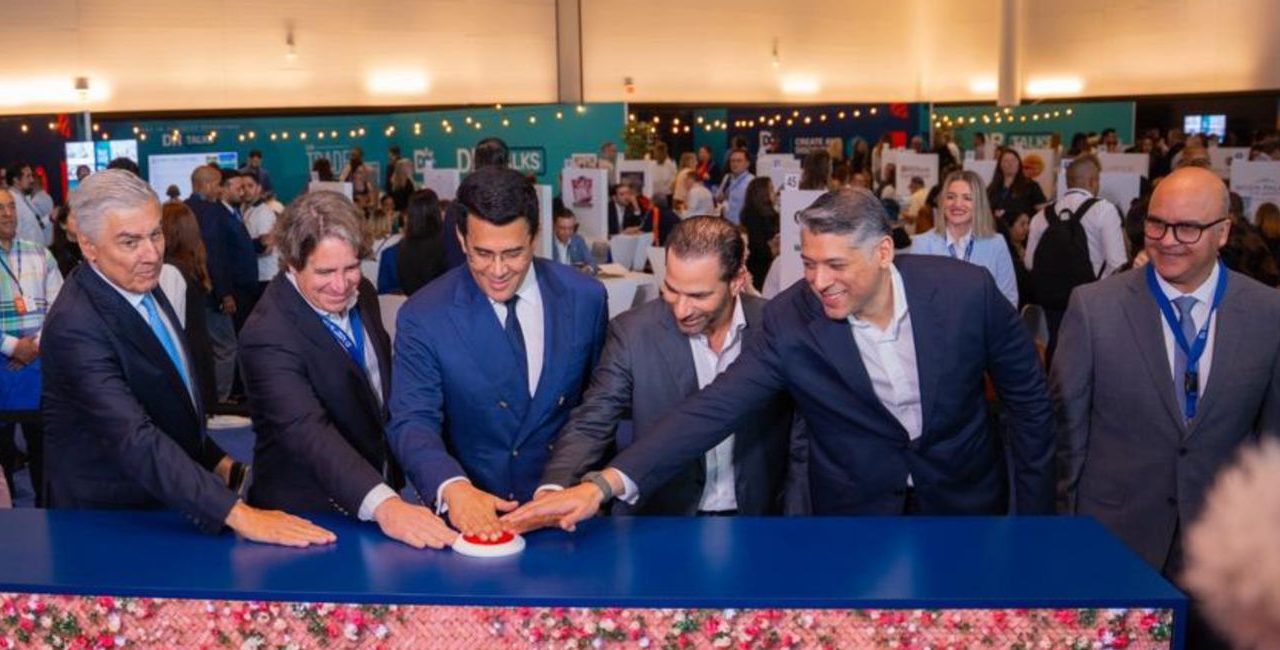
The window for underestimating the Dominican Republic as a destination closed sometime around April 8, 2026. That’s the date when tourism officials, travel executives, and over 1,200 industry professionals descended on Miami for Trade Show 2026, where the DR made one thing unmistakably clear: this is no longer a one-resort, one-story destination.
The numbers are hard to ignore. Tourism now generates a $15 billion economic impact for the country. A record-breaking 11.6 million visitors arrived in 2025. And at the Miami event alone, 1,800 business deals were struck in a matter of days. The trajectory isn’t leveling off; it’s accelerating.
But the more telling story isn’t the headline figure. It’s what’s driving that growth. Five distinct tourism segments emerged from the trade show as the real engines behind the DR’s rise, and they’re reshaping what travelers can expect from the Caribbean’s most visited country. Here’s the countdown.
#5: Cultural Tourism — History You Can Actually Touch
Most travelers arrive in the Dominican Republic and head straight for the beach. They miss something remarkable. The DR is home to Santo Domingo’s Colonial Zone, the oldest continuously inhabited European settlement in the Americas, a UNESCO World Heritage Site that predates Jamestown by over a century.
At the Miami trade show, cultural tourism was presented not as a niche offering but as a primary growth segment. Operators showcased programs built around Afro-Caribbean history, Taíno indigenous heritage, and the country’s layered colonial past. These aren’t museum experiences. They’re immersive, locally guided, neighborhood-level encounters.
The pitch resonated with attendees. American visitors, in particular, cite the DR’s cultural mix as a key reason to return beyond a single beach trip. As one recurring survey finding shows, travelers want more than sun; they want context for where they are.
| Segment | Key Draw | Target Traveler | Growth Status |
|---|---|---|---|
| Cultural | Colonial Zone, Taíno history | History & arts travelers | Emerging |
| Eco | Los Haitises, whale watching | Nature & conservation focus | Rapid growth |
| Adventure | Pico Duarte, wild coastlines | Active, 25–45 demographic | Rapid growth |
| Luxury | New hotel openings, Cap Cana | High-spend international visitors | Accelerating |
| Overall Economy | $15B impact, 1,800 deals | All visitor types | Record-setting |
#4: Eco-Tourism — The Wilderness Most Visitors Never See
Ask most people to picture the Dominican Republic and they’ll describe a swim-up bar. Ask a biologist the same question and they’ll describe something entirely different: Los Haitises National Park, a mangrove labyrinth and limestone karst landscape unlike anything else in the Caribbean.
Then there’s Samaná Bay, one of the world’s premier destinations for watching humpback whale migrations each winter. The DR’s eco-tourism operators have been quietly building infrastructure around these sites for years. The Miami trade show signaled that the investment phase is over. The marketing phase has begun.
Officials presented eco-tourism as a deliberate strategy to attract high-value visitors who stay longer and spend more per day than standard resort tourists. This isn’t a side attraction anymore. It’s a pillar of the country’s next phase of tourism growth.
#3: Adventure Tourism — The Caribbean’s Highest Peak Is Here
Here’s a fact that surprises most travelers: the highest mountain in the entire Caribbean is not in Jamaica, not in Puerto Rico, and not in Cuba. It’s in the Dominican Republic. Pico Duarte rises to 3,098 meters, and summiting it requires a multi-day trek through cloud forest terrain that feels nothing like any Caribbean resort experience.
Adventure tourism was presented at Trade Show 2026 as one of the fastest-growing inbound categories. Beyond hiking, operators highlighted kitesurfing at Cabarete (consistently ranked among the world’s top kitesurfing destinations), white-water rafting on the Yaque del Norte, and cliff diving along the Samaná Peninsula.
The segment targets an active demographic, roughly 25 to 45 years old, that actively avoids all-inclusive packages and seeks itinerary control. For the DR, capturing this traveler means competing with Costa Rica and Colombia, not just other beach destinations. The trade show messaging made clear that officials believe they can win that competition.
“Beyond the famous resorts, you can hike the Caribbean’s highest peak, explore wild coastlines, or dive into New World history — the Dominican Republic offers a mix of stunning beaches, diverse landscapes, and vibrant culture.”
— People Also Ask, Dominican Republic tourism research
#2: Luxury Tourism — New Hotels and High-Stakes Investment
The luxury segment may be the single most consequential shift happening in Dominican tourism right now. Trade Show 2026 in Miami spotlighted a wave of new luxury hotel openings, concentrated in areas like Cap Cana, Punta Cana, and the Las Terrenas coastline.
These aren’t modest upgrades to existing all-inclusives. They represent major international hospitality brands entering or expanding in the DR, betting that the country can attract the same high-net-worth traveler currently choosing the Maldives, Turks and Caicos, or St. Barts.
The business logic is compelling. The DR already has the infrastructure, the airlift, and the name recognition. What it has historically lacked is the perception of exclusivity. That perception is being actively rebuilt. The 1,800 business deals signed at the Miami trade show were heavily weighted toward luxury partnerships, according to reporting from Travel and Tour World.
Canadian travelers, who represent one of the DR’s largest visitor groups, are particularly responsive to this shift. Research consistently shows that Canadian visitors to the DR report a lifestyle quality, community warmth, and affordability that exceed expectations built on generic resort-town assumptions. The luxury expansion doesn’t eliminate that warmth; it frames it differently for a higher-spending audience.
#1: The $15 Billion Economic Machine — What That Number Actually Means
A $15 billion tourism economy sounds like a talking point until you understand what it represents in practice. For the Dominican Republic, tourism accounts for a substantial share of total GDP. It funds roads, hospitals, schools, and the kind of stable political environment that makes travel feel safe.
The record 11.6 million visitors who arrived in 2025 didn’t just generate a number. They generated employment for hundreds of thousands of Dominican workers across hospitality, transportation, food service, construction, and retail. The multiplier effect of this level of tourism spending runs through the entire economy.
What makes the Miami Trade Show 2026 significant is not just what was announced. It’s who was in the room. Approximately 1,200 industry professionals attended, including executives from major travel agencies, tour operators, airlines, and hotel groups. The 1,800 deals struck there will shape what product gets built, what packages get marketed, and where investment flows over the next three to five years.
The DR’s leadership used the event to make a precise argument: this is not a market that has peaked. It is a market that is restructuring toward higher-value, higher-diversity tourism while maintaining the mass-market beach business that built its reputation. That’s a difficult balance to strike, and not every destination that has tried it has succeeded.
But the fundamentals are strong. The DR has geographic diversity that most Caribbean nations cannot match: desert in the southwest, rainforest in the north, alpine terrain in the center, coral coastline in the east. It has a cultural depth rooted in Taíno, African, and European history. It has airlift from every major North American hub. And it now has a coordinated industry pitch, built over the floor of a Miami trade show, that frames all of that for the modern traveler.
What Travelers Should Actually Do With This Information
The countdown above isn’t just a ranking of tourism types. It’s a map of the DR’s ambition and, more practically, a guide for what kind of trip is now possible there that wasn’t effectively marketed before.
If you’ve been to Punta Cana once and assumed you’d seen the Dominican Republic, the trade show’s message is aimed directly at you. There is a version of the DR that includes a three-day Pico Duarte summit, a morning boat through Los Haitises mangroves, an afternoon in the Colonial Zone’s cobblestone streets, and a final night at a new luxury property in Cap Cana.
The 1,800 business deals signed in Miami will begin translating into bookable products and packages over the coming months. Travel agents attending the show left with inventory and pricing structures that haven’t fully hit the consumer market yet. Checking with a DR-specialist travel agent before mid-2026 could mean earlier access to those new luxury properties and structured adventure programs before demand fully catches up.
A $15 billion economy doesn’t build itself on beach chairs alone. The Dominican Republic has been working on the rest of the story for years. Miami 2026 was the moment it decided the world was ready to hear it.
The question now isn’t whether the DR can sustain this growth. It’s whether travelers will catch up to what the country has already become.
Frequently Asked Questions

You Might Also Like
Carnival Warns PortMiami Passengers: 17 Ships This Weekend Changes Everything
More than 140,000 cruise passengers are expected to pass through PortMiami in a single weekend…
Southwest Airlines Cleared Over Nut Allergy Complaint But Bigger Questions Remain
A federal complaint accusing Southwest Airlines of discriminating against passengers with severe food allergies was…

Colombian Air Force Hercules Crash in Putumayo Left Dozens Fighting to Survive
At least 66 people were killed on March 23, 2026, when a Colombian Air Force…
Leave a Reply