
▶ Read transcript
Here’s what you need to know about NASA’s DART mission and why it matters for our future. In September 2022, NASA deliberately crashed a small spacecraft into an asteroid called Dimorphos at about 14,000 miles per hour. The goal was to change its orbit by at least 73 seconds. The actual result was a 33-minute change, exceeding expectations by a factor of 25. That alone is remarkable, but there’s more. The debris blasted off the asteroid’s surface doubled the force of the impact, meaning future deflection missions could use smaller, cheaper spacecraft. And perhaps most historic, DART achieved the first ever measurable alteration of a celestial body’s orbit around the Sun. Confirming that tiny change required 22 observations by volunteer astronomers with backyard telescopes spread across multiple continents. The takeaway here is clear: planetary defense is no longer theoretical. If we spot a threatening asteroid early enough, we now have a proven tool to nudge it off course.
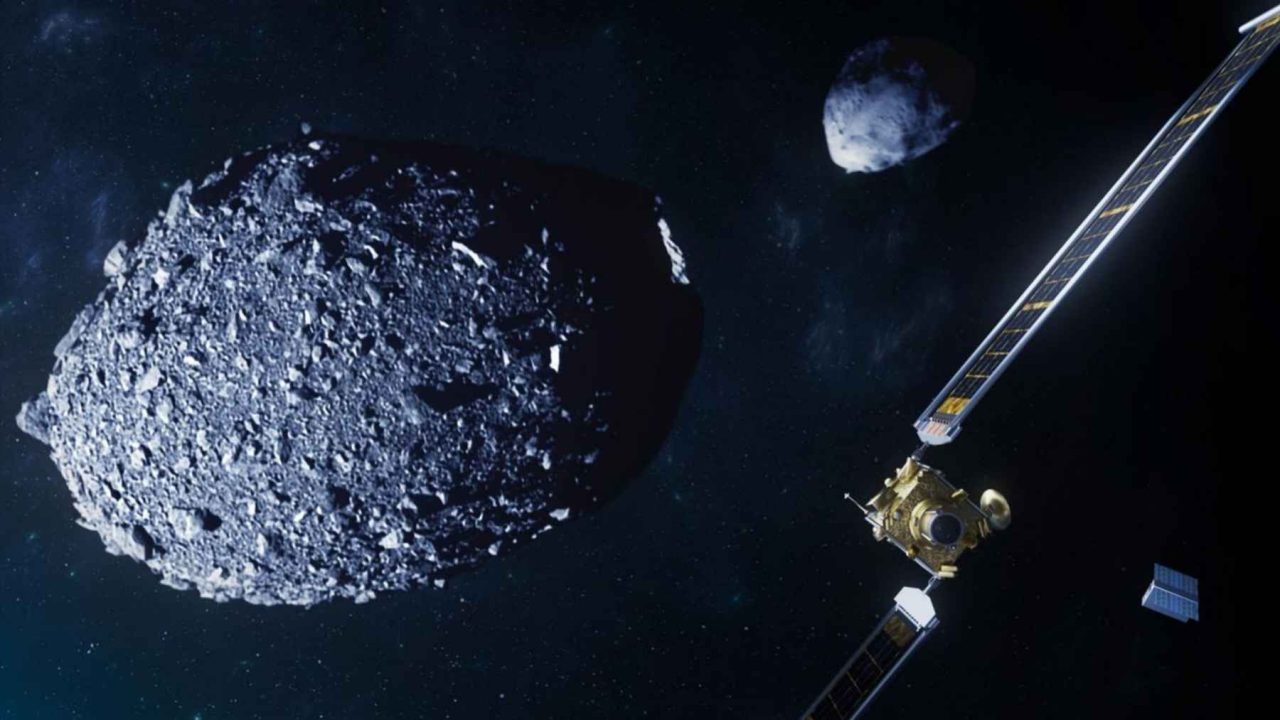
At 7:14 p.m. Eastern on September 26, 2022, a vending-machine-sized spacecraft traveling at roughly 14,000 miles per hour slammed into a 560-foot-wide asteroid named Dimorphos. The feed from its onboard camera went black. Across NASA’s Applied Physics Laboratory, engineers erupted in cheers.
They had just punched an asteroid in the face. And the universe flinched.
Why Ranking DART’s Achievements Matters for Planetary Defense
NASA’s Double Asteroid Redirection Test was always ambitious. But the full scope of what it accomplished has only come into focus through years of follow-up analysis. Each discovery layered on the last, building a case that humanity now possesses a genuine tool against cosmic threats.
What follows is a countdown of the five most significant achievements from the DART mission, ranked by their implications for our species’ long-term survival. Some were expected. Others stunned even the scientists who planned the mission.
| Achievement | Measured Result | Significance |
|---|---|---|
| Orbit of Dimorphos around Didymos shortened | ~33 minutes | Exceeded expectations by 25x |
| Momentum enhancement factor | ~2x | Debris doubled the push |
| Solar orbit shortened | ~0.15 seconds per 770-day orbit | First human alteration of a solar orbit |
| Orbital speed change | ~1.7 inches per hour | Measurable shift in Sun-relative velocity |
| Stellar occultations recorded | 22 (Oct 2022–Mar 2025) | Citizen science validated the result |
Five: Volunteer Astronomers Who Made the Impossible Measurable
Detecting a 0.15-second change in a 770-day orbit requires absurdly precise measurements. Professional telescopes alone couldn’t do it. So NASA turned to an unlikely army: amateur astronomers with backyard equipment.
Between October 2022 and March 2025, volunteer observers recorded 22 stellar occultations. These are moments when the asteroid system passes in front of a distant star, briefly dimming its light. Each occultation provided a data point for the system’s exact position.
“This result would not have been possible without volunteer observers.”
— Steve Chesley, NASA Jet Propulsion Laboratory
This wasn’t a polite nod to citizen science. It was a factual statement. The professional infrastructure simply didn’t exist to gather enough occultation data across the required geographic spread. Volunteers scattered across multiple continents filled the gaps.
Four: The Debris That Doubled the Punch
DART weighed about 1,260 pounds at impact. Against a 560-foot-wide asteroid, that’s like throwing a golf ball at a building. Yet the effect was far larger than the spacecraft’s momentum alone would predict.
The momentum enhancement factor came in at roughly two. In plain terms, the spray of rocky debris blasted off Dimorphos’s surface acted like a rocket exhaust, pushing the asteroid in the same direction as the impact. The ejecta roughly doubled the effective force.
This matters enormously for future deflection missions. If engineers can count on ejecta to amplify their push, they need smaller, cheaper spacecraft. Or they gain more deflection per mission. Either way, a factor of two transforms the economics of planetary defense.
Three: 33 Minutes Shaved Off a 12-Hour Orbit
Before DART launched, NASA’s minimum benchmark for success was changing Dimorphos’s orbit around Didymos by at least 73 seconds. The actual result? Approximately 33 minutes.
That’s not a modest overperformance. That’s exceeding the goal by a factor of roughly 25. The 12-hour orbit that Dimorphos traced around its larger partner, Didymos, was permanently shortened.
Didymos, the larger partner, measures about 2,640 feet across, close to half a mile. Dimorphos orbits this larger rock like a tiny moon. By shortening that orbit so dramatically, DART proved that kinetic impactors work. Not theoretically. Not in simulations. In actual space, against an actual asteroid.
Two: A Speed Change Measured in Inches Per Hour
After the impact, the Didymos-Dimorphos system’s orbital speed around the Sun changed by about 1.7 inches per hour. That sounds laughably small. It is small. And that’s precisely what makes it so remarkable.
Measuring a 1.7-inch-per-hour velocity change on an object roughly 6.8 million miles away required combining radar observations, ground telescope data, and those 22 citizen-science occultations. The precision involved is staggering.
Consider the math. Over a single 770-day orbit, that 1.7-inch-per-hour change accumulates. Over ten orbits, the positional difference grows. Over a century, it becomes enormous. Planetary defense doesn’t need brute force. It needs lead time and precision.
One: Humanity’s First Measurable Alteration of a Solar Orbit
Here is the achievement that rewrites the record books. New analysis confirms that DART’s impact shortened the Didymos-Dimorphos system’s roughly 770-day solar orbit by about 0.15 seconds. For the first time in history, a human-made object measurably altered the path of a natural celestial body around the Sun.
A newly discovered 500-foot asteroid has a 1-in-50 chance of hitting Earth in 15 years. You lead a planetary defense committee with a limited budget. You must choose how to allocate resources.
Let that settle. Humans have left footprints on the Moon. We’ve landed robots on Mars. We’ve sent probes beyond the solar system. But we had never, until this moment, changed the orbit of something that wasn’t ours.
The distinction between changing a local orbit (Dimorphos around Didymos) and a solar orbit (the whole system around the Sun) is critical. The local change was the intended test. The solar change is the proof of concept for actual planetary defense.
Any asteroid threatening Earth would be on a solar orbit. Deflecting it means changing that solar orbit enough to create a miss instead of a hit. DART demonstrated this is physically possible. The 0.15-second shift is tiny, yes. But the mission wasn’t designed to maximize solar orbit change. It was a test. And the test passed.
What the Numbers Mean for a Real Threat
If an asteroid were discovered on a collision course with Earth 20 years out, a DART-style impactor launched early enough could accumulate sufficient orbital change to avert disaster. The key variable is time. A 0.15-second orbital shift per impact, compounded over decades, adds up.
Multiple impacts could multiply the effect. Larger spacecraft could increase it further. And the momentum enhancement factor of two means nature itself helps. The ejecta from each impact contributes nearly as much as the spacecraft.
The European Space Agency’s Hera mission, launched in October 2024, is currently en route to Didymos to conduct a detailed post-impact survey. Its findings will refine our understanding of how the impact crater formed, how much material was ejected, and how Dimorphos’s internal structure responded. This data will directly inform the design of future deflection missions.
Why the Order of These Breakthroughs Shapes Our Future
Each achievement on this list builds on the one before it. Citizen scientists provided the data. Debris physics doubled the force. The local orbit change proved kinetic impact works. The speed measurement showed we can detect absurdly small changes. And the solar orbit shift confirmed that humanity can, in fact, move a rock around the Sun.
Planetary defense is no longer theoretical. It is an engineering discipline with a successful field test. The question has shifted from “Can we deflect an asteroid?” to “How much warning do we need?”
That second question is far more solvable. It requires better telescopes, earlier detection, and continued investment in survey programs. The physics works. The technology works. The citizen science infrastructure works.
For 66 million years, since an asteroid ended the reign of the dinosaurs, life on Earth has been defenseless against impacts from space. As of September 2022, that era is over. We threw a punch at the cosmos, and the cosmos moved.
The next question isn’t whether we can do it again. It’s whether we’ll be watching closely enough to know when we need to.



Leave a Reply