
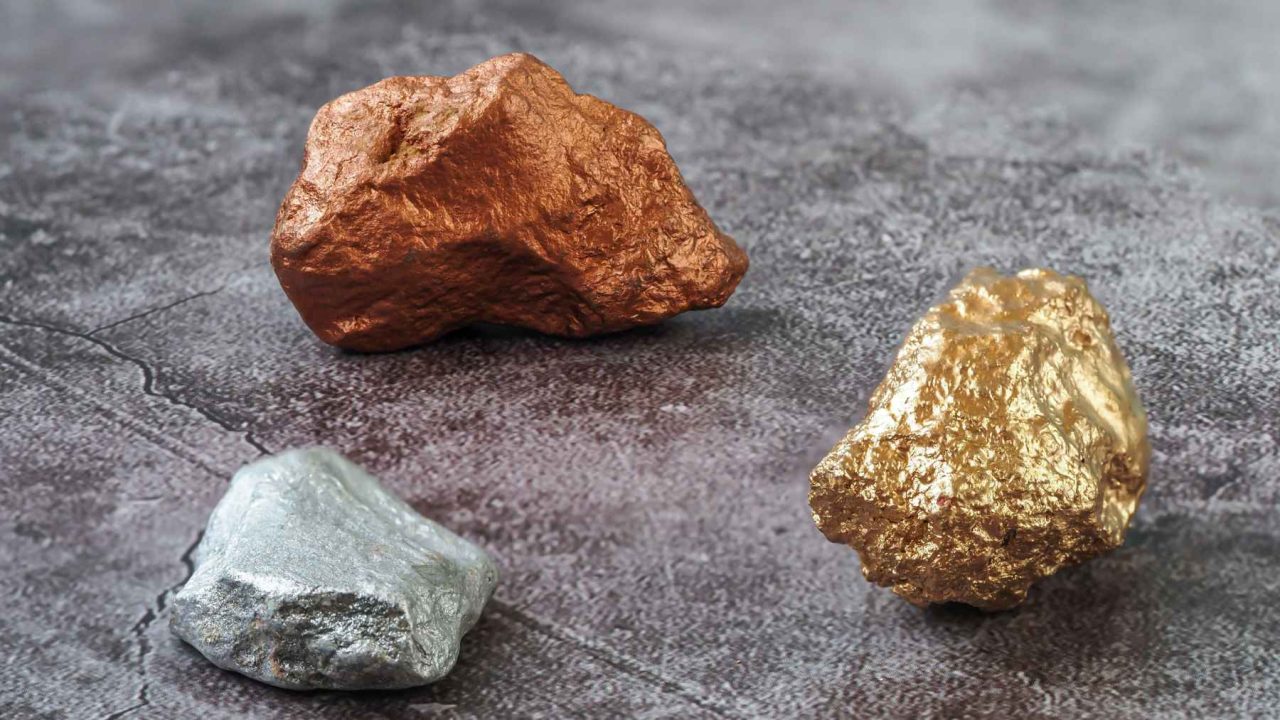
Eighty-four billion pounds. That number sat in a technical report for weeks before most people outside the mining world noticed it. When they did, the conversation changed fast.
That is how much copper geologists now believe lies beneath a stretch of the Andes Mountains straddling the border of Argentina and Chile, in a remote high-altitude zone called the Vicuña district. Add to that tens of millions of ounces of gold and silver, and you have what Lundin Mining CEO Jack Lundin described as “one of the most significant greenfield discoveries in the last 30 years.”
For context: the United States consumed roughly 1.8 million metric tons of copper in a recent year. The deposit at Vicuña holds enough to dwarf that figure many times over. It is not a modest find. It is, by almost any measurement, a once-in-a-generation event.
The Vicuña District: Two Deposits, One Staggering Number
The Vicuña district is not a single mine. It is a combination of two adjacent deposits: Filo del Sol and Josemaria. Together, they sit more than 4,000 meters above sea level, in one of the most geologically active and logistically demanding regions on the planet.
The resource estimate follows Canada’s NI 43-101 reporting standards, which divide confidence levels into two categories. The higher-confidence category alone lists approximately 29 billion pounds of contained copper, 32 million ounces of gold, and 659 million ounces of silver. That would already rank as an extraordinary find.
But then comes the lower-confidence category, adding roughly 55 billion pounds of copper, 49 million ounces of gold, and 808 million ounces of silver on top of that. Combined, the numbers become almost difficult to hold in your mind at once.
| Category | Copper (lbs) | Gold (oz) | Silver (oz) |
|---|---|---|---|
| Higher-Confidence (Measured & Indicated) | ~29 billion | 32 million | 659 million |
| Lower-Confidence (Inferred) | ~55 billion | 49 million | 808 million |
| Combined Total | ~84 billion | 81 million | 1.467 billion |
The Andes have always yielded mineral wealth. Copper, tin, silver, and gold have been pulled from these mountains for centuries. But the Vicuña district represents something the region has not seen in a very long time: a deposit large enough to shift global supply curves by itself.
BHP’s $2.1 Billion Bet and What Drove It
In 2024, mining giant BHP announced a plan to enter a 50-50 joint venture on the Vicuña district, expecting to pay approximately $2.1 billion in cash for its stake. For a company the size of BHP, that figure is meaningful. It signals conviction, not speculation.
The timing was deliberate. The International Energy Agency has warned that copper demand could climb by roughly 30 percent by 2040 under current policy settings, driven largely by electric vehicles, grid infrastructure, and renewable energy systems. Every solar panel, every wind turbine, every EV charging station requires copper in quantities that existing mines were not built to supply.
BHP’s decision to move this aggressively was not made in a vacuum. The company had watched the clean energy transition accelerate. It had also watched copper prices respond. A deposit of this scale, with confirmed high-confidence resources already certified under NI 43-101 standards, was precisely the kind of anchor asset that made the bet rational.
What made Vicuña especially compelling was its combination of metals. Copper alone would have been significant. But gold and silver at those concentrations turn the economics into something different entirely. High-grade gold offsets development costs. Silver adds another revenue layer. The three together create a project that can weather commodity price cycles better than most.
“Filo del Sol is one of the most significant greenfield discoveries in the last 30 years.”
— Jack Lundin, CEO, Lundin Mining
The Obstacles That 4,000 Meters of Altitude Create
The story of Vicuña is not simply a story of abundance. It is also a story of difficulty. The deposit sits at extreme altitude, in a landscape that offers very little mercy to engineers or workers.
Water access in the high Andes is both scarce and politically contested. Indigenous communities in the region have raised concerns about the environmental cost of large-scale extraction at this elevation. The ecosystem above 4,000 meters is fragile. Glacial meltwater, which feeds lowland agriculture and drinking supplies for thousands of people, runs through the same zones where drilling equipment now operates.
Argentina has been actively working to position itself as a more mining-friendly jurisdiction. The country holds some of the largest untapped mineral reserves on the continent but has historically struggled to attract long-term capital investment. The Vicuña discovery is already reshaping that narrative. Foreign capital, once cautious, is paying closer attention to what Argentine permitting timelines actually look like in practice.
Chile, for its part, is not a passive observer. The deposit straddles the border, and binational cooperation on permitting, infrastructure, and environmental oversight will be central to whether this project moves forward on a practical timeline or gets mired in jurisdictional complexity.
What 84 Billion Pounds Actually Means for the Clean Energy Transition
The numbers attached to Vicuña become more legible when placed against global supply projections. The world currently mines roughly 22 million metric tons of copper per year. Analysts have long flagged a looming structural deficit as energy transition demand outpaces the rate at which new deposits are brought online.
| Deposit | Location | Copper Reserves | Gold Content | Altitude | Status |
|---|---|---|---|---|---|
| Vicuña District (Filo del Sol + Josemaria) | Andes, Argentina/Chile Border | 84 Billion lbs | 81 Million oz total | 4,000+ meters | Greenfield Discovery |
| Escondida | Atacama Desert, Chile | ~119 Billion lbs est. | Minor byproduct | 3,050 meters | Active (World's Largest Mine) |
| Grasberg | Papua, Indonesia | ~40 Billion lbs | 67 Million oz | 4,200 meters | Active |
| Collahuasi | Northern Chile | ~50 Billion lbs | Minor byproduct | 4,400 meters | Active |
| Resolution | Arizona, USA | ~12 Billion lbs | Minor byproduct | Underground | Permitting Stage |
Most of the copper deposits discovered in recent decades have been lower-grade and more expensive to develop than historical mines. The industry has been running on aging assets for years. Vicuña, with its scale and its combined metal profile, represents the kind of project the market has been watching for.
That does not mean the deposit will be developed quickly or without cost. Turning a resource estimate into a producing mine at this altitude, across two jurisdictions, with the environmental scrutiny that now follows any large-scale extraction project, will take years. Some analysts estimate first production is still a decade away at minimum.
The gap between what the ground holds and what humans can extract responsibly is the central tension in the Vicuña story. And it is a tension that will not resolve quietly.
The Reflection: A Mountain That Changes the Ledger
There is something almost vertiginous about the scale of what sits beneath those Andean ridgelines. The people who first drilled into the rock at Filo del Sol were following geological signals: the shape of the terrain, the chemistry of the soil, the faint signature of porphyry copper systems that geologists have learned to read over generations of fieldwork.
What they found confirmed their models and then exceeded them. The Vicuña district is not a geological curiosity. It is a deposit that the world’s largest mining company considered worth a $2.1 billion entry bet, in a market that was already nervous about long-term supply.
The Andes have kept secrets before. Mummies found at extreme altitude. Stone structures visible only from the air. Ancient mining routes carved by civilizations that understood something fundamental about what these mountains contained.
What changes now is the scale of the ambition pointed at them, and the urgency behind it. Copper is no longer just infrastructure metal. It is the connective tissue of the energy future. And the largest known concentration of it on Earth is sitting above 4,000 meters, waiting for humanity to decide what it is actually willing to do to reach it.

Leave a Reply