
▶ Read transcript
Here’s what you need to know about a major new arrival in Great Smoky Mountains National Park. The Joro spider, a palm-sized invasive species from East Asia, was officially confirmed in the park in October 2024. These spiders build golden webs up to ten feet across and have been spotted mainly around Cades Cove during peak visitor season. First detected in Georgia back in 2014, the species has spread rapidly across the Eastern Seaboard, partly because young spiders use a technique called ballooning, riding silk strands on wind currents to travel miles at a time. The good news is they pose almost no risk to humans since their fangs can barely penetrate skin. The real worry is ecological. They can outcompete the park’s hundred-plus native spider species for food and territory. If you visit the Smokies and spot one, skip the shoe and instead photograph it and upload it to the free iNaturalist app. That citizen science data is far more valuable than squashing any single spider.
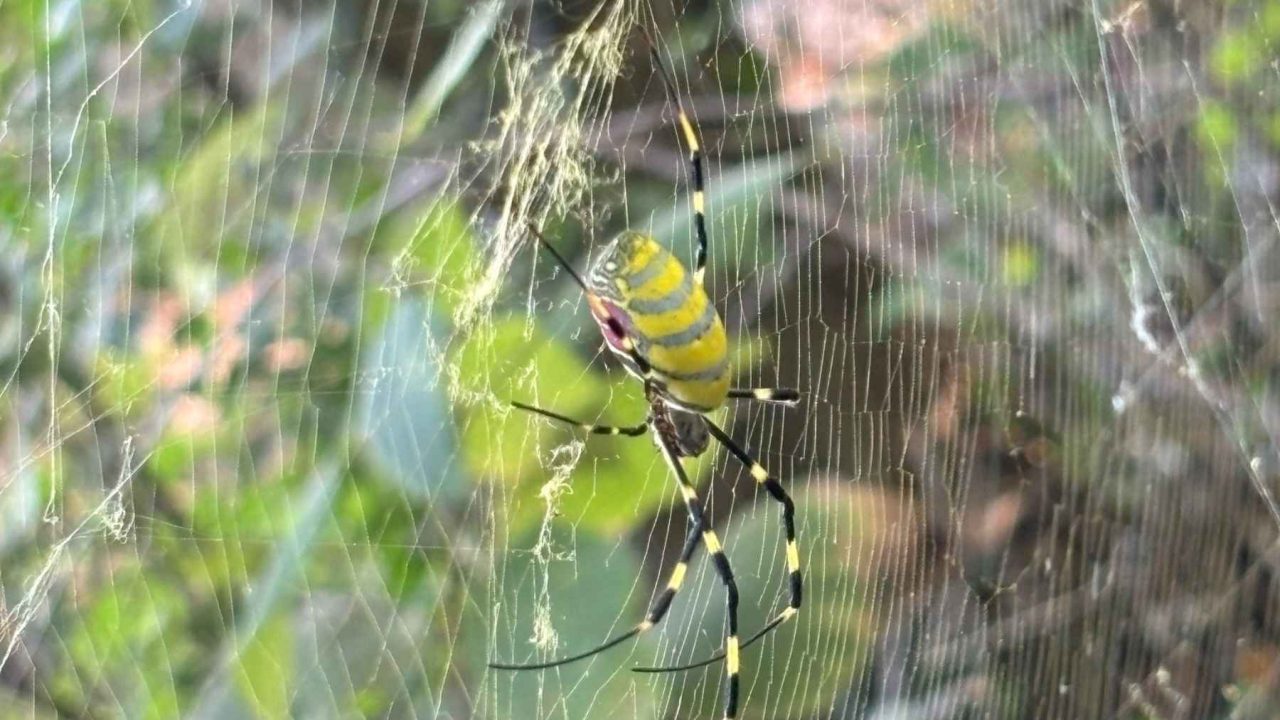
A hiker rounds a bend on the 11-mile loop road through Cades Cove, camera in hand, expecting elk or maybe a black bear in the morning mist. Instead, strung between two trail shelters, a golden web nearly 10 feet across catches the light. At its center sits a spider the size of a human palm, its body striped in vivid yellow and bluish-green.
This is the Joro spider. And it has officially moved into one of the most visited national parks in the United States.
First Confirmed Joro Sighting in the Smokies: October 2024
Great Smoky Mountains National Park, which straddles the border of Tennessee and North Carolina, recorded its first confirmed Joro spider sighting in October 2024. The park draws more than 12 million visitors in a typical year, making it consistently one of the most popular national parks in the country.
Most sightings so far have clustered in and around Cades Cove, the park’s beloved valley known for its wildlife viewing and historic homesteads. Visitors have reported encounters primarily during October and November, when adult females reach their full, imposing size.
On August 28, park officials took an unusual step. They asked visitors to photograph any suspected Joro spiders and upload the images using the free iNaturalist app. Citizen science, it turns out, may be the fastest way to track an invasion already in progress.
From a Shipping Container in Georgia to the Eastern Seaboard
The Joro spider (Trichonephila clavata) is native to East Asia, where it thrives in Japan, Korea, Taiwan, and China. It was first identified in north Georgia in 2014, likely arriving as a hitchhiker on international shipping containers.
In the decade since, the species has spread across multiple states along the East Coast. Researchers at the University of Georgia published findings suggesting the invasive arachnids could eventually colonize most of the Eastern Seaboard.
| Feature | Joro Spider (Invasive) | Native Orb Weavers |
|---|---|---|
| Adult female body + leg span | 3–4 inches | Typically 1–2 inches |
| Web diameter | Up to ~10 feet | Usually 2–3 feet |
| Coloration (female) | Bright yellow, bluish-green bands, red underside | Varies; often brown or muted tones |
| Origin | East Asia (Japan, Korea, China, Taiwan) | Native to North America |
| Threat to humans | Low; fangs rarely penetrate skin | Low to none |
| Ecological concern | Can outcompete native orb weavers | Integral part of local food webs |
The speed of this range expansion is partly explained by a remarkable dispersal mechanism. Young Joro spiders use a technique called “ballooning.” They release a strand of silk into the wind, which catches air currents and carries the tiny spiderlings miles from their birthplace. It is essentially parasailing for arachnids.
This means the Joro spider doesn’t need human help to travel, though it certainly benefits from it. Shipping containers, cars, and outdoor furniture all serve as unintentional transport vehicles.
Golden Webs on Trail Shelters: Where Joros Set Up Shop
Clemson University invasive species expert David Coyle has studied the Joro spider’s behavioral patterns closely. He noted that Joro spiders prefer to build their webs in places where people go, including shelters, porches, and similar structures.
“Joro spiders like to put their webs on places people go, including shelters and similar structures.”
— David Coyle, Clemson University invasive species expert
This behavioral preference makes encounters in a heavily trafficked park almost inevitable. Cades Cove alone sees thousands of visitors daily during peak autumn season, precisely when adult female Joro spiders are at their largest and most conspicuous.
The University of Georgia Extension describes adult females as bright yellow with bluish-green banding and red markings on the underside. Males are dramatically smaller, roughly a quarter of a female’s size. The webs themselves shimmer gold in sunlight, an almost beautiful calling card for an uninvited guest.
Low Risk to Humans, High Risk to Native Ecosystems
If you’re planning a trip to the Smokies and feeling uneasy, there’s some reassurance. Joro spiders are considered low risk for people and pets. Their fangs are small and generally cannot penetrate human skin. Even when they do bite, the venom is mild, comparable to a bee sting at worst.
The real concern isn’t what the Joro spider does to people. It’s what the species does to ecosystems.
Joro spiders can outcompete native orb weavers for food and web-building territory. Their enormous webs intercept more insects, and their tolerance for cooler temperatures gives them a seasonal advantage that many native species lack. Over time, this competitive pressure could reduce native spider populations in affected areas.
Great Smoky Mountains National Park is one of the most biodiverse places in North America. It hosts more than 100 native spider species. Introducing a dominant competitor into that web of relationships could ripple outward in ways scientists are still working to understand.
Ballooning Spiderlings and the Path Forward
The ballooning dispersal method is particularly concerning for containment efforts. A single egg sac can hold hundreds of spiderlings. When those juveniles take to the air, they can travel significant distances on wind currents. Traditional pest control methods are largely useless against a species that disperses through the atmosphere.
Researchers are now focused on understanding the Joro spider’s long-term ecological impact rather than trying to eradicate it. The consensus among entomologists is that the species is here to stay. The question is no longer whether the Joro spider will spread, but how profoundly it will reshape the ecosystems it enters.
You’re hiking through Cades Cove in October and spot a massive golden web stretched between two trail shelter posts. A bright yellow and blue-green spider the size of your palm sits at the center. Your kids are with you.
For the Great Smoky Mountains, the arrival of the Joro spider adds a new chapter to an old story. Invasive species, from hemlock woolly adelgids to wild boars, have challenged this park before. Each time, the ecosystem has absorbed the blow and adapted, though never without cost.
What Visitors to the Smokies Should Know in 2026
If you visit Great Smoky Mountains National Park this fall, you may encounter Joro spiders along trails, near shelters, and especially in Cades Cove. Their webs are large and conspicuous. The spiders themselves are strikingly colorful.
Resist the urge to kill them. One squished spider won’t slow an invasion driven by atmospheric dispersal and hundreds of eggs per sac. Instead, photograph any Joro spider you see and upload the image to iNaturalist. Every data point helps researchers track the spread and understand the species’ behavior in new habitats.
The Joro spider didn’t choose the Smokies. It arrived the way most invasive species do: quietly, accidentally, and with consequences no one fully anticipated. Now, in a park that protects one of the last great temperate forests on Earth, a palm-sized spider with a golden web is writing itself into the story, one silk thread at a time.




Leave a Reply