
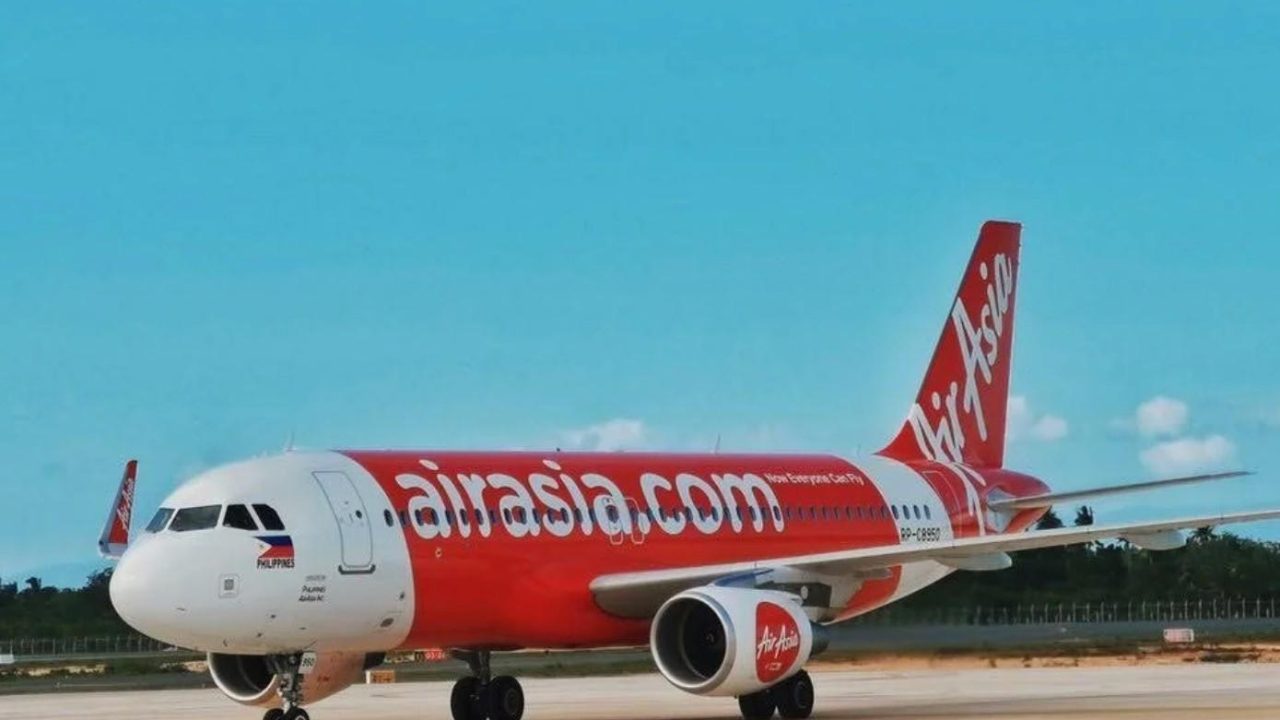
AirAsia X Berhad carried 18.9 million passengers in the first quarter of 2026 — a figure that signals the airline group is on the verge of a full recovery and is reshaping what low-cost long-haul travel looks like across Asia.
The number is more than a milestone. It reflects the combined power of an airline group that has consolidated all of its AirAsia aviation assets under a single operational umbrella for the very first time. The result is a unified carrier of significant scale, now competing aggressively across some of the world’s fastest-growing travel corridors.
What makes this moment especially striking is the breadth of markets driving that growth. Indonesia has now joined China, Malaysia, Thailand, the Philippines, Cambodia, and India as a key demand engine for the group — suggesting that the recovery is not concentrated in one region but spread across an entire continent of travelers eager to fly again.
(function(){var wrp=document.getElementById(“paap_stat_69dea154700b78.08197114”);if(!wrp)return;var ids=[“paap_stat_69dea154700b78.08197114_c0″,”paap_stat_69dea154700b78.08197114_c1”];var dur=1800;function ease(t){return 1-Math.pow(1-t,3);}function anim(){ids.forEach(function(id){var el=document.getElementById(id);if(!el)return;var tgt=parseFloat(el.getAttribute(“data-target”))||0;var pfx=el.getAttribute(“data-prefix”)||””;var sfx=el.getAttribute(“data-suffix”)||””;var dec=parseInt(el.getAttribute(“data-decimals”))||0;var st=null;function step(ts){if(!st)st=ts;var p=Math.min((ts-st)/dur,1);var v=ease(p)*tgt;el.textContent=pfx+v.toFixed(dec)+sfx;if(p<1)requestAnimationFrame(step);}requestAnimationFrame(step);});}if("IntersectionObserver" in window){var obs=new IntersectionObserver(function(e){e.forEach(function(en){if(en.isIntersecting){anim();obs.disconnect();}});},{threshold:0.2});obs.observe(wrp);}else{anim();}})();
The Consolidation That Changed Everything
AirAsia X Berhad’s first-quarter 2026 report is notable for a reason beyond the passenger numbers. This is the first-ever consolidated operational report the group has released since bringing all of its AirAsia aviation assets together under one structure. That integration was not cosmetic — it fundamentally changed how the airline manages capacity, routes, and demand.
By unifying operations, the group has created what analysts would describe as a low-cost aviation giant with the scale to compete across both domestic and international markets simultaneously. Where individual carriers once operated in silos, the consolidated group can now deploy aircraft, adjust frequencies, and respond to demand spikes across multiple countries with far greater efficiency.
The timing matters too. The first quarter of 2026 captured festive travel surges, school holiday periods, and the continued rebound of Chinese outbound tourism — all of which fed directly into AirAsia X’s expanded route network.
Which Markets Are Powering the 18.9 Million Surge
The demand story here is genuinely multi-market. ASEAN routes have been a core driver, with Malaysia, Thailand, the Philippines, and Cambodia all contributing meaningfully to the group’s passenger volumes. These are markets where AirAsia has historically held strong brand recognition and loyal customer bases.
China routes have also played a significant role. The resumption and expansion of Chinese outbound travel has been one of the defining trends in Asian aviation since 2023, and AirAsia X has positioned itself to capture a meaningful share of that demand on medium and long-haul corridors.
India and Indonesia represent the newer growth frontiers. Both countries have large, underserved populations of price-sensitive travelers — exactly the demographic that low-cost carriers are built to serve. Indonesia’s inclusion alongside the more established markets signals that the group is successfully penetrating a market that has historically been dominated by domestic carriers.
| Market | Role in AirAsia X Recovery |
|---|---|
| Malaysia | Core hub and primary demand base |
| China | Key international route driver with strong outbound demand |
| Thailand | Strong ASEAN contributor to passenger volumes |
| Philippines | Active ASEAN market supporting regional growth |
| Cambodia | Contributing ASEAN market within consolidated network |
| India | Emerging growth frontier with large price-sensitive traveler base |
| Indonesia | Newest market to join recovery surge in 2026 |
What This Means for Travelers Across the Region
For anyone flying between Southeast Asia, South Asia, and East Asia, the implications of this consolidation are real and practical. A larger, more unified AirAsia X means more routes, more frequencies, and — in a competitive low-cost environment — continued pressure on fares.
Travelers in Indonesia, in particular, are gaining access to a broader network than was previously available to them under a fragmented structure. The ability to connect through a single group’s ecosystem, with coordinated schedules and pricing, makes international travel more accessible for millions of people who have historically relied on more expensive full-service carriers.
The festive travel surge that helped fuel Q1 2026 numbers also illustrates something important: demand across these markets is not just recovering — it is growing. Airlines that have the capacity and the route network in place are capturing that growth directly.
For budget-conscious travelers planning trips across Asia later in 2026, the near-full recovery status of AirAsia X suggests seat availability and competitive fares will remain a feature of the market rather than a temporary promotional strategy.
What Happens Next for AirAsia X in 2026
The group’s near-full recovery trajectory heading into the remainder of 2026 sets up a pivotal year. With the consolidation of aviation assets now complete and the first unified operational report published, the focus shifts to sustaining and building on the momentum established in the first quarter.
Expanded capacity across ASEAN and the continued development of China, India, and Indonesia routes are likely to remain priorities. The group has demonstrated that its consolidated structure can capture demand across a wide range of markets simultaneously — a capability that will only become more valuable as Asian travel demand continues its upward trend.
The near-full recovery label also carries strategic weight. It signals to investors, partners, and airports across the region that AirAsia X is no longer in rebuilding mode — it is in growth mode. How aggressively the group pursues new routes and additional capacity in the coming quarters will be the next chapter of this story.
Frequently Asked Questions
How many passengers did AirAsia X carry in Q1 2026?
AirAsia X Berhad carried 18.9 million passengers in the first quarter of 2026, marking a major milestone in the group’s recovery.
Which countries are driving AirAsia X’s passenger growth?
China, Malaysia, Thailand, the Philippines, Cambodia, India, and Indonesia have all been identified as key markets contributing to the group’s 2026 surge.
What is significant about AirAsia X’s Q1 2026 report?
It is the first-ever consolidated operational report released after the group integrated all AirAsia aviation assets under a single unified structure.
Is AirAsia X fully recovered from its post-pandemic downturn?
The group has described its position as a near-full recovery in 2026, suggesting it is approaching but has not yet confirmed complete restoration to pre-disruption levels.
What role did festive travel play in the Q1 2026 numbers?
Festive travel surges were cited as a contributing factor to the strong passenger volumes recorded during the first quarter of 2026.
Why is Indonesia’s inclusion in the growth markets significant?
Indonesia joining the list of demand-driving markets signals AirAsia X is successfully expanding into a large, price-sensitive travel market that had not previously been a headline contributor to group growth.



Leave a Reply