
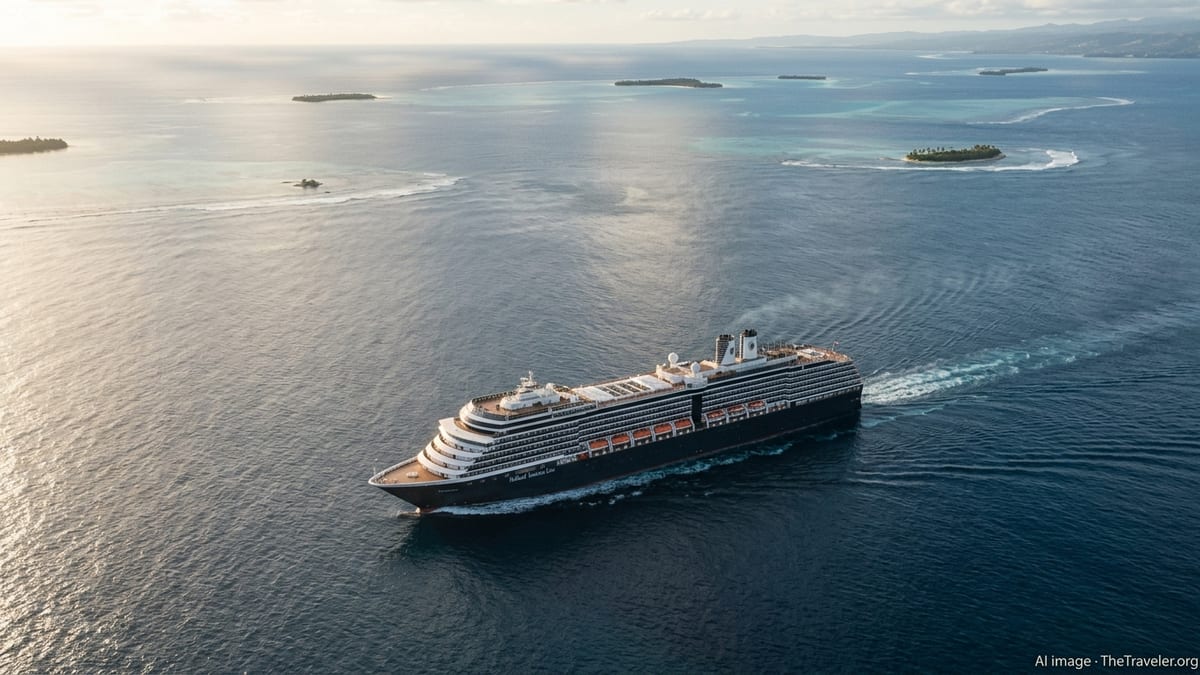
A single voyage. Thirty-six nights. Four distinct regions of the world — and one ship threading them all together. Holland America Line’s Noordam has set sail on a repositioning voyage that takes passengers from Australia through the South Pacific, French Polynesia, Hawaii, and onward to the West Coast of the United States. It’s a journey that covers an extraordinary sweep of the Pacific, and it’s drawing attention for more than just its length.
Repositioning voyages like this one are rarely just logistical moves for cruise lines. They’re increasingly being recognized as a way to open up destinations that standard itineraries rarely touch — and for travelers, that means access to ports that would otherwise require significant effort and expense to reach independently.
The Noordam’s current sailing reflects a broader pattern in the cruise industry: as demand for new and immersive experiences grows, cruise lines are leaning into longer, more ambitious routes that blend well-known destinations with genuinely off-the-beaten-path stops.
What the Noordam’s 36-Night Voyage Actually Covers
The voyage departs from Australia and heads across the Pacific, making its way through some of the most remote and visually stunning island groups on the planet before arriving on the U.S. West Coast. The route isn’t just long — it’s deliberately varied, mixing popular tourist destinations with lesser-visited ports that don’t typically appear on standard cruise itineraries.
Among the confirmed ports of call, several stand out for their relative rarity on cruise schedules:
- Vava’u, Tonga — A remote island group known for its humpback whale population and traditional Polynesian culture, rarely accessible by mainstream cruise lines.
- Rarotonga, Cook Islands — The largest of the Cook Islands, offering a mix of volcanic peaks, coral reefs, and a distinctly unhurried pace of life.
- Fakarava, French Polynesia — A UNESCO Biosphere Reserve and one of the most pristine atolls in the Pacific, known for exceptional diving and near-total seclusion.
- Kailua-Kona, Hawaii — A popular Hawaiian stop, but one that serves as a natural gateway between the deep Pacific and the final leg of the journey toward the U.S. mainland.
The combination of established and emerging ports is a deliberate strategy — one that gives experienced cruisers something genuinely new while still offering the familiar anchors that first-time long-voyage passengers tend to appreciate.
Key Details: Ports, Regions, and Route at a Glance
| Port of Call | Region | Notable Feature |
|---|---|---|
| Departure: Australia | Australia / Pacific Rim | Voyage origin |
| Vava’u | Tonga | Remote Polynesian island group |
| Rarotonga | Cook Islands | Largest Cook Island, volcanic landscape |
| Fakarava | French Polynesia | UNESCO Biosphere Reserve atoll |
| Kailua-Kona | Hawaii | Gateway to the Hawaiian Islands |
| Final Destination: U.S. West Coast | North America | Voyage end point |
The voyage also positions the Noordam for its upcoming Alaska season — a region that Holland America has long treated as one of its signature offerings. The West Coast arrival essentially sets the ship up for a natural geographic transition northward.
Why This Kind of Voyage Matters for Cruise Tourism
There’s a real argument to be made that repositioning voyages are one of the most underappreciated products in the cruise market. Because ships need to move between seasonal home ports anyway, passengers essentially get to ride along on a journey that the line has to make regardless — often at more competitive pricing than peak-season sailings, and with a depth of destination coverage that shorter itineraries can’t match.
For the destinations themselves, the impact is meaningful. Ports like Fakarava and Vava’u don’t have the infrastructure to handle massive cruise ship traffic, but they benefit enormously from the kind of measured, high-interest visitation that a single ship on a long voyage can bring. Travelers on a 36-night sailing tend to be engaged, curious, and willing to spend time and money in each port — exactly the kind of visitor that smaller, less-touristy destinations thrive on.
Observers of the cruise industry have noted that this model — pairing famous destinations with genuinely rare stops — is becoming an increasingly effective way for lines to differentiate their premium offerings in a crowded market.
The Alaska Connection: What Comes After the Pacific
The Noordam’s Pacific repositioning isn’t the end of the story. The vessel’s West Coast arrival sets the stage for its Alaska season, extending the geographic arc from the warm waters of French Polynesia all the way to the glaciers and wildlife corridors of the Alaskan coastline. That’s a remarkable range for a single ship within a single sailing calendar.
Alaska remains one of the most sought-after cruise destinations in North America, and Holland America has built a significant part of its brand identity around the region. Positioning the Noordam to transition from a South Pacific repositioning voyage directly into Alaska sailings reflects the line’s broader strategy of keeping its fleet in high-demand, high-engagement waters throughout the year.
For travelers considering the Alaska season, the Noordam’s repositioning voyage also signals that the ship arrives with a well-traveled crew and a passenger community that has already experienced some of the Pacific’s most extraordinary stops — which tends to set a particular tone for the sailings that follow.
Frequently Asked Questions
How long is the Noordam’s repositioning voyage?
The voyage is 36 nights, departing from Australia and ending on the U.S. West Coast.
Which cruise line operates the Noordam?
The Noordam is operated by Holland America Line.
What are the key ports of call on this voyage?
Confirmed ports include Vava’u in Tonga, Rarotonga in the Cook Islands, Fakarava in French Polynesia, and Kailua-Kona in Hawaii, among others.
What happens after the Noordam reaches the West Coast?
Based on
Why do cruise lines operate repositioning voyages?
Repositioning voyages allow ships to move between seasonal home ports while carrying passengers, offering longer and often more diverse itineraries than standard sailings.
Is Fakarava a typical cruise destination?
No — Fakarava is a UNESCO Biosphere Reserve atoll in French Polynesia and is considered one of the more rarely visited stops on any mainstream cruise itinerary.

Leave a Reply