
Are you still dropping $300 a night to shuffle through the same Instagram-famous streets that 4 million other people photographed last year? Somewhere between Savannah’s crowds and Sedona’s parking apocalypse, America quietly built a second tier of extraordinary small towns that most visitors completely bypass. These are places with genuine history, working restaurants with locals at the bar, and hotel rooms under $120. From lesser-known national parks to small towns with surprisingly impressive attractions, these underrated destinations run the gamut — and in 2026, with overtourism pressuring iconic spots coast to coast, the timing to find them matters.
with real data
across list (vs. $225 at tourist hubs)
on this list (Beaufort, NC)
major metro
Why America’s Small Town Renaissance Is Peaking in 2026
Read more: The Monk Who Moved America: Seattle’s Historic Vivekananda Statue
Wondering where to go in 2026? Consider this your guide to quiet coastal paradises, contemporary design cities, and new ways to travel far — and far doesn’t always mean international. Domestic airfare averaged $322 per round trip in early 2026, according to the Bureau of Transportation Statistics. Driving 150 miles to a genuine, undiscovered American town costs roughly $18 in gas at current prices. The economics are undeniable. Add remote-work flexibility and the collapse of the five-day weekend obligation, and suddenly Winthrop, Washington — population 408, Okanogan County — becomes a serious option, not just a curiosity.
From coastal destinations with stunning natural scenery to hidden gems with historic architecture, these are some of the most beautiful places most Americans drive past without stopping. (I made that exact mistake with Ste. Genevieve, Missouri — blew through on I-55 three times before I finally pulled off and found the oldest permanent European settlement west of the Mississippi, founded in 1735, with French Creole architecture that has no business being that intact.)
Towns #25 Through #11: The First Wave Worth Your Windshield Time
These fourteen towns all rank high on character and low on crowds. Brief entries don’t mean lesser quality — these lesser-visited spots are well worth the trek.
- #25 — Philipsburg, MT (Granite County, pop. ~900): Sapphire mining, Victorian main street, hotel rooms at $72/night.
- #24 — Ste. Genevieve, MO (Ste. Genevieve County, founded ): Oldest intact French colonial architecture in the U.S.; B&B rooms from $95.
- #23 — Beaufort, NC (Carteret County, pop. ~4,100, founded ): Third-oldest town in North Carolina; waterfront ferry to wild horse island, $5 round trip.
- #22 — Thibodaux, LA (Lafourche Parish, pop. ~14,700): Cajun food at $12 a plate, LSU AgCenter Botanic Gardens, 45 miles from New Orleans.
- #21 — Pella, IA (Marion County, pop. ~10,400): Dutch-settled in ; working windmill; Tulip Time Festival draws 150,000 visitors — then empties out again.
- #20 — Winthrop, WA (Okanogan County, pop. ~408): 240 miles of cross-country ski trails, walkable 1883-style Western downtown, lodging from $98.
- #19 — Bisbee, AZ (Cochise County, pop. ~5,200): Perched at 5,538 ft elevation, copper-boom architecture from the 1880s, average July high of 84°F vs. Phoenix’s 106°F.
- #18 — Marble Falls, TX (Burnet County, pop. ~7,000): Colorado River access, 70 miles west of Austin, downtown meal under $15.
- #17 — Coupeville, WA (Island County/Whidbey Island, pop. ~1,900): One of the oldest towns in Washington state, founded ; Penn Cove mussels served fresh at $14/bowl; ferry from Mukilteo is $14 round trip.
- #16 — Mineral Point, WI (Iowa County, pop. ~2,500): Cornish miners’ cottages from the lead-mining era; galleries in limestone buildings; inn rooms at $105.
- #15 — Apalachicola, FL (Franklin County, pop. ~2,400): Produces 90% of Florida’s oysters; 19th-century cotton warehouses on the waterfront; Airbnbs from $110/night.
- #14 — Natchitoches, LA (Natchitoches Parish, pop. ~17,400): Oldest permanent settlement in the Louisiana Purchase territory, established ; meat pies at Lasyone’s, $6 each.
- #13 — Bardstown, KY (Nelson County, pop. ~14,200): Self-declared “Bourbon Capital of the World” with 11 distilleries within 15 miles; tour tickets average $18.
- #12 — Lewisburg, WV (Greenbrier County, pop. ~3,700): Named Budget Travel’s “Coolest Small Town in America”; Greenbrier Valley Theatre tickets at $25; median home price $189,000.
- #11 — Dahlonega, GA (Lumpkin County, pop. ~6,600): Site of America’s first major gold rush in , 65 miles north of Atlanta; winery tasting rooms charge $12–$18.
From Greece to Panama, discover 25 underrated beach towns where you can enjoy ocean views, welcoming communities, and a more affordable life — and that’s a legitimate counterpoint. International Living’s 2025 Global Retirement Index ranked coastal Mexico and Portugal as more affordable per square foot than most American small towns, even the cheap ones. A retiree in Sayulita, Mexico pays roughly $800/month for a one-bedroom vs. $1,100 in Bardstown, KY. If pure cost-per-experience is the metric, some foreign alternatives do win on raw math. But visa requirements, healthcare access gaps, and the specific pleasure of knowing a place shares your national history tip the balance back toward the U.S. list.
Towns #10 Through #2: Where the Drive Actually Pays Off
#10 — Galena, IL (Jo Daviess County, pop. ~3,200): 85% of buildings are listed on the National Register of Historic Places. Ulysses S. Grant lived here; his home is open to the public for $5. Chicago is 165 miles east.
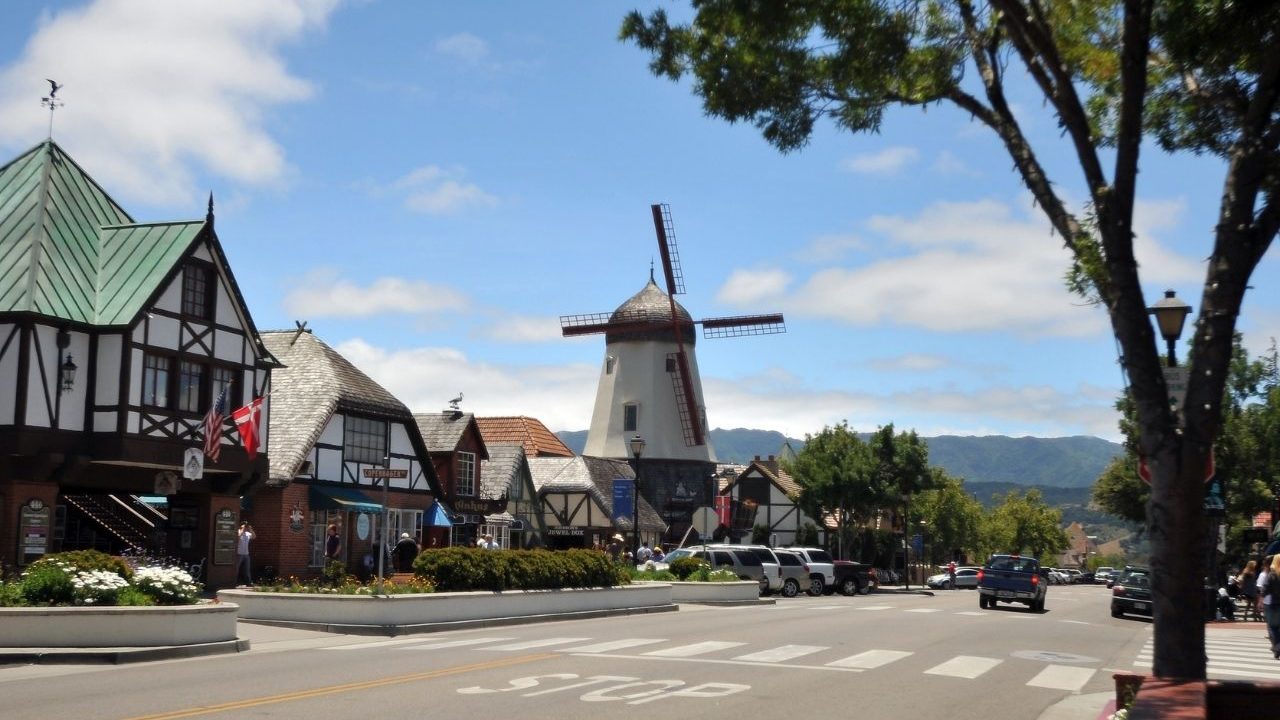
#9 — Leavenworth, WA (Chelan County, pop. ~2,200): Bavarian architectural makeover in turned a dying timber town into a destination earning $6 million annually in lodging taxes. Rooms at Der Sportsmann run $135/night — cheaper than Seattle by $120.
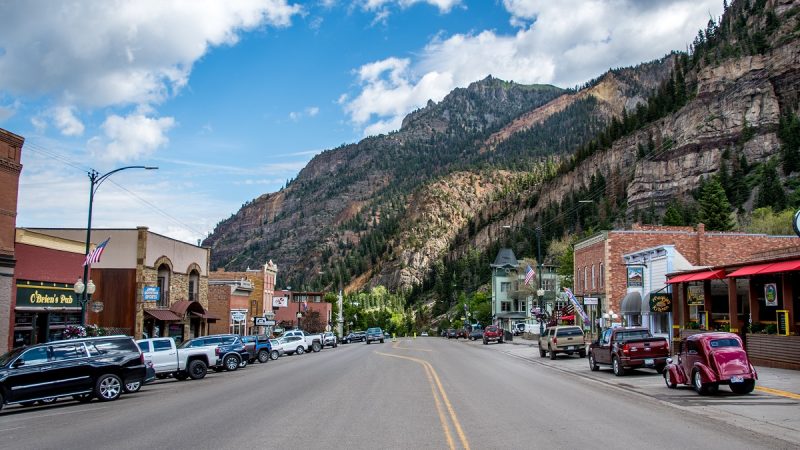
#8 — Silverton, CO (San Juan County, pop. ~600): Elevation 9,318 feet. The Durango & Silverton Narrow Gauge Railroad has run continuously since ; tickets cost $119 round trip from Durango, 45 miles south. One of the least-visited towns in Colorado despite being genuinely spectacular.
#7 — Madison, IN (Jefferson County, pop. ~11,000): The Ohio River façade contains 133 consecutive blocks of 19th-century architecture — one of the largest intact historic districts in the Midwest. Average B&B rate: $109/night, about 40% less than what you’d pay in comparable Louisville neighborhoods.
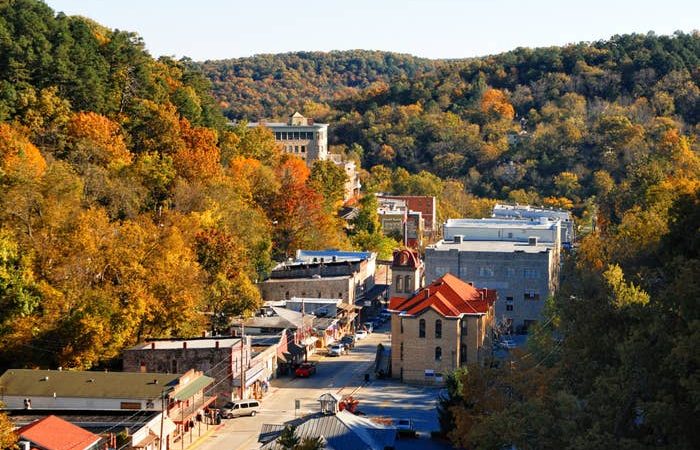
#6 — Eureka Springs, AR (Carroll County, pop. ~2,100): Victorian resort town founded in ; 63 springs; entire downtown listed on the National Register. Hotel Crescent, built 1886, charges $149/night. No traffic lights anywhere in the historic district.
#5 — Marfa, TX (Presidio County, pop. ~1,900): The Chinati Foundation, opened , displays Donald Judd’s permanent large-scale installations across 340 acres; admission $25. The mysterious Marfa Lights have been documented since . El Cosmico campsite pods rent for $95/night.
#4 — Beaufort, SC (Beaufort County, pop. ~13,500): Founded , second-oldest city in South Carolina. Antebellum plantation architecture survived the Civil War because Union troops occupied it as a hospital center. Inn at Palmetto Bluff charges $199/night — still $100 cheaper than comparable Charleston properties on the same weekend.
#3 — Port Townsend, WA (Jefferson County, pop. ~10,100): Victorian seaport at the northeast tip of the Olympic Peninsula, founded . Believed it would become the Pacific Northwest’s major port; San Francisco’s rise ended that ambition and left 72 Victorian mansions untouched. Ferry from Whidbey Island takes 30 minutes, costs $15.
#2 — Columbus, IN (Bartholomew County, pop. ~48,000): The most architecturally significant small city in America, ranked sixth globally by the American Institute of Architects. Buildings by Eero Saarinen, I.M. Pei, and Richard Meier stand within walking distance of each other. Architecture tour tickets: $30. Hotel rates average $112/night — about what a closet-sized room costs in Indianapolis.
| Town | Avg Hotel/Night | Nearest Major City | Drive Distance | Top Draw |
|---|---|---|---|---|
| Astoria, OR | $139 | Portland | 96 miles | Oldest U.S. city west of Rockies |
| Columbus, IN | $112 | Indianapolis | 44 miles | World-class architecture, $30 tour |
| Port Townsend, WA | $129 | Seattle | 59 miles + ferry | 72 intact Victorian mansions |
| Beaufort, SC | $199 | Charleston | 70 miles | Pre-Civil War streetscapes |
| Silverton, CO | $98 | Durango | 45 miles | 1882 narrow gauge railroad |
Show the Math: What a 3-Night Trip to Astoria Costs vs. Portland
Hotel: $289 × 3 = $867
Parking downtown: $28/day × 3 = $84
Avg dinner for 2: $85 × 3 = $255
Portland total: ~$1,206
Astoria (3 nights, same dates):
Hotel: $139 × 3 = $417
Parking: $0 (free street parking throughout downtown)
Avg dinner for 2: $52 × 3 = $156
Gas from Portland: 96 miles × 2 = 192 miles ÷ 28 mpg × $3.89 = ~$27
Astoria Column admission: $5/vehicle (one-time)
Astoria total: ~$605
Savings: $601 for a more interesting, less crowded experience.
#1 Pick: Astoria, Oregon — Founded 1811, Still Genuinely Overlooked
Astoria sits at the mouth of the Columbia River in Clatsop County, Oregon, population 10,100. It is the oldest American city west of the Rocky Mountains, incorporated in as a fur-trading post by John Jacob Astor’s Pacific Fur Company — 8 years before Illinois even became a state. The Astoria Column, built in and standing 125 feet on Coxcomb Hill, offers a 360-degree view that costs exactly $5 to access by car. (I drove up here on a Tuesday in October and shared the parking lot with two other families.)
The Victorian neighborhood on 15th and Grand Avenue contains more than 600 Queen Anne and Italianate homes built during the city’s salmon-canning peak between 1875 and 1910. The Columbia River Maritime Museum, opened , charges $16 admission and displays the actual lightship Columbia. Hotel Elliot — built 1924, restored 2003 — charges $169/night for a rooftop room overlooking the river. For context, a comparable view hotel in Portland’s Pearl District runs $309 on the same night.
Fort Astoria established — first permanent U.S. settlement on Pacific Coast
Boom decade: 37 salmon canneries operating along the Columbia River waterfront
Astoria Column completed; Trajan’s Column in Rome served as architectural model
The Goonies filmed here, briefly raising national curiosity — crowds never followed
Still only 10,100 residents; no major chain hotels on the waterfront; walkable, genuinely local
History travelers (45+): 213 years of documented American Western history, three intact forts, a world-class maritime museum — all within a 2-mile radius. Budget: $400–$600 for a 3-night stay.
Budget-conscious couples (25–40): Astoria’s $139/night average beats Portland by $150. The food scene on Commercial Street is serious — Baked Alaska restaurant has held its Pacific Northwest reputation since 2001, with entrées averaging $28.
Remote workers: Median rent in Astoria was $1,140/month in early 2026, per Zillow — roughly $780 less than Portland’s $1,920 median. Fiber internet is available in 91% of the city.
The 25 towns on this list share one quality that no famous destination can replicate: the genuine surprise of finding something extraordinary when you weren’t expecting it. You can verify Astoria’s history at nps.gov, check Lewisburg’s National Register listings at the National Register of Historic Places, or read Beaufort NC’s documented founding records at ncpedia.org. Pick one town from the top five. Drive there in the next 60 days. Then tell us in the comments: did we underrank it or did it earn its spot?
Frequently Asked Questions

You Might Also Like
Why These 15 Tiny Towns Are the Real America (Under $195/Night)
15 small American towns bypassed by interstates offer zero crowds, real connections, and hotel rates…
8 Most Underrated U.S. Road Trip Destinations for 2026
8 underrated U.S. destinations delivering the national park experience without the crowds or cost —…
Montana Has a Town You Can Live In for Free — and Another Just Sold for $2.25 Million
A Montana woman bought the entire town of Pray for $2.25M. Eighty miles away, Garnet…
Leave a Reply