
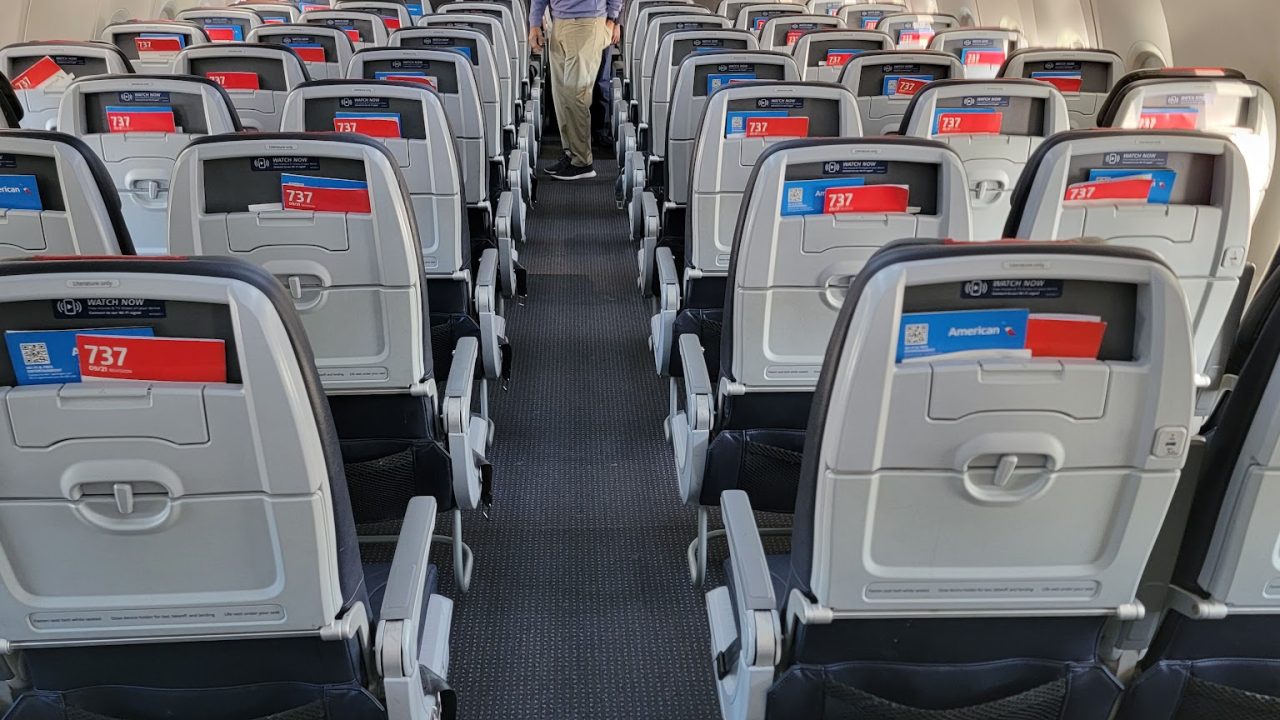
American Airlines quietly removed seatback screens from its narrow-body aircraft nearly a decade ago, betting that passengers would simply pull out their phones and tablets instead. Now, with competition intensifying and traveler expectations rising, the airline is reconsidering that decision — and exploring a significant upgrade to both its entertainment and connectivity offerings.
The airline is actively exploring the possibility of bringing seatback screens back to its narrow-body fleet, a move that would mark a notable reversal of a cost-cutting strategy that has drawn criticism from frequent flyers for years. Alongside that, American Airlines is in discussions with SpaceX’s Starlink and Amazon Leo about upgrading its in-flight Wi-Fi systems to deliver faster, more reliable internet at altitude.
The push comes as rivals Delta and United Airlines continue to invest heavily in the passenger experience — raising the stakes for any carrier that wants to remain competitive on domestic routes.
Why American Airlines Reversed Course on Seatback Screens
When American Airlines stripped seatback screens from its narrow-body jets, the logic seemed sound at the time. Screens are expensive to install, maintain, and repair. Smartphones and tablets were becoming ubiquitous. Why not let passengers entertain themselves?
The problem is that not every passenger travels with a fully charged device, a downloaded playlist, or a data plan that works at 35,000 feet. For families with young children, budget travelers, and anyone who simply forgot to prep before boarding, the absence of a seatback screen turns a two-hour domestic flight into a noticeably bare experience.
Technology has also moved on considerably since that original decision was made. Screens are lighter, more energy-efficient, and cheaper to integrate than they were a decade ago. The calculus that once favored removal is starting to shift back in the other direction.
Observers note that the competitive pressure from Delta and United — both of which have maintained or expanded seatback entertainment on key routes — has made American’s stripped-down cabins increasingly difficult to defend to passengers who have options.
The Starlink and Amazon Leo Connection
Seatback screens are only part of the story. Even the best on-demand entertainment library becomes frustrating if the Wi-Fi crawls or drops out entirely over the Rockies. That’s where the Starlink and Amazon Leo discussions become particularly significant.
SpaceX’s Starlink operates a low-Earth orbit satellite constellation designed to deliver high-speed, low-latency internet — the kind of connection that can actually support video streaming, video calls, and real-time browsing at altitude. Amazon Leo represents a competing approach in the same low-Earth orbit space.
American Airlines is currently in discussions with both providers, suggesting the airline has not yet committed to a single partner. The outcome of those talks could determine what kind of connectivity experience passengers can expect on American flights in the years ahead.
Several other carriers have already moved toward Starlink or similar low-orbit satellite systems, and the shift is widely seen as a meaningful step up from the older satellite connectivity that has frustrated airline passengers for years.
Key Details: What Is Being Considered and Why It Matters
- Seatback screen restoration is being explored specifically for American Airlines’ narrow-body aircraft fleet, which covers the majority of domestic routes.
- Wi-Fi upgrade discussions are underway with SpaceX’s Starlink and Amazon Leo, two providers operating low-Earth orbit satellite systems.
- Competitive pressure from Delta and United Airlines is a driving factor behind the review of American’s in-flight entertainment and connectivity strategy.
- The original removal of seatback screens was driven by cost-cutting and the assumption passengers would use personal devices — a bet that has become harder to sustain.
- No final decisions have been announced; the airline is currently in the exploration and discussion phase.
| Feature | Current Status at American Airlines | Under Consideration |
|---|---|---|
| Seatback Screens (Narrow-Body) | Removed approximately a decade ago | Restoration being actively explored |
| In-Flight Wi-Fi | Existing system in place | Upgrade via Starlink or Amazon Leo in discussions |
| Competitive Benchmark | Behind Delta and United on IFE investment | Closing the gap through potential upgrades |
What This Means for Passengers Who Fly American
If American Airlines follows through on both fronts — seatback screens and upgraded satellite Wi-Fi — the difference for everyday travelers could be substantial. Domestic flights, which make up the bulk of American’s operations, have long been the weak point when it comes to the airline’s entertainment and connectivity offering.
Passengers who currently board American narrow-body jets and find blank seat backs in front of them may soon have access to on-demand movies, TV shows, and maps without needing to drain their own device batteries. That matters more than it might sound for early-morning departures, red-eyes, and flights where charging ports are scarce or unreliable.
On the Wi-Fi side, a switch to low-Earth orbit satellite connectivity — if the Starlink or Amazon Leo discussions lead to a deal — would represent a meaningful improvement over the spotty, slow connections that have been a persistent complaint among business and leisure travelers alike. The ability to reliably stream, work, or video call from a domestic flight would remove one of the more common frustrations associated with air travel.
For families, the return of seatback screens could be particularly welcome. Keeping children occupied on a flight without relying on a parent’s phone or a tablet that may or may not survive the journey charged is a genuine quality-of-life improvement that many travelers would notice immediately.
- Seatback screens were removed from narrow-body jets approximately a decade ago as a cost-cutting measure.
- Passengers are expected to use personal devices for all in-flight entertainment needs.
- Current Wi-Fi system has faced criticism for speed and reliability on domestic routes.
- Seatback screens are being explored for restoration across the narrow-body fleet.
- On-demand entertainment would be available directly from the seat without personal devices.
- Wi-Fi upgrade discussions with SpaceX Starlink and Amazon Leo aim to deliver faster, more reliable connectivity.
What Happens Next
American Airlines has not announced a timeline or confirmed any final decisions. The airline is currently in the exploration phase — assessing the feasibility of seatback screen installation and holding discussions with potential Wi-Fi partners including Starlink and Amazon Leo.
The next visible signals will likely come from those partnership discussions. If American commits to Starlink or Amazon Leo, a connectivity upgrade could move relatively quickly into implementation. Seatback screen retrofits, by contrast, tend to involve longer lead times given the engineering and certification work required to modify aircraft interiors.
What is clear is that the pressure is real. With Delta and United continuing to invest in the passenger experience, American Airlines faces a choice between staying the course or making a meaningful push to close the gap. The discussions currently underway suggest the airline has decided that staying the course is no longer the safer option.
Frequently Asked Questions
Is American Airlines definitely bringing back seatback screens?
No final decision has been announced. The airline is currently exploring the possibility of restoring seatback screens to its narrow-body fleet, but no commitment has been confirmed.
Which aircraft would get seatback screens if American moves forward?
The exploration is focused on American Airlines’ narrow-body aircraft fleet, which operates the majority of the airline’s domestic routes.
What Wi-Fi providers is American Airlines talking to?
American Airlines is in discussions with SpaceX’s Starlink and Amazon Leo about upgrading its in-flight Wi-Fi systems.
Why did American Airlines remove seatback screens in the first place?
The airline removed seatback screens from its narrow-body fleet approximately a decade ago, citing cost-cutting measures and the expectation that passengers would use their own personal devices for entertainment.
How does American Airlines compare to Delta and United on in-flight entertainment?
Competitive pressure from Delta and United Airlines — both of which have maintained stronger in-flight entertainment investments — is identified as a key driver behind American’s current review of its offerings.
When could passengers expect to see these changes?
No timeline has been confirmed. The airline is in early-stage discussions and exploration, and any changes would depend on partnership agreements and aircraft retrofit schedules.



Leave a Reply