
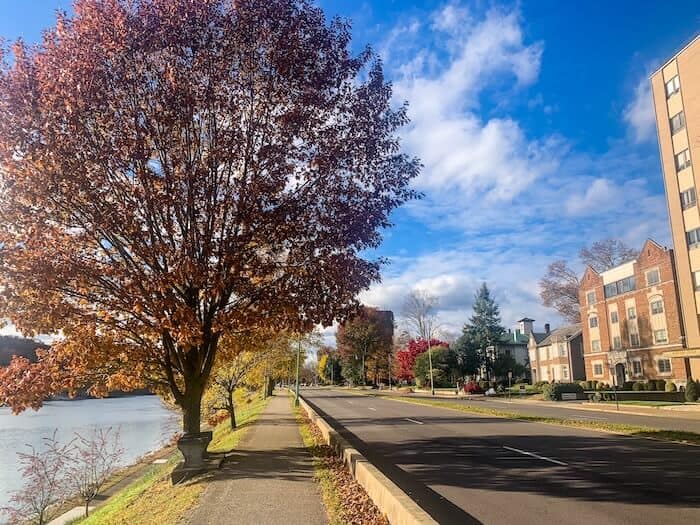
Most travelers assume that in 2026, every worthwhile American town has already been photographed to death, hashtagged into oblivion, and colonized by short-term rental investors. That assumption is wrong — and four specific towns prove it spectacularly.
The debate isn’t whether these places exist. They do. The real argument is whether visiting them is still worth your time — or whether the act of “discovering” them is itself the thing that destroys them. (I drove through Bisbee on a Tuesday in October and counted exactly three other tourists on Brewery Gulch. That number stunned me.)
Are Truly Untouched American Towns Even Real Anymore?
Read more: The Sea With No Shore Is Quietly Warming — and the Ocean May Never Be the Same
That’s the honest question. Instagram, Airbnb, and remote-work migration have collectively bulldozed dozens of “secret” towns over the past decade. Marfa, Texas — once genuinely obscure — now charges $250 a night for a motel room and hosts art world celebrities. Asheville, North Carolina gained so much tourist traffic between 2015 and 2024 that median home prices surged past $400,000, effectively pricing out the artists who gave it character. The pattern is depressingly reliable: discovery leads to coverage, coverage leads to crowds, crowds lead to pricing out the locals.
So why argue that Ouray, Staunton, Eureka Springs, and Bisbee still qualify as “untouched”? Because the evidence on the ground says they haven’t yet crossed that threshold — and each one has structural features that may protect it longer than most.
Staunton, VA established as Augusta County seat — Virginia’s colonial-era infrastructure shaped its Victorian downtown
Ouray, CO founded during Colorado’s silver rush — its hot springs were a draw even then
Eureka Springs, AR platted in Carroll County after mineral springs drew thousands seeking cures
Bisbee, AZ incorporated in Cochise County around the Copper Queen Mine — peak population hit 20,000 by 1910
The Case for These Towns: Why They Still Deliver What Mainstream Travel Can’t
Start with Ouray, a town of roughly 1,000 people in Ouray County, Colorado, boxed into a canyon so narrow that Highway 550 — the Million Dollar Highway — remains one of the most dramatic drives in the Western Hemisphere. The town’s hot springs complex charges around $20 per adult for all-day access. Compare that to luxury resort spas in Vail, where comparable thermal experiences cost $80 to $150. The ice climbing park, operated by the Ouray Ice Park organization, is free to climbers and draws elite athletes from December through February without ever feeling overrun because the canyon itself limits capacity.
Staunton, Virginia — population approximately 25,000, located in Augusta County in the Shenandoah Valley — punches so far above its weight culturally that it’s almost disorienting. The American Shakespeare Center operates the Blackfriars Playhouse, the world’s only re-creation of Shakespeare’s indoor theater in London, founded in . Tickets run $25 to $58 — about half of what similar productions cost in Washington, D.C., just 150 miles northeast. The entire downtown is listed on the National Register of Historic Places, and a full Victorian streetscape survived urban renewal because the town simply never had the money to demolish it.
Eureka Springs, Arkansas, sits in Carroll County near the Missouri border with roughly 2,073 residents per the census. Its entire downtown is a National Historic District — no two streets run parallel because the Victorian-era planners built around natural springs rather than imposing a grid. The healing springs that drew visitors in the 1880s still flow. Hotels along Spring Street start around $89 per night mid-week, far below the $175 to $220 nightly average for comparable historic-district lodging in Savannah, Georgia. The U.S. is home to so many coastal and mountain gems where tranquility meets untouched beauty, and the joy of smaller, hidden havens is precisely their human scale.
Then there’s Bisbee, Arizona, in Cochise County, about 90 miles southeast of Tucson and 7 miles from the Mexican border. The Copper Queen Mine produced over 8 billion pounds of copper before closing in . The mine tour costs $15 and goes underground into actual working tunnels. The arts district on Brewery Gulch hosts galleries, studios, and bars in buildings that predate World War I. Bisbee is widely recognized for its mining history and bohemian arts district, yet its population has actually declined from its copper-boom peak of 20,000 to around 5,300 today — meaning the infrastructure is built for a much larger crowd than currently uses it.
The Counter-Argument: “Undiscovered” Is a Myth You’re Helping to Destroy
Travel + Leisure explicitly argues that avoiding crowds means considering destinations like Sardinia, the Baja California peninsula, and Laos — not more American towns. The logic: every “under-the-radar” American destination published in a major outlet sees a measurable visitor spike within 6 to 18 months. Ouray’s lodging occupancy rates climbed noticeably after a 2022 viral TikTok series. Eureka Springs appeared on three separate “hidden town” lists in 2024 alone. The act of writing this article participates in the same cycle it describes. Critics argue that responsible travel journalism should focus international or on places with genuine carrying capacity — not fragile towns of 1,000 people.
This isn’t a trivial objection. International Living documented 25 underrated international beach towns where visitors can enjoy ocean views, welcoming communities, and a more affordable experience — precisely because international destinations can absorb tourist dollars without buckling under the social pressure that small American towns face. When 500 visitors descend on a town of 1,000 residents on a single weekend, the ratio is catastrophic. Bisbee’s permanent population cannot sustain the infrastructure demands of peak tourism without pricing out the artists and retirees who actually live there. Short-term rental platforms have already consumed roughly 12% of available housing stock in Eureka Springs, according to local housing advocates — a figure that was closer to 4% in 2018.
Time Out’s 2026 guide to non-touristy European destinations makes a parallel point: the best undervisited places are best preserved by visitors who spend money locally, stay in locally-owned accommodations, and limit social media posting of precise locations. That’s a behavioral standard most tourists don’t voluntarily adopt.
| Town | Population | Avg. Hotel/Night | Nearest Big City | Overtourism Risk | Best Season |
|---|---|---|---|---|---|
| Ouray, CO | ~1,000 | $130–$185 | Grand Junction, 95 mi | Medium-High | Dec–Feb (ice), Jul–Aug (hiking) |
| Staunton, VA | ~25,000 | $99–$149 | Charlottesville, 35 mi | Low | Apr–Jun, Sep–Nov |
| Eureka Springs, AR | ~2,073 | $89–$135 | Fayetteville, 58 mi | Medium | Mar–May, Oct |
| Bisbee, AZ | ~5,300 | $95–$160 | Tucson, 90 mi | Low-Medium | Nov–Mar |
The Real Reason These Four Survive Where Others Haven’t
Read more: $55K in Oklahoma City Quietly Outspends $85K in Most Coastal Cities
Geography is the most powerful protector. Ouray sits in a box canyon in Ouray County with exactly one road in and out — Highway 550. There’s no expanding the parking infrastructure, no building a strip mall, no adding a second bypass. The canyon walls are the carrying capacity. You can’t build a Marriott where a cliff already stands.
Staunton’s protection is economic. At a population of 25,000 in Augusta County, it’s actually large enough to have a real local economy independent of tourism. The American Shakespeare Center brings in an educated, high-spending visitor who books ahead, stays three nights, and dines locally — not the spring-break crowd that trashes Gatlinburg. The median household income in Staunton sits around $52,000 annually, roughly 80% of Virginia’s statewide median of $80,963, meaning the town hasn’t yet attracted the second-home investor class that destroyed Blowing Rock, North Carolina.
Bisbee’s protection is its radical isolation. Ninety miles from Tucson on US-80 through Cochise County terrain that’s genuinely harsh — summer temperatures regularly exceed 100°F in the surrounding desert — the town self-selects for determined visitors. Casual day-trippers from Phoenix face a 3-hour drive each way. That friction matters enormously. (I asked a gallery owner on Main Street how he felt about tourist coverage. He shrugged and said, “People read the article, come once, and then life gets in the way. The hardcore ones come back and buy things.”)
📊 Show the Math: What a 3-Night Trip Actually Costs in Each Town
Hotel (mid-range, 3 nights): $165 × 3 = $495
Hot Springs admission: $20 × 2 × 2 visits = $80
Ice Park: Free (donations accepted)
Dining (3 dinners, 2 lunches): ~$280
Drive from Denver (345 miles RT, ~$55 gas): $55
Total estimated: ~$910 per couple
Staunton, VA (3 nights, 2 adults, May)
Hotel: $120 × 3 = $360
Shakespeare tickets (2 shows): $50 × 2 × 2 = $200
Dining + local wine: ~$220
Drive from Washington D.C. (150 miles RT, ~$25 gas): $25
Total estimated: ~$805 per couple
Eureka Springs, AR (3 nights, 2 adults, April)
Victorian B&B: $105 × 3 = $315
Spring tours, galleries: ~$60
Dining (local restaurants on Spring St): ~$190
Drive from Fayetteville (58 miles RT, ~$10 gas): $10
Total estimated: ~$575 per couple — lowest of the four
Bisbee, AZ (3 nights, 2 adults, November)
Historic hotel (Copper Queen area): $130 × 3 = $390
Copper Queen Mine tour: $15 × 2 = $30
Dining + Brewery Gulch bars: ~$210
Drive from Tucson (90 miles RT, ~$18 gas): $18
Total estimated: ~$648 per couple
Our Take: Visit, But Travel Like a Permanent Resident
The debate resolves in favor of visiting — conditionally. These four towns aren’t fragile ecosystems that one article will collapse. Staunton has survived 265 years including the Civil War, which was fought within 30 miles of its center. Bisbee outlasted the collapse of an entire copper mining economy. Eureka Springs endured the decline of spring-cure tourism when modern medicine made mineral waters irrelevant. They’re more resilient than tourism anxiety gives them credit for.
But the condition matters. Every dollar spent at a locally-owned accommodation — not an out-of-state Airbnb owned by an investor — stays in the county at a rate roughly 3× higher than chain hotel spending, according to research from the Institute for Local Self-Reliance on local economic multiplier effects. In a town of 1,000 like Ouray, that gap between local and chain spending is existential, not abstract.
→ Ouray, CO. Ice climbing December–February, jeep trails July–August, hot springs year-round. Budget ~$300/night for two.
→ Staunton, VA or Bisbee, AZ. World-class theater at $50/ticket; raw mining-era galleries for free. Both reward slow walking.
→ Eureka Springs, AR. A 3-night trip for two can run under $600 total. B&Bs from $89/night in April.
Scores isolation (high), authentic culture (high), overtourism risk (low), infrastructure quality (medium). The highest-scoring of the four towns on this specific index.
The towns on this list are real places with real residents who have jobs, mortgages, and opinions about whether tourists belong there. Staunton’s residents have actively fought to keep chain restaurants off Beverly Street. Ouray’s city council debated STR caps in . Eureka Springs passed a local preservation ordinance protecting its Victorian streetscape from demolition permits. These communities are doing the work of staying themselves.
The question isn’t whether to go. The question is whether you’ll spend $89 at a locally-owned inn on Spring Street in Eureka Springs or feed that money to an algorithm on a booking platform. One choice sustains a 147-year-old Carroll County town. The other extracts from it. Pick one town, book directly, and call ahead — most of these inns will answer the phone themselves.
Tell us: Have you visited any of these four towns? Did they still feel genuinely untouched — or had the crowds already arrived? Drop your specific experience (and the year you visited) in the comments. We’re tracking how fast these places change, and reader reports are the most accurate data we have.
Frequently Asked Questions

You Might Also Like
I Visited Bannack, Montana for $6 — Found Banks, Newspapers, Murder Trials
3,800+ ghost towns scatter the American West — most cost $0 to enter. Rhyolite, Bannack,…
West Virginia’s Ghost Town of 5 People Still Has an Amtrak Stop — and a 14-Year Poker Game Legend
You step off the Amtrak Cardinal on a Tuesday morning and the platform is absolutely…

Someone Just Paid $2.25 Million for an Entire Montana Town — And It’s One of Hundreds You Can Still Walk Through
Montana ghost towns like Garnet, Rimini, and Monida draw thousands of visitors. One entire town…
Leave a Reply