
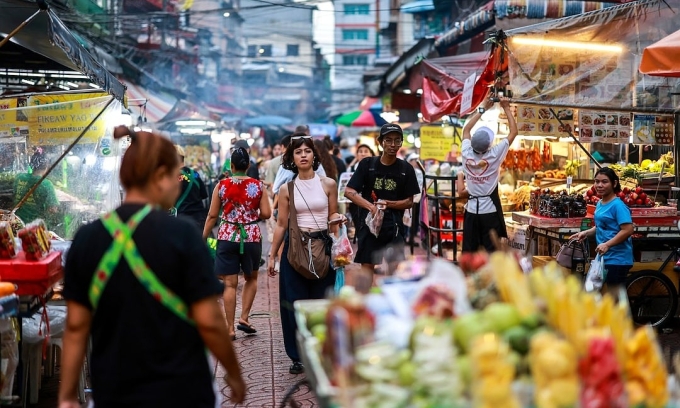
A geopolitical crisis centered thousands of miles away is quietly reshaping travel plans across an entire continent. The ongoing conflict in the Middle East — and the airspace and shipping disruptions that have followed — is now threatening tourism industries from India to Japan, Vietnam to South Korea, and points in between.
The trigger is both economic and logistical. The closure of the Strait of Hormuz, a critical chokepoint for global energy trade, has sent fuel prices climbing. For countries across Asia that depend heavily on Middle Eastern energy imports, the ripple effect has been swift: higher transportation costs, rising airfare, flight cancellations, and a measurable drop in the number of international visitors willing or able to make the journey.
What started as a regional conflict has become a shared problem for some of the world’s most tourism-dependent economies.
How a Middle East Crisis Became Asia’s Tourism Problem
The connection between a conflict in the Middle East and an empty hotel room in Bangkok or Kyoto might not be immediately obvious — but the mechanics are straightforward. Aviation fuel is priced in global commodity markets. When energy supply routes are disrupted, airlines face higher operating costs almost immediately. Those costs get passed to passengers through higher fares, or absorbed through route cancellations when demand doesn’t justify the expense.
Airspace restrictions compound the problem further. When certain flight corridors become unavailable due to conflict or airspace closures, routes between Europe, the Middle East, and Asia grow longer and more expensive. That adds hours to already long-haul journeys and pushes up costs for carriers operating those routes.
For countries like India, Thailand, Vietnam, Sri Lanka, China, Japan, and South Korea — all of which rely significantly on international tourism as a driver of economic activity — the downstream consequences are real and growing.
Which Countries Are Feeling the Pressure
The list of affected nations spans the breadth of the Asian continent, covering both established tourism giants and emerging destinations. While the specific economic data for each country has not yet been fully reported, the general pattern is consistent: nations that depend on energy imports from the Middle East and draw visitors from long-haul markets are facing a dual squeeze.
| Country | Key Tourism Concern | Contributing Factor |
|---|---|---|
| India | Decline in international arrivals | Rising fuel costs, flight disruptions |
| Thailand | Straining tourism industry | Skyrocketing transportation costs |
| Japan | Reduced travel flow | Airspace restrictions, route changes |
| Vietnam | Disrupted inbound travel | Flight cancellations |
| South Korea | Tourism downturn risk | Energy import dependency |
| China | Reduced international visitor flow | Broader regional disruption |
| Sri Lanka | Pressure on recovering tourism sector | Rising costs, travel uncertainty |
The breadth of this list matters. These are not marginal economies. Together, they represent a significant share of global tourism activity, and a prolonged downturn across all of them simultaneously would have consequences well beyond the hospitality sector.
The Real-World Impact on Travelers and the Industry
For travelers, the most immediate effect is cost. When aviation fuel prices rise sharply, airlines adjust. Fares go up, promotional deals disappear, and some routes get suspended entirely — particularly thinner long-haul routes that were already operating on narrow margins.
Flight cancellations create a second layer of disruption. Travelers who had already booked trips face the frustration and expense of rebooking, sometimes at significantly higher prices. Others simply decide not to travel, choosing to wait until the situation stabilizes.
The industries that depend on those visitors — hotels, restaurants, tour operators, cultural sites, local transport providers — feel the drop almost immediately. Tourism is one of the few sectors where the economic impact of fewer arrivals is both fast and broad. A canceled flight doesn’t just hurt the airline; it ripples through every business that visitor would have patronized.
- Higher airfares driven by elevated fuel costs
- Flight cancellations on routes passing through or near affected airspace
- Longer journey times due to rerouting around closed airspace
- Declining international arrivals across multiple Asian markets
- Increased financial strain on tourism-dependent local economies
For Sri Lanka in particular, the timing is difficult. The country has been working to rebuild its tourism industry following years of economic and political turbulence. A new wave of external pressure — especially one rooted in global energy markets rather than anything within Sri Lanka’s control — adds an unwelcome complication to that recovery.
Why This Is Harder to Fix Than It Looks
The challenge for governments across Asia is that the root cause of this disruption sits entirely outside their borders. No amount of domestic tourism policy can reopen the Strait of Hormuz or de-escalate a conflict in the Middle East. What Asian nations can do is limited: offer subsidies to airlines, promote alternative source markets, run domestic tourism campaigns, or reduce visa friction to make travel easier where possible.
But those are partial solutions to a structural problem. As long as fuel prices remain elevated and airspace restrictions stay in place, the economics of long-haul travel to Asia will remain under pressure.
Officials and industry observers have noted that the situation reflects a broader vulnerability — the degree to which tourism, one of the world’s largest industries, remains exposed to geopolitical events far removed from the destinations themselves.
What the Coming Months Could Look Like
The trajectory of this disruption depends almost entirely on how the Middle East situation develops. A de-escalation that reopens shipping lanes and stabilizes fuel prices could allow aviation markets to recover relatively quickly. A prolonged conflict, or any expansion of the crisis, would likely deepen the tourism downturn across Asia and push recovery timelines further into the future.
For travelers with plans to visit any of the affected countries, the practical advice is to monitor airline communications closely, consider flexible booking options, and factor potential fare increases into travel budgets. For the tourism industries in these countries, the period ahead will test their resilience and their ability to adapt to conditions beyond their control.
The situation is still developing, and the full scale of the economic impact on Asian tourism has not yet been formally quantified. What is clear is that the affected countries are now confronting this challenge together — even if the solutions, if they come, will have to emerge from a very different part of the world.
Frequently Asked Questions
Which Asian countries are most affected by the Middle East conflict’s impact on tourism?
According to available reporting, India, Vietnam, Japan, Thailand, South Korea, China, and Sri Lanka are among the countries confronting growing threats to their tourism sectors as a result of the crisis.
What is causing flight cancellations and higher airfares?
The closure of the Strait of Hormuz has disrupted energy supply routes, driving up fuel prices and increasing operating costs for airlines, which has led to higher fares and some flight cancellations.
How does the Strait of Hormuz closure affect countries in Asia?
Many Asian nations depend heavily on energy imports from the Middle East. When that supply route is disrupted, fuel costs rise sharply, affecting transportation industries including aviation.
Is this expected to be a short-term or long-term disruption?
The duration of the disruption depends on how the Middle East situation develops. A specific timeline has not been confirmed, and the situation remains ongoing as of the latest reporting.
What can travelers do to protect themselves from these disruptions?
Travelers are advised to monitor airline communications, book flexible fares where possible, and account for potential cost increases when planning trips to affected destinations.
Is Sri Lanka’s tourism recovery at particular risk?
Reporting indicates that Sri Lanka, which has been working to rebuild its tourism industry, faces added pressure from this external disruption — though the full impact has not yet been formally measured.




Leave a Reply