
▶ Read transcript
Here’s what you need to know about a growing conversation around whether less supervised childhoods actually produced more resilient kids. A meta-analysis of 52 research studies found that overparenting consistently correlates with higher rates of anxiety and depression in young people, and this pattern held across cultures and income levels. Researchers point out that the relationship can become a feedback loop, where an anxious child triggers more parental control, which then fuels even more anxiety. Meanwhile, the unstructured free play and frequent boredom that defined childhoods in the 1960s and 70s appear to have built real skills in self-regulation, creativity, and independent problem-solving. That said, correlation is not causation, and researchers haven’t yet proven a direct causal link between overparenting and mental health struggles. The takeaway? Look for small ways to let kids experience boredom and solve problems on their own, because those low-stakes challenges may be exactly what builds lasting resilience.
What if the best thing your parents ever did for you was leave you alone?
That question sounds provocative, maybe even reckless. But a growing body of psychological research suggests the answer might be yes. Children who grew up in the 1960s and 1970s developed a specific kind of mental toughness that modern childhoods have made nearly impossible to build.
The reason has nothing to do with superior parenting. It has everything to do with what happened in the vast, unsupervised hours between breakfast and dinner.
The Myth of Protective Parenting as Emotional Armor
Most people assume that attentive, involved parenting produces emotionally healthy children. The logic feels airtight. More supervision means fewer dangers. More guidance means fewer mistakes. More emotional support means stronger emotional foundations.
This belief has driven a dramatic cultural shift over the past four decades. Parents today spend significantly more time with their children than parents did in the 1960s and 70s. Schedules are packed with structured activities. Digital monitoring tools let parents track a child’s location in real time.
| Parenting Factor | 1960s–1970s Childhood | Modern Childhood |
|---|---|---|
| Supervision level | Minimal; children roamed freely | High; GPS tracking, constant check-ins |
| Boredom tolerance | Expected; no on-demand entertainment | Rare; screens fill every idle moment |
| Conflict resolution | Handled between children themselves | Often mediated by parents or teachers |
| Delayed gratification | Built-in (waiting for TV shows, letters) | Minimal (streaming, instant messaging) |
| Emotional coaching | Rare; feelings were often dismissed | Frequent; emotional vocabulary encouraged |
The assumption is that every column on the right side of that table represents progress. And in many ways, it does. Children today are safer, more heard, and more emotionally literate than previous generations.
But safety and resilience are not the same thing. And the data is starting to reveal an uncomfortable gap between the two.
52 Studies, One Consistent Finding: Overparenting Correlates with Anxiety
Researchers Qi Zhang at the University of Wisconsin-Madison and Wongeun Ji at Handong Global University conducted a meta-analysis that pulled together results from 52 research articles on overparenting and its effects on children. The findings were striking in their consistency.
Across all 52 studies, overparenting showed small but reliable links to depression, anxiety, and other internalizing symptoms. Most participants were around age 20, reflecting the mental health landscape of teens and young adults.
Perhaps most telling: the relationship appeared broadly similar across cultures and income levels. This wasn’t a phenomenon limited to affluent Western families. Overparenting’s association with internalizing problems showed up everywhere researchers looked.
The researchers also noted something crucial about directionality. The relationship between overparenting and anxiety can run both ways. An anxious child can trigger more parental control, and more control can fuel further anxiety. This creates a feedback loop that tightens over time.
Free Play, Boredom, and the Neuroscience of Self-Regulation
So if overparenting correlates with emotional fragility, what built the opposite? The answer lies in the daily texture of a 1960s or 1970s childhood.
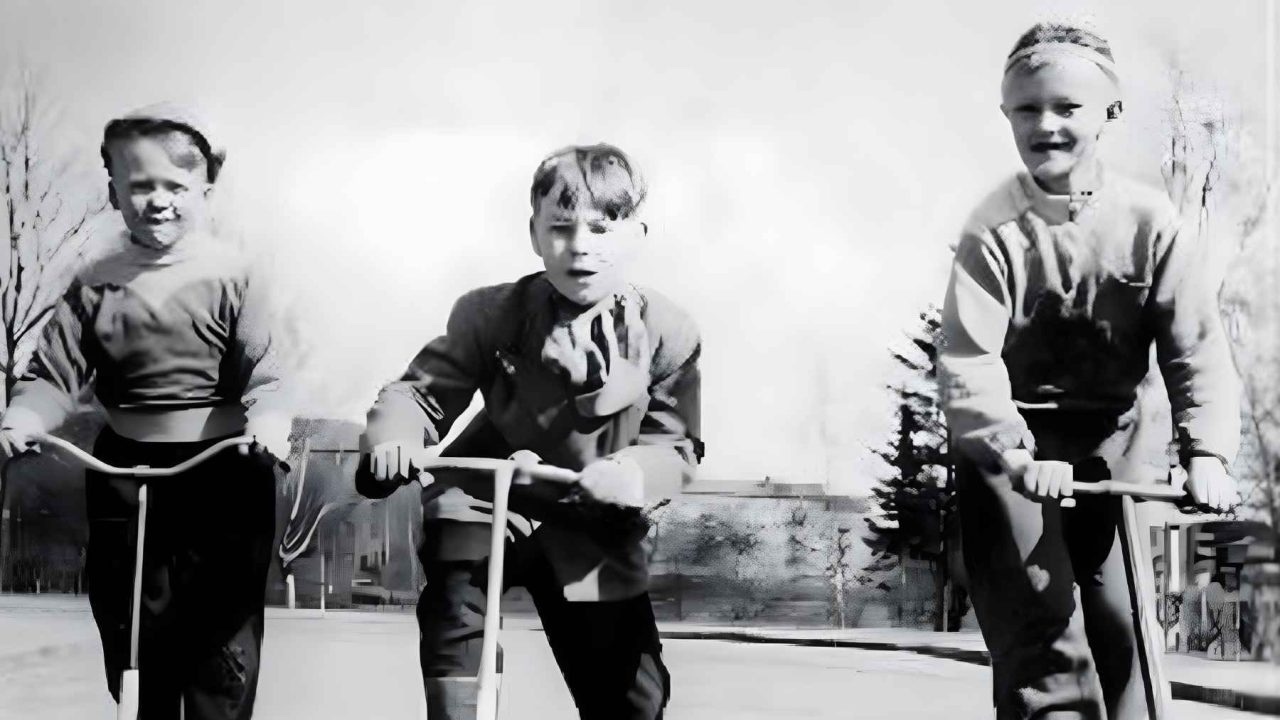
Children of those decades grew up with what psychologists now call “benign neglect.” Parents instilled discipline and integrity but simultaneously gave children enormous room to navigate the world on their own. Kids walked to school alone. They settled their own disputes. They spent hours in unstructured, unsupervised play.
“Toughness was simply what formed in the space where supervision, entertainment, and emotional coaching used to be.”
— Psychological analysis of 1960s–70s childhood resilience
Boredom was a constant companion. There were three television channels, and they didn’t broadcast all day. Letters took days to arrive. If you wanted to talk to a friend, you walked to their house. Waiting wasn’t a design flaw; it was life.
That boredom turns out to be neurologically productive. It pushes the brain to become creative. It encourages imagination, problem-solving, and self-reflection. Most importantly, it teaches children that they can tolerate discomfort without immediately escaping it. This ability to sit with boredom and still feel okay is a foundational form of self-soothing.
In 2022, Yeshe Colliver and colleagues used data from the Longitudinal Study of Australian Children to examine the role of free play in child development. Their findings reinforced what developmental psychologists have long suspected: unstructured play builds cognitive flexibility and emotional regulation in ways that structured activities cannot replicate.
Emotion Regulation as a Skill, Not an Inheritance
Marc Brackett at the Yale Center for Emotional Intelligence describes emotion regulation as “a set of learned intentional skills for managing feelings wisely.” The key word is “learned.” Emotional resilience isn’t genetic destiny. It’s built through practice.
And practice requires exposure to difficulty.
Children of those decades didn’t develop hyper-independence and emotional endurance because their parents were wise. They developed those traits because the environment demanded it. When no adult intervened in a playground argument, children learned to negotiate. When no screen dissolved boredom, children learned to create. When no parent validated every feeling, children learned to process emotions internally.
This doesn’t mean those childhoods were ideal. Many children of the 60s and 70s carry genuine wounds from emotional neglect, harsh discipline, and a cultural dismissal of children’s inner lives. The point isn’t to romanticize the past. The point is to understand which specific features of that environment built resilience, so those features can be intentionally preserved.
Your 9-year-old comes home upset because a friend excluded them from a game at recess. They’re crying and asking you to call the other child’s parents. You know this is a low-stakes social conflict.
The Modern Comfort Trap and Its Cost to Developing Minds
Modern parenting has overcorrected. In the effort to protect children from every possible harm, many parents have inadvertently removed the low-stakes challenges that build emotional muscle.
Consider the daily life of a typical child today. A screen is available within arm’s reach at almost every moment. Boredom is treated as a problem to solve, not a state to endure. Parents mediate peer conflicts that previous generations would have resolved on the playground. Schedules are so packed with enrichment activities that genuine free time barely exists.
Each of these comforts eliminates a small opportunity for self-regulation practice. Individually, none of them matter much. Collectively, they represent thousands of missed repetitions in the emotional gym.
The result is a generation that may be more emotionally articulate but less emotionally durable. Young people today can name their feelings with impressive precision. But naming a feeling and tolerating it are very different skills.
Rebuilding Resilience Without Returning to the Past
The practical implications here are not about abandoning children or recreating a 1970s childhood wholesale. Many features of that era were genuinely harmful. The goal is surgical: identify the specific conditions that built resilience and reintroduce them deliberately.
This means allowing children to be bored without rushing to fill the silence. It means letting them struggle with a problem for longer than feels comfortable before stepping in. It means accepting that some peer conflicts, while painful, are training grounds for negotiation and empathy.
It also means parents learning to tolerate their own discomfort. Watching a child struggle activates a parent’s anxiety. The urge to intervene is powerful and well-intentioned. But every time a parent solves a problem a child could have solved alone, that child loses a repetition in self-regulation.
The 52-study meta-analysis doesn’t tell parents to disappear. It tells them to step back just enough. The sweet spot lies between neglect and overprotection, in a zone where children feel supported but not shielded, loved but not managed.
The Paradox of Progress
We have built a world that is safer, more connected, and more responsive to children’s emotional needs than any previous era. These are genuine achievements. But safety without challenge produces fragility. Connection without solitude prevents self-knowledge. Responsiveness without restraint blocks self-regulation.
The children of the 1960s and 70s didn’t become resilient because the world was better. They became resilient because the world was harder in small, survivable ways, every single day.
The question for modern parents isn’t whether to protect their children. It’s whether they have the courage to stop protecting them from the very experiences that would make protection unnecessary.



Leave a Reply