
What does it say about America that we built entire cities — complete with banks, saloons, schoolhouses, and churches — and then simply walked away from them? Somewhere between the gold rush and the railroad collapse, between the copper boom and the coal fire, we left behind hundreds of towns that time refused to erase. The question isn’t whether ghost towns exist. The question is whether they deserve your vacation days, your tank of gas, and your genuine curiosity.
The United States contains an estimated 3,800+ ghost towns — concentrated heavily in the American West, Appalachia, and the industrial Midwest. The best ones are not Instagram props. They are open-air museums with no admission line and no velvet rope. But not all ghost towns are created equal. Knowing which ones reward the drive separates a great road trip from a wasted weekend.
Side A — Ghost Towns Are the Most Honest History Lessons in America
Read more: 8 Ghost Towns Worth the Detour — Bannack Leads at 4.8 Stars
Let’s start with the strongest argument in favor of making the drive. Coast to coast, the USA is littered with eerie abandoned places — from deserted theme parks and ivy-clad mansions to once-lavish resorts left exactly as their last guests found them. But ghost towns hit differently. They aren’t ruins of failed ambition. They are ruins of *successful* ambition that simply ran out of reasons to continue.
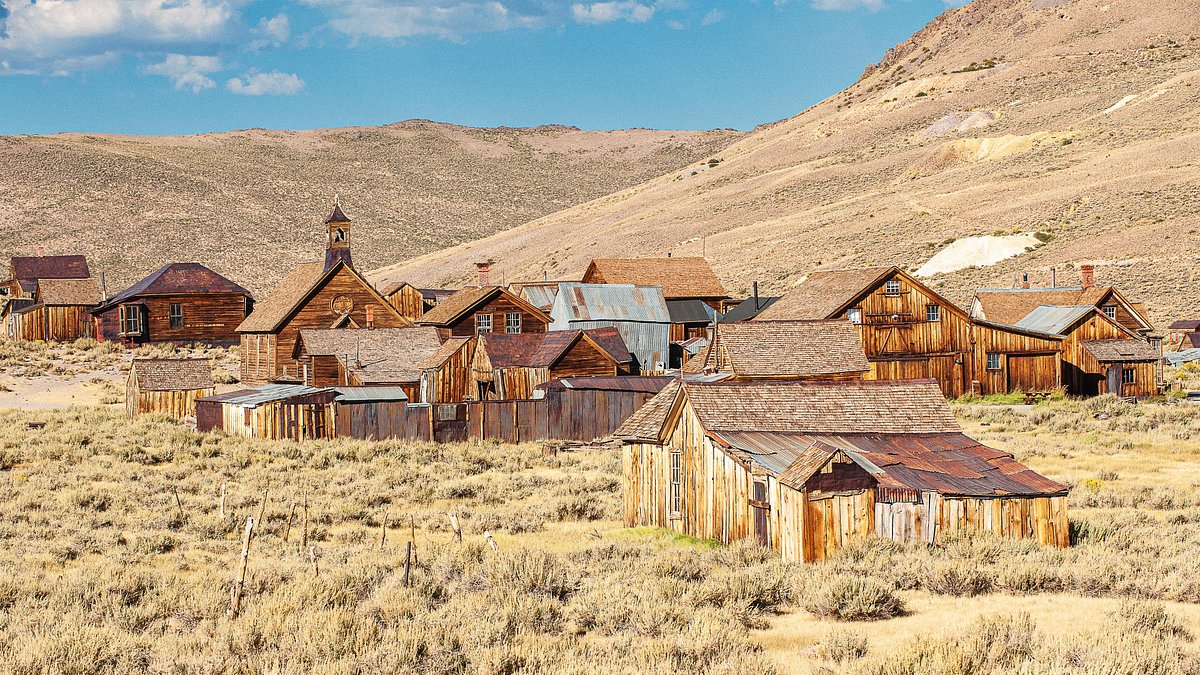
Bodie, California makes the case better than anywhere else in the country. Located in Mono County, roughly 75 miles southeast of Lake Tahoe and sitting at 8,375 feet elevation, Bodie was a gold rush boomtown that hit its peak population of approximately 10,000 residents around . By , the last residents had left. California designated it a state historic park in . Today, approximately 170 original structures still stand — not restored, not rebuilt, just preserved in what the California State Parks department calls “a state of arrested decay.”
Admission runs around $8 per adult. That’s less than a gas station sandwich and a bottle of water. You walk through a genuine 19th-century drugstore with medicine bottles still on shelves. You peer into a saloon that served whiskey to miners who died in this very county. You stand in a one-room schoolhouse and realize the desks are still there, exactly where the last child left them. No curator explains anything. The silence does all the work.
Then there is Centralia, Pennsylvania — Columbia County, about 100 miles north of Philadelphia. This isn’t just abandoned. It is actively on fire. A coal seam beneath the borough has been burning since . The government spent an estimated $42 million relocating residents through the 1980s and 1990s. The population collapsed from roughly 1,100 people in to fewer than five registered residents today. Steam rises through cracks in Route 61. The hillside cemetery — still maintained, still accepting burials — sits above ground that quietly smolders. You will not find a more surreal landscape east of the Mississippi.
Arizona’s must-see ghost towns offer fascinating histories and eerie structures, as seen in Swansea, Fairbank, Gleeson, and Agua Caliente. Rhyolite, Nevada — located in Nye County, five miles west of Beatty — was founded in after a gold strike. Its peak population reached an estimated 5,000 to 10,000 people within just four years. By , it was empty. The shell of the three-story Cook Bank Building still dominates the skyline. Entry is free. It sits within 120 miles of Las Vegas — making it the most accessible major ghost town in the American Southwest.
Side B — Most Ghost Towns Will Disappoint You, and Here’s Why
The counter-argument deserves full respect. For every Bodie, there are fifty “ghost towns” that amount to a single crumbling wall, a historical marker bolted to a fence post, and three hours of dirt road you were not prepared for. The internet has dramatically oversold the ghost town experience. Social media has turned what should be solemn, historically rich sites into content backdrops — a trend that trivializes the very communities these places once were.
“Ghost town tourism often romanticizes displacement and economic collapse. Many of these sites represent environmental contamination, broken Indigenous land agreements, or industrial disasters. Treating them as adventure tourism erases that gravity.” — A legitimate critique from preservation scholars and tribal historians that deserves more airtime than it gets on travel blogs.
There is also the very practical question of access and safety. Michigan is no stranger to abandoned places — Detroit alone was home to over 100,000 abandoned structures at its post-collapse peak, many of which are structurally unstable, contaminated, or located in neighborhoods where uninvited exploration creates real community harm. The line between ghost town tourism and urban trespassing is thinner than most travel content admits.
Road costs add up fast. Driving from Phoenix, Arizona to Bodie, California is roughly 600 miles — about $90 in gas at current prices for a standard sedan. Add two nights of lodging near Bridgeport, CA (gateway town for Bodie) at roughly $140/night, meals, and park fees, and you are looking at a $400 to $500 minimum weekend. That is comparable to a flight deal to a verified UNESCO World Heritage Site. The math doesn’t always favor the road.
The Nuance — Tier Your Ghost Towns Before You Book Anything
Here is what the debate misses: not all ghost towns belong in the same category. The difference between a transcendent experience and a wasted Saturday is almost entirely about which tier of ghost town you are visiting. Think of it in three layers.
Tier One ghost towns are state or federally protected, staffed or monitored, and have multiple standing structures. Bodie, California qualifies. So does Bannack, Montana — Beaverhead County’s first territorial capital, founded in and now a state park with over 60 original buildings including a hotel, church, and Masonic temple. Day-use fee: roughly $6 per person. Bannack sits about 25 miles southwest of Dillon, MT. It is genuinely extraordinary and wildly undervisited.
Tier Two ghost towns are partially inhabited or commercially operating. Jerome, Arizona — perched on Cleopatra Hill in Yavapai County — peaked at 15,000 residents during the copper boom of the . Today its population sits around 450 people, and a handful of galleries, restaurants, and the excellent Jerome State Historic Park operate alongside genu
, making it one of the most dramatically vertical ghost towns in the Southwest. Jerome clings to a 30-degree slope at roughly 5,000 feet elevation. The drive up Highway 89A from Cottonwood is genuinely vertiginous. Expect galleries, wine bars, and a haunted hotel — the Grand Hotel Jerome has been welcoming guests since . Rooms run $150–$280/night. Jerome is weird, beautiful, and absolutely worth the detour off I-17.
Rhyolite, Nevada — sitting in Nye County about 4 miles west of Beatty — is a Tier One wreck of spectacular ambition. At its peak, Rhyolite had 10,000 residents, a three-story bank building, an opera house, and a train station. By , it was empty. The Bureau of Land Management maintains open access — no fee, no gate, no ranger. You simply drive out there and walk among the ruins. The roofless Cook Bank building alone justifies the 120-mile drive from Las Vegas. Bring water. The Mojave doesn’t negotiate.
The Pacific Northwest’s Quietly Haunting Leftovers
Bodie, California — in Mono County, east of the Sierra Nevada — is arguably the most perfectly preserved ghost town in North America. The California State Parks system maintains it in a state of arrested decay: nothing is restored, nothing is demolished. Whatever was left when the last resident walked out, stays. Founded during an gold rush, Bodie peaked at 10,000 people and 65 saloons. Today, roughly 200 wooden structures still stand, frozen in the high-desert wind at 8,375 feet. The park sits 13 miles east of US-395 on a partially unpaved road. Day-use fees run $8 per adult, $5 for ages 4–17. In winter, the road closes entirely. Plan for summer or early fall.
Further north, Molson, Washington — in Okanogan County near the Canadian border — tells a stranger story. Three competing townsite factions built three separate Molsons within a mile of each other in the early . Two evaporated. One left behind an open-air museum of rusting farm equipment, a bank vault, and a schoolhouse. Admission is free. The nearest city is Oroville, Washington, about 12 miles south. Almost nobody goes here. That is precisely the point.
Appalachian Ghosts: Forgotten Mill Towns of the East
Read more: 15 Hidden American Towns Locals Love (Most Have Never Heard Of)
Ghost towns aren’t exclusively a Western phenomenon. Thurmond, West Virginia — in Fayette County along the New River Gorge — was once the highest-revenue freight depot on the entire Chesapeake & Ohio Railway. During coal’s Gilded Age peak, Thurmond processed millions in commerce. Today, its population hovers around five permanent residents, according to recent Census estimates. The National Park Service, which manages New River Gorge National Park and Preserve, maintains the restored depot as a visitor center. Access is free. The drive along WV-25 through the gorge is itself worth documenting.
Elkmont, Tennessee — inside Great Smoky Mountains National Park in Sevier County — offers something rarer: ghost cabins inside a living forest. A private resort community flourished here from through the . After years of legal battles, the National Park Service preserved roughly 19 historic structures. Elkmont is also one of the premier spots in North America to witness synchronous fireflies — a phenomenon so rare the park holds an annual lottery for viewing permits each June. Park entrance fees apply: $35 per vehicle for a 7-day pass as of .
Practical Road-Trip Intel Before You Go
Most serious ghost town visits require basic preparation that first-timers skip. High-elevation sites like Bodie and Bannack can drop to near-freezing overnight — even in July. Nevada desert sites like Rhyolite demand a minimum of 2 liters of water per person for even a 90-minute visit. Cell coverage is nonexistent at most of these locations. Download offline maps via NPS.gov or your state park’s official site before departure. Carry a paper backup.
Artifact removal — even a single nail, brick fragment, or bottle — is a federal or state crime at protected sites. The Archaeological Resources Protection Act carries fines up to $20,000 and potential imprisonment for first offenses. Take photographs only. Leave the past exactly where you found it.
The best time to visit most Western ghost towns is May through early October. Spring offers wildflowers in desert sites. Fall delivers low crowds and dramatic light. Summer weekends at Jerome or Bodie can draw substantial crowds — arrive before 9 a.m. or after 4 p.m. for anything resembling solitude. The experience you’re chasing — standing alone in a roofless building while wind moves through empty window frames — requires timing and patience.
The Emotional Weight of These Places
There is something unscripted and honest about standing in Rhyolite’s ruined train station or walking Bannack’s main street at dusk. No curated narrative, no audio tour telling you how to feel. These places failed. People invested everything — money, years, sometimes lives — and the town simply stopped. The copper ran out. The gold pinched off. The railroad rerouted. And the houses stayed behind, slowly returning to the landscape at a pace too slow to watch but fast enough to measure decade by decade.
That is the actual attraction. Not nostalgia exactly — more like confronting impermanence in a culture that avoids doing so. Ghost towns are the American landscape’s most honest footnotes. Drive out to one. Stand in it for an hour without checking your phone. You will understand something about this country that no museum exhibit can convey.
Frequently Asked Questions
Is it legal to visit abandoned ghost towns on private land?
No — not without explicit owner permission. Many Western ghost towns sit on Bureau of Land Management or state-managed land, which is publicly accessible. Always verify land ownership before entering. The BLM’s website has interactive maps identifying public land boundaries. Trespassing on private ghost town property can result in criminal charges regardless of how abandoned the structure appears.
Which ghost town is the most accessible for families with young children?
Bannack State Park in Montana is the most family-friendly option on this list. Flat walking paths, interpretive signage, and ranger-led programs make it manageable for kids. The $6/person day-use fee is nominal. Bodie, California is also suitable for older children but requires a high-clearance vehicle for its final 3 unpaved miles. Rhyolite, Nevada has no shade structures — heat management is critical for families visiting between June and September.
Can you find gold or minerals at ghost town sites?
At state park and National Park Service sites — no. Removing any natural or cultural resource is illegal under the Archaeological Resources Protection Act and similar statutes. On BLM-administered open land with no special designation, casual recreational gold panning is generally permitted in certain creek areas. Check BLM’s recreational mining guidelines for specifics by state and district.
Are ghost town buildings safe to enter?
Structural safety varies enormously. At Bodie and Bannack, many interiors are viewable through windows but entry is restricted to protect both visitors and structures. At unmanaged sites like Rhyolite, buildings are open-air ruins without roofs — generally safe to walk around. Never enter any building with a compromised roof, rotted flooring, or leaning walls. Old mines near ghost towns pose separate, serious hazards: unstable shafts, oxygen-depleted air, and toxic dust. MSHA’s old mine safety guidance is worth reading before any visit near mining sites.
What’s the best single ghost town if I can only visit one?
Bodie, California — and it’s not particularly close. The sheer number of intact structures, the state park’s commitment to arrested decay, and the high-desert setting combine to create something genuinely irreplaceable. It requires more logistical planning than Jerome’s easy highway access, but the payoff is proportional. If distance is a constraint and you’re in the Southwest, Jerome, Arizona on Highway 89A delivers a living ghost town experience with lodging, food, and history layered into a single dramatic hillside. Either choice will justify the drive.

You Might Also Like
8 Ghost Towns Worth the Detour — Bannack Leads at 4.8 Stars
Over 3,800 ghost towns dot the American West. These 8 have 4,647 verified ratings and…

The Oldest Mineral Springs Resort in North America Sits 50 Miles From Santa Fe — and Most Americans Drive Past It
What would it mean to soak in the same water that Pueblo peoples, Spanish settlers,…
8 Most Underrated US Cities With Homes 40–60% Below Average
8 underrated U.S. cities—including Bardstown, KY and Bisbee, AZ—offer median home prices 40–60% below the…
Leave a Reply