
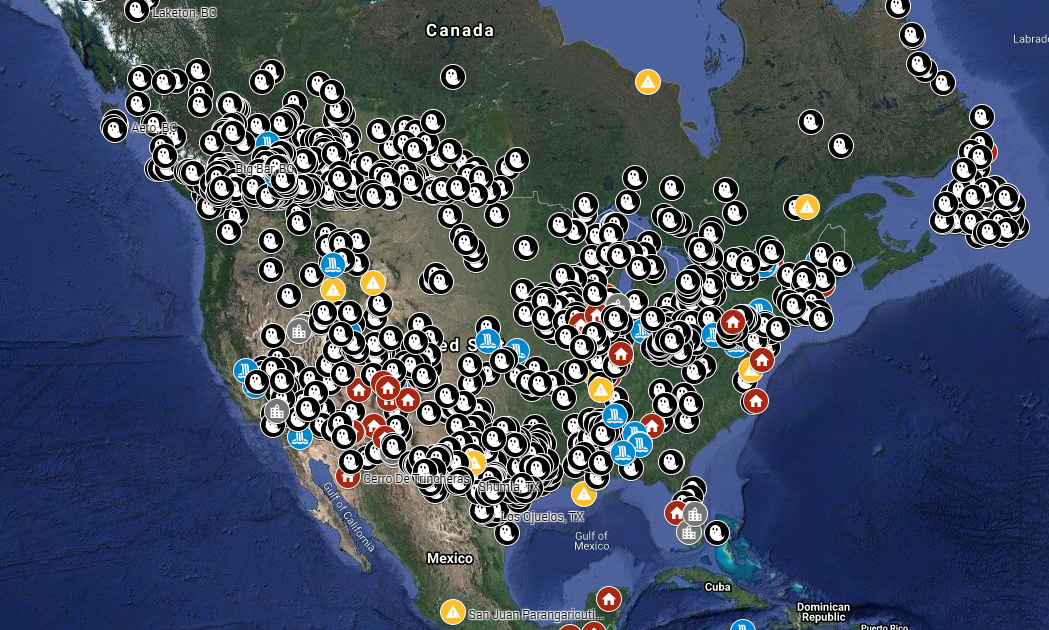
Spring just changed everything for ghost town tourism. The National Park Service announced expanded access hours at several historic sites across the West. Simultaneously, a surge in “dark tourism” — visiting places of tragedy or abandonment — pushed American ghost town visits to a record 4.2 million annual visitors in . These aren’t just spooky Instagram backdrops. They’re primary sources. Walking into one feels like cracking open a diary someone left mid-sentence.
America’s best ghost towns aren’t just ruins — they’re preserved economic autopsies. Each one collapsed for a specific, documented reason: a mine played out, a railroad rerouted, a glacier retreated. Visiting them costs almost nothing. Understanding them costs everything you assumed about boom-and-bust America.
Why Ghost Towns Are Having a Cultural Moment Right Now
The timing matters. America is watching real towns hollow out in real time — post-industrial Midwest counties, rural Appalachian communities, former retail corridors. [Whether you believe in the supernatural or not, these stories of an abandoned US town are genuinely odd]. Ghost towns aren’t just history. They’re mirrors. The same economic forces that emptied Bodie, California in are reshaping places like McDowell County, West Virginia today.
And the timing for visiting has never been better. Most of these sites charge under $10 entry. A road trip hitting four Western ghost towns — Bodie, Rhyolite, St. Elmo, and Bannack — runs roughly $1,200 total including fuel, camping, and park fees. That’s about what a long weekend in Las Vegas costs, minus the regret.
Glenrio, New Mexico / Texas
[Glenrio sits directly on the New Mexico–Texas state line]. It straddles two states and two time zones simultaneously. The town existed primarily to serve Route 66 travelers from roughly onward. When Interstate 40 bypassed it entirely in , Glenrio collapsed within a decade. The diner still shows peeling menus. The motel office still has a check-in window. Gas pumps stand like rusted sentinels. Getting there costs almost nothing — it’s visible from I-40 near Deaf Smith County, Texas. Entry is free.
Custer, Idaho — Custer County
[Custer, Idaho, photographed extensively for its intact mill structures], sits in the Salmon River Mountains at nearly 6,200 feet elevation. Silver and lead mining drove its founding in . The town’s peak population hit around 600. The General Custer Mine made fortunes — briefly. By , most miners were gone. Today the Yankee Fork Gold Dredge and Custer Museum operate seasonally through the Land of the Yankee Fork State Park. Admission runs about $5. The drive in via Highway 75 through the Sawtooth Valley is worth the trip alone.
Rhyolite, Nevada — Nye County
Rhyolite, Nevada exploded to a population of 10,000 after a gold strike in . It had electric lights, a stock exchange, an opera house, and three newspapers — simultaneously. By , fewer than 20 people remained. What survived is genuinely surreal: the three-story Cook Bank building skeleton, a bottle house built entirely from 51,000 beer bottles by miner Tom Kelly, and a concrete train depot that still stands. The ghost town sits just outside Death Valley National Park near Beatty, Nevada. Free to visit. The Goldwell Open Air Museum adjacent to the site adds contemporary sculpture to the ruins — a bizarre, brilliant juxtaposition.
Nelson, Nevada — Clark County
Nelson sits in the El Dorado Canyon, about 50 miles south of Las Vegas on Highway 165. It’s the oldest mining district in Nevada — operations began around under Spanish explorers. The town became notorious after a Bureau of Reclamation pipeline explosion in killed 25 workers. That tragedy accelerated the abandonment. Today Nelson is privately owned and operates as a fee-based ghost town attraction. Expect to pay around $10 to walk the property. Vintage aircraft, rusted vehicles, and original mine structures make it one of the most photogenic sites on this list. It’s close enough to Las Vegas that you could do it as a half-day trip for under $30 including gas.
St. Elmo, Colorado — Chaffee County
St. Elmo is Colorado’s best-preserved ghost town, full stop. Founded in at 10,000 feet elevation in Chaffee County, it once housed 2,000 residents and 150 buildings. The Alpine Tunnel railroad connected it to the world. When mining slowed and the railroad pulled out in , the town emptied fast. Today about 40 structures remain standing. The Miner’s Exchange general store is still remarkably intact. You can rent a cabin nearby in Nathrop, Colorado for around $120/night. Entry is free. The drive up County Road 162 passes through the Arkansas River Valley — genuinely one of Colorado’s most dramatic approaches to any historic site.
Bannack, Montana — Beaverhead County
[Bannack, Montana is one of the most documented ghost towns in the American West]. Gold was discovered at Grasshopper Creek in B
. The camp exploded into Montana’s first territorial capital almost overnight. At its peak, Bannack held nearly 3,000 residents — saloons, hotels, a masonic lodge, and a gallows that saw real use. Sheriff Henry Plummer was secretly running the road agent gang terrorizing the gulch. Vigilantes hanged him on that very gallows in . More than 50 original structures still stand inside Bannack State Park, which charges just $8 per vehicle. Walk the main street at dusk and the silence feels earned.
Rhyolite, Nevada — Nye County
[Rhyolite represents one of the most dramatic boom-to-bust cycles in Mojave Desert history]. Gold ore was discovered in the Bullfrog Hills in . Within four years, this Nye County desert town swelled to an estimated 10,000 people. It had electric lights, a stock exchange, an opera house, and three railroads. By , fewer than 14 people remained. What the desert didn’t reclaim still staggers visitors. The three-story Cook Bank Building stands roofless against the sky like a Roman ruin. The famous Bottle House — built from roughly 50,000 beer and whiskey bottles by miner Tom Kelly — still gets visitors from around the world. Rhyolite sits about 120 miles northwest of Las Vegas on the edge of Death Valley National Park. No admission fee. No rangers. Just wind, ruins, and an eerie outdoor sculpture park next door called Goldwell Open Air Museum, free to enter, operated by a Belgian nonprofit. Few ghost towns reward a slow, quiet walk more than this one.
Centralia, Pennsylvania — Columbia County
[Centralia is arguably the most unsettling active ghost town in the United States]. A coal seam fire ignited beneath this Columbia County borough in and never stopped burning. The fire now extends under an estimated 3,700 acres. It could burn for another 250 years, according to federal geological estimates. In , the town held around 1,000 residents. Today, fewer than 5 people legally live there. Steam still rises through cracks in empty lots. Pennsylvania Route 61 — the main road through town — buckled so badly it was permanently closed and is now covered in spray-painted warnings and apocalyptic graffiti. The abandoned section of Route 61 became a pilgrimage site for urban explorers and fans of the Silent Hill video game franchise, which drew direct inspiration from Centralia’s hellscape imagery. The borough’s zip code, 17927, was officially discontinued by the U.S. Postal Service in . Visiting feels less like tourism and more like witnessing a slow, geological grief.
St. Elmo, Colorado — Chaffee County
[St. Elmo is consistently cited as one of Colorado’s most intact and accessible ghost towns]. Founded in at an elevation of 10,567 feet in Chaffee County, St. Elmo boomed on silver and gold mining. Its peak population reached roughly 2,000 in the early 1880s. The town had its own post office, newspaper, hotels, and a general store — the latter still standing and operating seasonally as a small gift shop and rental cabin office. St. Elmo sits 19 miles southwest of Buena Vista along a well-maintained gravel road, making it one of the most drivable ghost towns in the Rockies. The Chalk Creek still runs cold and clear behind the original townsite. Most structures — including the town hall, a former dance hall, and several original cabins — are remarkably preserved because the dry mountain air acts as a natural preservative. The town lost its railroad connection in and emptied within a decade. Wildflowers overtake the main street by July. Bring layers — even in summer, afternoon temperatures drop sharply above 10,000 feet.
Kennecott, Alaska — Wrangell-St. Elias National Park
[Kennecott is a National Historic Landmark and one of the most remote ghost towns reachable by road in the United States]. The copper mines here, discovered in , were among the richest ever found on American soil. The Kennecott Mines Company extracted over 591,535 tons of copper between and . At its operational peak, the company town housed around 300 workers year-round inside a vertical maze of red-painted industrial buildings clinging to a Alaskan glacier moraine. When copper prices collapsed and ore ran thin, the company shut the mill in — workers leaving so abruptly that dishes were still on tables. Getting there requires driving the 60-mile unpaved McCarthy Road — one of the most dramatic drives in America — from Chitina, roughly 200 miles east of Anchorage. The National Park Service now manages the site. Guided tours of the Kennecott Mill Town run approximately $25 per adult. The 14-story concentration mill dominates every view, its original machinery still in place, rusting in silence above the Kennicott Glacier. Few places on this list feel more genuinely unreachable — or more worth the effort.
Thurmond, West Virginia — Fayette County
[Thurmond was once the most profitable railroad depot on the Chesapeake & Ohio Railway]. This Fayette County town along the New River processed more freight revenue than Cincinnati in . Coal made it happen. At peak, trains moved through Thurmond nearly continuously — day and night. The town had a hotel, a bank, a post office, and reportedly some of the longest-running poker games in Appalachian history. The famous Dunglen Hotel hosted those games for 14 uninterrupted years, according to local lore. Then the coal industry restructured, diesel engines replaced steam, and roads bypassed the gorge entirely. The permanent population today is approximately 5 people — one of the lowest of any incorporated municipality in the United States. The Thurmond Depot, a handsome 1904 brick structure, still stands and is now operated by the National Park Service as part of New River Gorge National Park. Amtrak’s Cardinal line still stops here — though only a handful of passengers board each year. Standing on that platform watching a train disappear into the gorge is one of the more melancholy experiences American travel offers.


Leave a Reply