
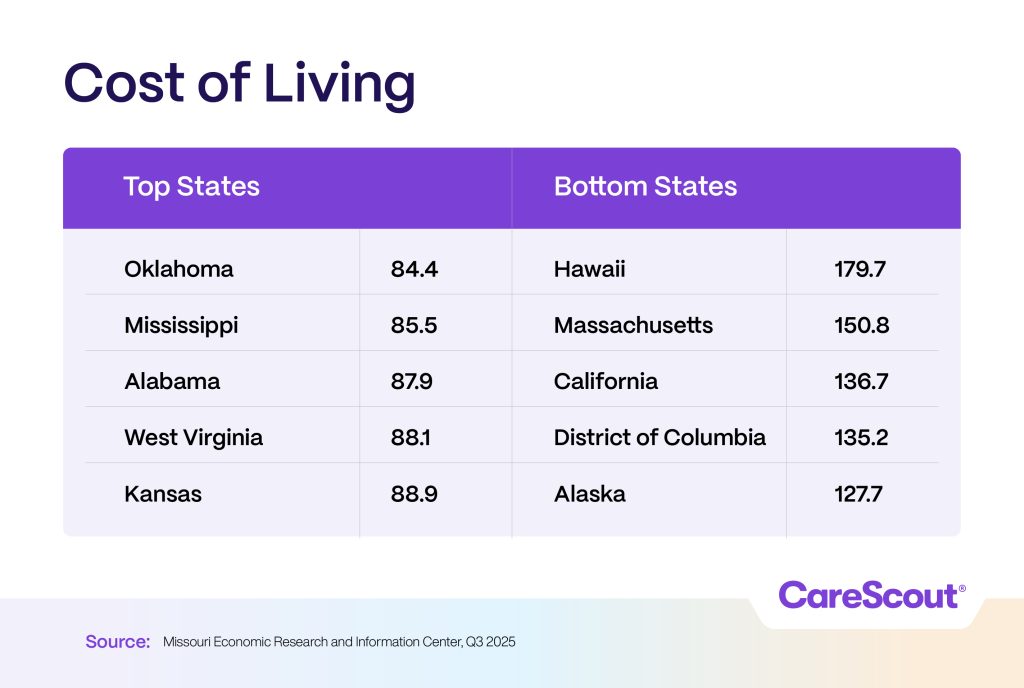
In Tulsa, Oklahoma, a two-bedroom apartment rents for roughly $875 per month. That same unit in Phoenix, Arizona runs $1,620. That gap — $745 every single month — is why Oklahoma ranked number one for overall affordability in 2026 with a cost of living index of 85.5, meaning everyday life costs roughly 14.5% less than the national baseline. The question isn’t whether these states are cheap. It’s whether they’re worth it.
The five most affordable states in 2026 are Oklahoma (85.5 index), Mississippi, Alabama, Missouri, and West Virginia. Housing, everyday expenses, and levies beyond income taxes determine your true cost of living — not tax rates alone. A household in Springfield, Missouri can live comfortably for under $3,200/month. That’s the ceiling, not the floor.
Oklahoma COL Index
#1 Most Affordable, 2026
Median Home Price
Oklahoma City, OK (2026)
Monthly Retirement Budget
Feasible in top 5 states
Below National Average
Oklahoma vs. U.S. baseline
Housing in Oklahoma, Mississippi & Alabama: The Numbers That Actually Move People
Read more: Cheapest States to Live in America
Housing is the single largest budget item for most households. In Hattiesburg, Mississippi — a college town of about 48,000 — the median home sale price hovers near $159,000 as of early . Monthly mortgage payments on that home, at a 6.8% fixed rate with 10% down, run roughly $1,020. In Huntsville, Alabama, the fastest-growing city in the state, median home prices sit around $298,000 — pricier, but still far below the national median of $419,000.
West Virginia tells an even starker story. In Morgantown, WV — home to West Virginia University and a population of 32,000 — a 3-bedroom house lists for $185,000–$225,000. Charleston, the state capital, sees median prices under $160,000. Renters in Springfield, Missouri pay a median of just $720/month for a one-bedroom — about what a parking spot costs in Manhattan.
Groceries & Essentials: What $400/Month Actually Buys You in Tulsa vs. Hartford
Connecticut residents ranked cost of living as the top issue facing their state — and grocery prices are a big reason why. A standard market basket in Hartford, Connecticut runs roughly $112 per week for a family of two. That same basket in Tulsa, Oklahoma costs approximately $87 per week — a 22% difference compounding month after month.
The USDA’s food cost data for 2026 places Oklahoma grocery costs at about 4–6% below the national average. Mississippi and Alabama sit in similar territory. Gas in Oklahoma City averages $2.89/gallon versus $3.68 in the Northeast. Utilities — electricity, gas, internet — run $145–$190/month in most Oklahoma and Missouri markets for a standard 1,000 sq. ft. apartment.
Transportation Costs: Car-Dependent but Surprisingly Cheap
Read more: The Hidden Ocean Beneath the Atlantic That Could Save Us From Thirst
Every state on this list is car-dependent. That’s the honest trade-off. But car ownership is cheaper here than in coastal metros. In Tulsa, average car insurance runs $1,380/year — vs. $2,640/year in Miami, Florida. Gas costs roughly $95–$130/month for an average commuter in these states. Auto registration fees in Missouri average just $21.25/year for a standard passenger vehicle. Total transportation for one car in these states: roughly $450–$550/month all-in.
Healthcare Costs in the Affordable South & Midwest
Healthcare is where affordability gets complicated. Alabama, Mississippi, and West Virginia rank among states with the highest rates of chronic illness — which can raise personal health costs even when premiums are lower. That said, ACA marketplace premiums in Alabama average around $412/month for a 40-year-old non-smoker on a silver plan — compared to $598/month in Connecticut. In Missouri, the Missouri Department of Insurance reports average benchmark silver plan premiums near $389/month for the same profile. Employer-sponsored plans in manufacturing-heavy markets like Huntsville, AL often run $150–$260/month for employee-only coverage.
State Tax Breakdown: Income, Property & Sales Rates Compared
Read more: $675/Month Rent: The 5 Cheapest States to Live in America
Income tax savings are just part of the equation — other levies shape your true financial picture. Here’s how the five most affordable states stack up on taxes in :
| State | Top Income Tax | Avg. Property Tax Rate | State Sales Tax | Taxes on SS Income |
|---|---|---|---|---|
| Oklahoma | 4.75% | 0.90% | 4.50% | Exempt |
| Mississippi | 4.00% (flat) | 0.79% | 7.00% | Exempt |
| Arkansas | 4.40% | 0.61% | 6.50% | Exempt |
| Alabama | 5.00% | 0.41% | 4.00% | Exempt |
| Tennessee | 0% | 0.71% | 7.00% | Exempt |
| West Virginia | 5.12% | 0.57% | 6.00% | Exempt |
| Indiana | 3.05% (flat) | 0.84% | 7.00% | Exempt |
| Missouri | 4.80% | 0.97% | 4.225% | Exempt |
Sources: Tax Foundation 2026,
U.S. Census Bureau.
Local surtaxes excluded. Rates current as of .
Housing: Where Your Dollar Stretches the Furthest
Housing is the single biggest lever on your monthly budget. Nationally, the median home price hit
$419,800 in early 2026, per the
U.S. Census Bureau.
In the states below, you’ll pay a fraction of that.
🏆 Mississippi — Cheapest in the Nation
Median home price in Jackson, MS: $157,000.
That’s not a typo. Rankin County suburbs push slightly higher at $198,000 —
still less than half the national median.
Median rent in Hattiesburg sits at $890/month for a two-bedroom.
Oklahoma — Tulsa Defies Gravity
Tulsa’s median home price is $189,500
as of Q1 2026. Oklahoma City comes in at $214,000.
Both cities offer genuine urban amenities — Gathering Place park,
a revitalized Brady Arts District — without coastal price tags.
West Virginia — The Appalachian Bargain
Morgantown, home to West Virginia University, has a median home price of
$229,000.
Smaller towns like Martinsburg clock in at $198,000.
The state’s 0.57% effective property tax rate is a quiet windfall for buyers.
Indiana — Fort Wayne Leads the Midwest
Fort Wayne, Indiana’s second-largest city, posted a median home price of
$204,000 in 2026.
Indianapolis metro averages $278,000 — expensive by Hoosier standards,
but $141,000 below the national median. Indiana’s flat
3.05% income tax is one of the lowest flat rates anywhere.
Grocery Costs: The Weekly Bill by State
The USDA’s
Economic Research Service
tracks regional food price indices annually. In 2026, the national average
monthly grocery spend for a single adult on a moderate plan is
$383. Here’s how our top states compare.


Leave a Reply