
▶ Read transcript
Here’s what you need to know about a fascinating new study linking birdwatching to brain changes. Researchers at Baycrest Hospital compared brain scans of 29 expert birdwatchers with 29 novices and found that experienced birders had measurably denser, more organized brain tissue in regions that control attention and visual recognition. The experts ranged in age from 24 to 75, suggesting these brain differences may persist or even accumulate across decades.
Now here’s where it gets contentious. The neuroscience community is split on what this means. One camp says birdwatching physically rewires the brain, much like studies have shown with taxi drivers and musicians. The other camp argues people with naturally stronger visual cognition may simply be drawn to birding in the first place. The study’s cross-sectional design can’t prove which came first.
The takeaway? You don’t need to wait for the debate to settle. Picking up birdwatching as a hobby engages attention, memory, and perception in ways that could benefit your brain, especially as you age.
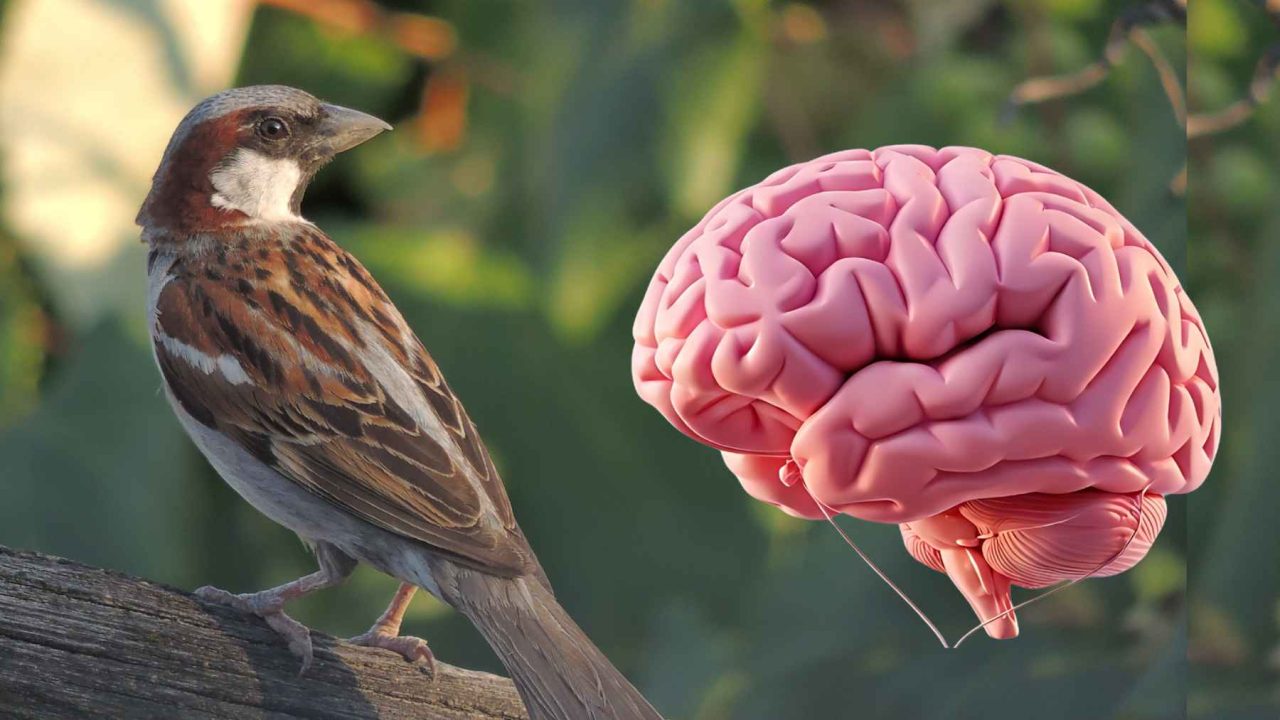
Twenty-nine brains. That’s all it took to ignite one of the most surprising neuroscience debates of 2026. A study published on March 25, 2026, found that experienced birdwatchers have measurably different brain structures compared to novices, with denser tissue in regions governing attention, perception, and visual recognition. The implications have split researchers into two camps: those who believe sustained birdwatching physically rewires neural architecture, and those who argue the differences may simply reflect pre-existing cognitive advantages.
A Hobby That Divides Neuroscientists
The study, led by Erik A. Wing of Baycrest Hospital, compared 29 skilled bird identification experts with 29 age- and sex-matched novices. Expert birders ranged in age from 24 to 75; beginners ranged from 22 to 79. Using both diffusion-weighted MRI and functional MRI, the team tracked structural and functional differences across the brain.
What they found was striking. Expert birders showed lower mean diffusivity in key brain regions, meaning water movement through neural tissue was more constrained. In neuroscience, that typically signals denser, more organized tissue. The clearest structural differences appeared in frontoparietal areas that help control attention and in regions involved in detailed visual recognition.
The debate isn’t about whether the differences exist. Both sides accept the MRI data. The argument is about causation: did birdwatching create those brain changes, or were people with certain neural advantages simply drawn to birding in the first place?
| Brain Measure | Expert Birders | Novices | Significance |
|---|---|---|---|
| Mean Diffusivity (frontoparietal) | Lower | Higher | Denser, more organized tissue in experts |
| Visual Recognition Regions | Enhanced structure | Baseline | Linked to fine-grained perceptual discrimination |
| Functional Activation (bird ID tasks) | Stronger, more focused | Weaker, more diffuse | Experts recruit specialized networks more efficiently |
| Bird ID Accuracy (local + nonlocal species) | Significantly higher | Lower | Predicted by lower mean diffusivity |
The Case That Birding Reshapes Neural Architecture
Proponents of the “birding builds brains” interpretation point to a well-established principle in neuroscience: experience-dependent plasticity. Decades of research on London taxi drivers, professional musicians, and chess masters have shown that sustained, deliberate practice in a complex domain can physically alter brain structure.
Birdwatching, they argue, is a uniquely demanding cognitive task. Identifying a warbler in a half-second flash of movement requires integrating color, shape, size, flight pattern, habitat context, and sometimes song, all simultaneously. By consistently distinguishing subtle variations in plumage, song, and flight patterns, birdwatchers effectively train their minds to perceive the world at a finer resolution.
“Neuroscientists puzzling over how human memory and learning function often turn to birdwatchers to connect the dots.”
The study’s design strengthens this argument. Participants had to match birds after a short delay, including both local and nonlocal species. The fact that lower mean diffusivity across expert-linked brain regions predicted higher bird identification accuracy suggests a direct relationship between structural changes and functional performance. If pre-existing talent were the sole explanation, you’d expect the structural differences to be uniform rather than concentrated in task-relevant regions.
Furthermore, the age range of experts (24 to 75) suggests that these brain changes may persist, or even accumulate, across decades. As NBC News reported, the changes may enhance cognition even as you age. This is particularly compelling given that frontoparietal regions are among the first to deteriorate in normal aging.
The Skeptics’ Counterargument: Selection Bias and Small Samples
Critics raise legitimate concerns. The most obvious: 29 experts and 29 novices is a small sample. Neuroimaging studies of this size can detect real effects, but they can also amplify noise. Replication with larger, more diverse cohorts remains essential before drawing sweeping conclusions.
Then there’s the chicken-and-egg problem. People who become expert birders may have started with superior visual discrimination, stronger attentional control, or greater working memory capacity. These pre-existing cognitive strengths could have made birding more rewarding, encouraging deeper engagement. The brain differences observed in the MRI might reflect the starting conditions, not the journey.
Skeptics also note that expert birders tend to spend more time outdoors, engage in more physical activity, and maintain richer social networks through birding communities. Any of these factors could independently contribute to the observed brain differences. Disentangling the specific cognitive demands of bird identification from the broader lifestyle of an avid birder is methodologically challenging.
There’s also the question of domain specificity. If birdwatching rewires the brain, does butterfly identification do the same? What about mushroom foraging or gemstone collecting? Without comparison groups of other visual experts, it’s difficult to claim something unique about birding itself.
What the MRI Data Actually Reveals
Setting aside interpretive debates, the raw findings deserve close examination. The study used two complementary imaging techniques. Diffusion-weighted MRI measures how freely water molecules move through brain tissue. In regions with more densely packed neurons, more myelin, or more complex cellular architecture, water movement is more restricted, producing lower mean diffusivity values.
Functional MRI, meanwhile, tracked which brain regions activated during bird identification tasks. Together, the two methods painted a converging picture: experts didn’t just perform better on the tasks. Their brains were structurally and functionally distinct in the very regions you’d predict would matter for this kind of expertise.
The study included 15 women among the experts and 14 among the beginners, providing reasonable sex balance. The age matching (experts 24–75, novices 22–79) controlled for the confound of age-related brain changes. These design choices don’t eliminate all alternative explanations, but they do narrow the field considerably.
You’re 55 years old and your doctor suggests picking up a cognitively stimulating hobby to support brain health. A friend invites you to join a local birding group that meets three mornings per week. You’ve never been interested in birds before.
Critically, the predictive relationship between brain structure and task performance adds weight to the expertise interpretation. Lower mean diffusivity didn’t just correlate with being an expert. It predicted how accurately an expert could identify birds. This dose-response pattern is harder to explain through selection bias alone.
Birding as Cognitive Medicine: An Editorial Assessment
After weighing both sides, the most parsimonious interpretation is that birdwatching expertise and brain structure exist in a reinforcing loop. Some degree of pre-existing cognitive aptitude likely draws people toward birding. But years of sustained practice almost certainly amplify and refine those neural circuits further.
This interpretation aligns with the broader neuroplasticity literature. London taxi drivers don’t have enlarged hippocampi because people with big hippocampi become cab drivers. Musicians don’t have thicker auditory cortices because of genetic luck. Practice matters. And birdwatching, with its relentless demand for rapid, fine-grained visual discrimination, is precisely the kind of practice that neuroscience predicts would leave structural traces.
The skeptics are right that we need longitudinal data. They’re right that the sample is small. But dismissing the findings entirely would require ignoring decades of convergent evidence from other expertise domains.
What This Means for Aging, Hobbies, and Future Research
The implications extend well beyond ornithology. If sustained birdwatching genuinely strengthens frontoparietal networks, it could represent a low-cost, accessible form of cognitive maintenance for aging populations. Frontoparietal regions are critical for executive function, working memory, and attentional control. These are exactly the capacities that decline most noticeably with age.
The next research steps are clear. Longitudinal studies should track beginning birders over five to ten years, scanning their brains at regular intervals. Comparison groups of other visual experts (entomologists, botanists, art appraisers) would help determine whether the effects are specific to birding or general to any form of visual expertise.
There’s also a public health angle. Birdwatching is free, requires no special equipment beyond a pair of binoculars, and can be practiced almost anywhere. If future research confirms the causal link, prescribing birding walks could become as evidence-based as prescribing physical exercise for cardiovascular health.
For now, the 58 brains in the Baycrest study have opened a window into something remarkable. The simple act of watching a cedar waxwing strip berries from a branch, repeated thousands of times across decades, may leave a physical signature in the tissue of the human brain. Neuroscience has spent years studying expertise in chess, music, and sports. Perhaps the most illuminating laboratory was always just outside the window, perched on a branch, waiting to be noticed.




Leave a Reply