
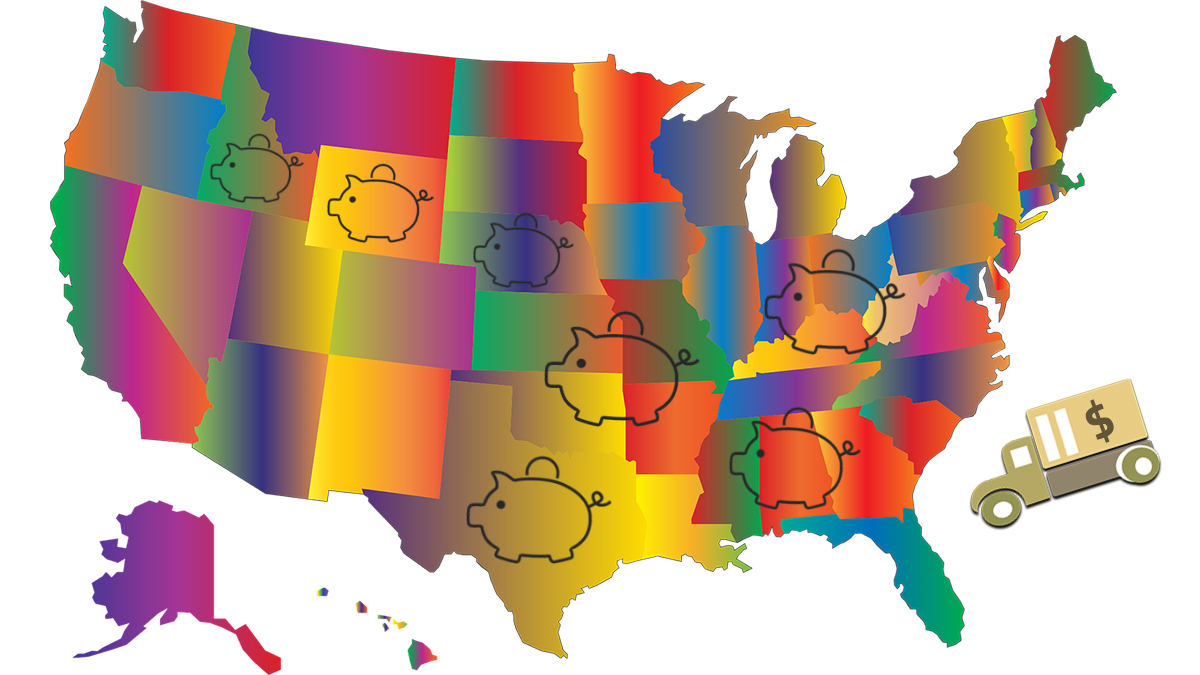
In Tulsa, Oklahoma, a two-bedroom apartment rents for around $750 a month — that’s less than a studio costs in Austin. Oklahoma ranks number one for overall affordability in 2026, posting a cost of living index of just 85.5 — meaning everyday life runs roughly 14.5% cheaper than the national baseline. That gap translates to real dollars: thousands per year, tens of thousands per decade. Half of American households are quietly running the numbers right now. This guide gives you the full ranking, the actual monthly costs, and the honest trade-offs.
The five cheapest states in 2026 are Oklahoma (85.5 index), Mississippi, Alabama, Missouri, and West Virginia. Combined with remote-work income, residents in these states routinely save $800–$1,400/month versus California or New York equivalents. Housing, everyday expenses, and local levies — not just income tax — determine true affordability.
#1 Cheapest State
Oklahoma City, OK
Tulsa, OK
Oklahoma, 2026
Why People Are Actually Leaving High-Cost States Right Now
Read more: Cheapest States to Live in America
The migration math shifted hard after 2022. Remote work didn’t die — it matured into hybrid arrangements and full-remote roles that pay San Francisco salaries to people living in Bartlesville, Oklahoma. Half of American states have annual total household expenditures of approximately $75,000 or less — the other half stretch well beyond that, often past $90,000. That $15,000+ annual gap is what’s driving U-Haul trucks south and east.
In Bentonville, Arkansas — just 30 miles from the Missouri border — a family of four routinely spends $3,100–$3,600/month on all household expenses. The same lifestyle in Denver runs closer to $5,200/month. People aren’t sacrificing quality. They’re arbitraging geography.
The Full 2026 Ranking: What You Actually Pay Each Month
Forbes ranks the cheapest states based on the cost of living index for each state, factoring housing, groceries, utilities, transportation, and healthcare. Here’s what that index means in real monthly dollars for a single adult renting:
| Rank | State | COL Index | Avg. 1BR Rent | Est. Monthly Total | Anchor City |
|---|---|---|---|---|---|
| 1 | Oklahoma | 85.5 | ~$750 | ~$2,650/mo | Tulsa, Oklahoma City |
| 2 | Mississippi | ~86.8 | ~$720 | ~$2,580/mo | Hattiesburg, Meridian |
| 3 | Alabama | ~87.9 | ~$800 | ~$2,720/mo | Huntsville, Tuscaloosa |
| 4 | Missouri | ~88.2 | ~$830 | ~$2,790/mo | Springfield, Joplin |
| 5 | West Virginia | ~88.9 | ~$670 | ~$2,500/mo | Morgantown, Clarksburg |
Cost index based on Council for Community and Economic Research (C2ER) data. Monthly estimates assume a single adult, no dependents. Housing reflects median 1BR rent in mid-size cities.
The Full Top 15 Cheapest States — Ranked
Read more: $675/Month Rent: The 5 Cheapest States to Live in America
West Virginia and Mississippi have swapped the top spot for years. In , Mississippi holds the crown — narrowly. Here’s the complete picture, ranks 6 through 15.
| Rank | State | Cost Index | Median Rent (1BR) | Est. Monthly Cost |
|---|---|---|---|---|
| 6 | Oklahoma | ~89.4 | ~$740 | ~$2,620/mo |
| 7 | Alabama | ~89.9 | ~$760 | ~$2,650/mo |
| 8 | Iowa | ~90.1 | ~$780 | ~$2,680/mo |
| 9 | South Dakota | ~91.0 | ~$790 | ~$2,700/mo |
| 10 | Indiana | ~91.4 | ~$800 | ~$2,720/mo |
| 11 | Nebraska | ~91.8 | ~$820 | ~$2,750/mo |
| 12 | Ohio | ~92.2 | ~$830 | ~$2,770/mo |
| 13 | Louisiana | ~92.7 | ~$840 | ~$2,790/mo |
| 14 | Michigan | ~93.1 | ~$860 | ~$2,820/mo |
| 15 | Tennessee | ~93.6 | ~$870 | ~$2,850/mo |
Deep Dive: Mississippi — America’s Cheapest State in 2026
Hattiesburg, MS · Lamar County · Pop. ~47,000
Spend a week in Hattiesburg and you’ll understand why Mississippi keeps winning the affordability crown. The city sits at the crossroads of U.S. 98 and Interstate 59 in Forrest County — 90 miles from Biloxi, 65 miles from Jackson. It’s not glamorous. But your dollar genuinely stretches here in ways that feel almost disorienting if you’re arriving from the East Coast.
A two-bedroom apartment near the University of Southern Mississippi runs $750–$900/month. A sit-down lunch is $9. Unleaded gas hovers around $2.85/gallon — well below the national average. The state has no estate tax, and its income tax is being phased down to 0% by 2030 under legislation signed in 2022.
Sample Monthly Budget — Single Adult, Hattiesburg, MS
Deep Dive: West Virginia — The Overlooked Bargain
Read more: Why That $745/Month Rent Gap Could Change Where You Live in 2026
Morgantown, WV · Monongalia County · Pop. ~32,000
People hear “West Virginia” and think isolation. But Morgantown — home to West Virginia University, founded in — is a functioning small city
Frequently Asked Questions

You Might Also Like
Knoxville’s $2,410/Month Cost of Living: What the Index Won’t Tell You
Knoxville, TN costs a single adult ~$2,410/month — 18% below the U.S. average. Here's exactly…

Austin’s $5,400 Monthly Burn: What a Cost of Living Index Really Measures
Austin hit $5,400/month. Here's what a cost of living index actually measures — 6 weighted…

Vermont Renter Rebate 2026: Income Tier Rules That Stack Two Programs
Vermont's dual-tier renter rebate delivers up to $2,474/year to SSI recipients—but the income cliff at…
Leave a Reply