
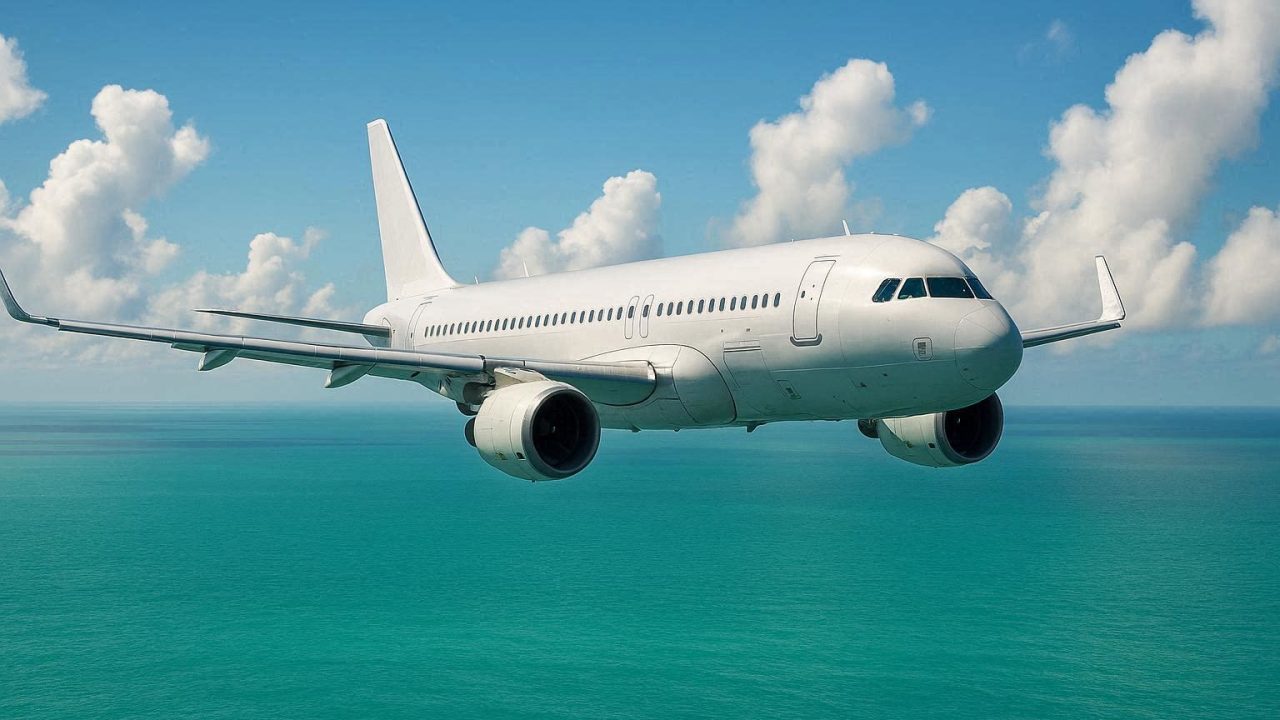
A single aircraft order worth $15.8 billion just reshaped the competitive landscape of global aviation — and it signals something much bigger about where air travel is heading in Asia over the next decade.
China Eastern Airlines, the Shanghai-based carrier, has agreed to purchase 101 jets from Airbus, all from the A320neo family. The deal is one of the most significant commercial aviation agreements in recent memory, covering deliveries scheduled between 2028 and 2032. For Airbus, it deepens an already strong foothold in the world’s fastest-growing aviation market. For China Eastern, it’s a major step forward in modernizing a fleet that will need to handle surging passenger demand across domestic and regional routes.
The scale of this commitment — over a hundred aircraft, nearly five years of scheduled deliveries, and a price tag that rivals the GDP of small nations — makes this far more than a routine procurement deal. It reflects a deliberate, long-range strategy by one of China’s flagship carriers.
(function(){var wrp=document.getElementById(“paap_stat_69c78f1fd42e41.27758647”);if(!wrp)return;var ids=[“paap_stat_69c78f1fd42e41.27758647_c0″,”paap_stat_69c78f1fd42e41.27758647_c1”];var dur=1800;function ease(t){return 1-Math.pow(1-t,3);}function anim(){ids.forEach(function(id){var el=document.getElementById(id);if(!el)return;var tgt=parseFloat(el.getAttribute(“data-target”))||0;var pfx=el.getAttribute(“data-prefix”)||””;var sfx=el.getAttribute(“data-suffix”)||””;var dec=parseInt(el.getAttribute(“data-decimals”))||0;var st=null;function step(ts){if(!st)st=ts;var p=Math.min((ts-st)/dur,1);var v=ease(p)*tgt;el.textContent=pfx+v.toFixed(dec)+sfx;if(p<1)requestAnimationFrame(step);}requestAnimationFrame(step);});}if("IntersectionObserver" in window){var obs=new IntersectionObserver(function(e){e.forEach(function(en){if(en.isIntersecting){anim();obs.disconnect();}});},{threshold:0.2});obs.observe(wrp);}else{anim();}})();
Why China Eastern Is Betting Big on the A320neo Family
The A320neo family isn’t a single aircraft — it’s a range of narrow-body jets built around the same core platform but optimized for different route types and passenger loads. China Eastern’s order spans four specific variants: the A320neo, A321neo, A321XLR, and A321LR.
That mix matters. The standard A320neo and A321neo are workhorses for high-frequency domestic routes, capable of moving large numbers of passengers efficiently between China’s major cities. The A321LR and A321XLR, however, are long-range variants — the XLR in particular is designed to connect city pairs that previously required a widebody aircraft or a connecting flight. For China Eastern, this opens up new regional route possibilities across Asia and potentially into Europe and the Middle East without the operating costs of a larger jet.
Fuel efficiency is central to the appeal of the neo family. Compared to previous-generation aircraft, these jets deliver meaningful reductions in fuel burn — a critical consideration as airlines globally face pressure to manage costs and reduce emissions. For a carrier operating at China Eastern’s scale, those efficiency gains compound significantly across hundreds of daily flights.
The Numbers Behind the Deal
| Detail | Specifics |
|---|---|
| Total order value | $15.8 billion |
| Number of aircraft | 101 jets |
| Aircraft family | Airbus A320neo family |
| Variants included | A320neo, A321neo, A321XLR, A321LR |
| Delivery window | 2028 to 2032 |
| Airline headquarters | Shanghai, China |
The delivery timeline stretching from 2028 to 2032 is worth noting. These aren’t aircraft China Eastern needs tomorrow — this is strategic planning on a five-year horizon, signaling confidence in continued passenger growth and the financial stability to commit to a major capital program well in advance.
What This Means for Airbus’s Position in China
China is one of the most contested aviation markets on the planet. Airbus and Boeing have long competed fiercely for orders from Chinese carriers, and the geopolitical backdrop — including trade tensions and the rise of China’s own COMAC aircraft manufacturer — makes every major order a statement as much as a transaction.
This deal reinforces Airbus’s standing at a moment when that position cannot be taken for granted. The A320neo family has clearly resonated with Chinese airline procurement teams, and an order of this size from a major state-affiliated carrier like China Eastern carries significant weight — both commercially and symbolically.
Observers note that Airbus has been steadily gaining traction across Asia, with China in particular showing strong appetite for the neo family’s combination of range flexibility and operating economics. A deal of this scale suggests that relationship is deepening, not plateauing.
What Happens Between Now and 2028
With the order now confirmed, the work shifts to Airbus’s production side. Manufacturing 101 aircraft across multiple variants, coordinating delivery slots, and managing supply chain logistics across a four-year window is an enormous undertaking — particularly as Airbus has faced production pressures across its narrowbody lines in recent years.
For China Eastern, the intervening years will involve planning how these new jets integrate into existing fleet schedules, training programs for pilots and maintenance crews, and decisions about which routes get upgraded first once deliveries begin.
The airline will also be watching closely how the A321XLR performs in early commercial service with other carriers. The XLR is one of the most anticipated new aircraft in aviation, and China Eastern’s order suggests strong confidence in its long-range capabilities — but real-world operational data from the first few years of service will inform exactly how and where those jets get deployed.
What’s clear is that China Eastern isn’t standing still. This order is part of an ongoing fleet modernization strategy, and the airline appears committed to positioning itself with one of the most modern and efficient narrowbody fleets among major Asian carriers by the early 2030s.
Frequently Asked Questions
How much is China Eastern’s Airbus order worth?
The order is valued at $15.8 billion and covers 101 aircraft from the A320neo family.
Which specific Airbus aircraft are included in the deal?
The order includes four variants: the A320neo, A321neo, A321XLR, and A321LR.
When will China Eastern receive the new aircraft?
Deliveries are scheduled to take place between 2028 and 2032.
Where is China Eastern Airlines based?
China Eastern Airlines is headquartered in Shanghai, China.
Why did China Eastern choose the A320neo family?
The A320neo family offers fuel efficiency and route flexibility across both domestic and regional operations, making it well-suited to China Eastern’s network expansion plans.
Does this deal affect Boeing’s position in China?
8 billion order going to Airbus is widely seen as a significant win for Airbus in one of aviation’s most competitive markets.



Leave a Reply