
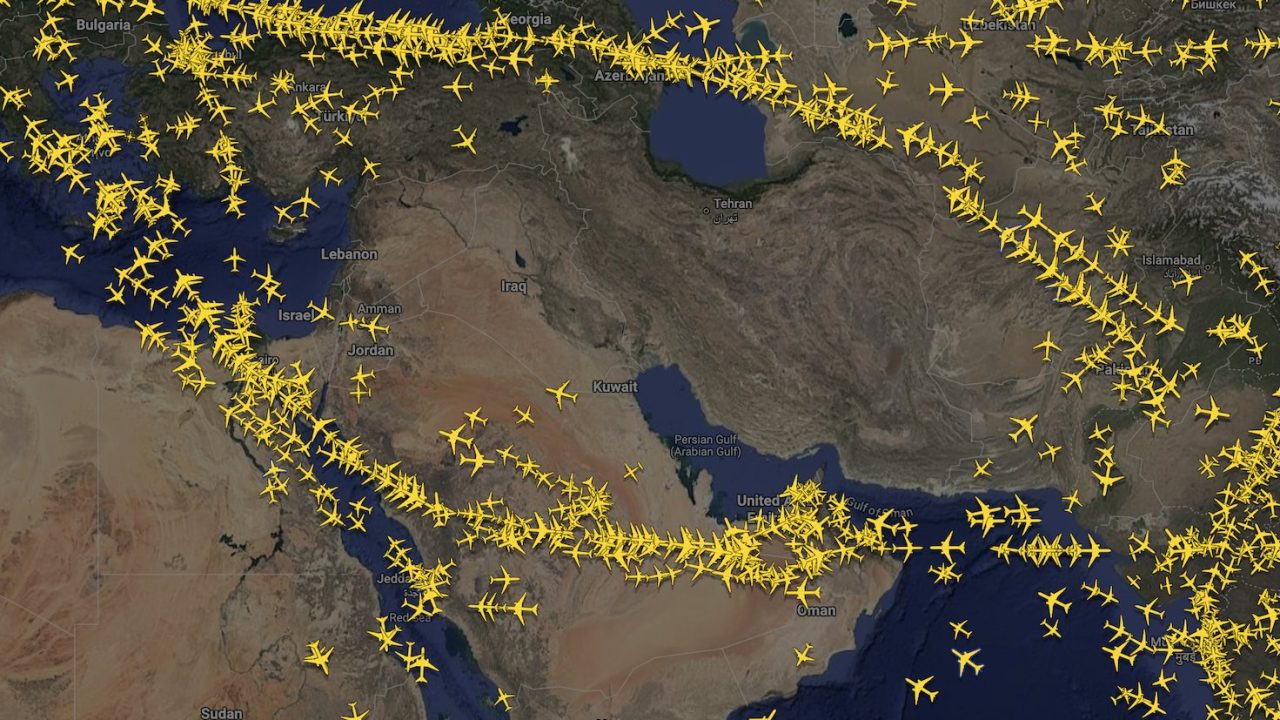
An estimated 116 million international trips are now at risk as escalating conflict involving Iran has forced the closure of critical air corridors across the Middle East — and if you have a flight booked anywhere that routes through the region, your plans may already be in serious jeopardy.
The airspace shutdown is not a minor inconvenience. It is a structural disruption to the global aviation network, one that is cascading outward in ways most travelers have not yet felt — but almost certainly will.
Major hub airports that normally serve as the connective tissue of long-haul international travel are at the center of the problem. And the ripple effects stretch far beyond the Middle East itself.
What Is Actually Happening to Global Airspace Right Now
Following the escalation of the Iran conflict, vast air corridors over the Middle East have been shuttered for safety. These are not minor regional routes. They are among the busiest and most strategically important flight paths on the planet, connecting Europe, Asia, Africa, and Oceania through a relatively narrow band of airspace.
The airports most directly affected are the ones travelers know well: Dubai, Doha, and Abu Dhabi. Industry analysts describe these as “gateway” airports — massive hubs that funnel hundreds of millions of passengers annually between continents. With those gateways compromised, airlines are being forced to seek alternative routing that is longer, less efficient, and in many cases simply not viable with current aircraft range or crew scheduling rules.
The result is a compounding crisis. Flights are being cancelled outright. Others are being rerouted on paths that add hours to journey times. And the knock-on effect is spreading across carrier networks that had no direct connection to the region in the first place.
The Plane Shortage Problem Nobody Is Talking About
Beyond the route disruptions, there is a second, less obvious crisis emerging: a critical shortage of available aircraft.
When a conflict zone expands and no-fly zones are declared, any aircraft physically located within that airspace at the time of closure — or operating routes through it — can become effectively stranded. Those planes are removed from global circulation. They cannot be repositioned easily. They cannot serve other routes. They simply sit.
For airlines already operating with tight fleet utilization — which is the norm across the industry — losing even a handful of aircraft from active rotation creates a cascade. Fewer planes available means fewer flights that can operate. Fewer flights means more passengers competing for limited seats. And that means prices rise while options shrink.
This is the part of the story that could affect you even if your trip has nothing to do with the Middle East. A plane grounded in a conflict zone is a plane not flying your route somewhere else.
Routes, Hubs, and the Numbers Behind the Disruption
The scale of what is at stake becomes clearer when you look at the specific pressure points identified so far.
| Factor | Detail |
|---|---|
| International trips at risk | Approximately 116 million |
| Primary hubs affected | Dubai, Doha, Abu Dhabi |
| Root cause | Airspace closures linked to Iran conflict escalation |
| Route types most impacted | Long-haul routes transiting through Middle East corridors |
| Secondary crisis | Aircraft stranded in or near no-fly zones, removed from global fleet |
| Airline response | Seeking alternative, less efficient routing paths |
- Long-haul routes between Europe, South Asia, Southeast Asia, and East Africa are among the most exposed, as they historically transit Middle Eastern airspace.
- Carriers based in the Gulf region — whose entire business model is built around those hub airports — face the most direct operational pressure.
- Airlines rerouting around the closures are absorbing higher fuel costs and longer flight times, squeezing already thin margins.
- Mass cancellations have already been recorded across multiple carriers, with grounded flights concentrated on routes that cannot be economically rerouted.
How This Could Wreck Your Specific Trip
If you are traveling in the coming weeks or months, the disruption is not abstract. There are several concrete ways this situation could directly affect your plans.
Your flight could be cancelled without a clear rebooking option. When airlines cancel en masse, the alternative seats available are limited. Passengers are being placed on waitlists or offered refunds rather than rebookings, because there simply are not enough aircraft or open routes to absorb everyone.
Your layover airport may no longer be viable. If your itinerary includes a connection through Dubai, Doha, or Abu Dhabi, your airline may restructure that routing entirely — potentially adding many hours to your journey or requiring a completely different set of flights.
Ticket prices on surviving routes are climbing. As available seats shrink and demand concentrates on fewer viable flights, fares on alternative routes are rising sharply. Travelers who need to rebook are finding that replacement options cost significantly more than their original tickets.
Travel insurance claims are surging. Analysts note that conflict-related cancellations create complicated insurance situations, as many standard travel policies contain exclusions related to war or geopolitical events. Travelers should review their policy language carefully before assuming they are covered.
What Travelers Should Do Right Now
The situation remains fluid, which makes planning difficult — but there are practical steps worth taking immediately if you have upcoming travel.
- Check your airline’s current advisory page for any route-specific updates or cancellation policies related to the Middle East disruptions.
- If your itinerary connects through Dubai, Doha, or Abu Dhabi, contact your carrier directly to understand whether alternative routing is available and what your rebooking rights are.
- Review your travel insurance policy for war and conflict exclusion clauses before filing or assuming coverage.
- If your travel dates are flexible, consider postponing until the airspace situation stabilizes — airlines in crisis situations are often more willing to waive change fees than they would be under normal circumstances.
- Monitor official aviation authority updates; airspace status can change quickly as diplomatic and military situations evolve.
The honest reality is that no one can say with certainty when Middle Eastern airspace will reopen, or what the aviation landscape will look like when it does. The 116 million trips currently at risk represent an enormous volume of human plans, business commitments, and family travel — all of it hanging on a geopolitical situation that remains unresolved.
Frequently Asked Questions
How many international trips are at risk from the Middle East airspace closures?
Approximately 116 million international trips are reported to be at risk as a result of the airspace disruptions linked to the Iran conflict escalation.
Which airports are most affected by the Middle East flight disruptions?
The major hubs most directly impacted are Dubai, Doha, and Abu Dhabi, which industry analysts describe as critical “gateway” airports for global long-haul travel.
Why is there a shortage of aircraft if the problem is airspace closures?
Aircraft physically located within or operating through designated no-fly zones are effectively grounded and removed from global circulation, reducing the total number of planes available to airlines worldwide.
Will my travel insurance cover a cancellation caused by this conflict?
Many standard travel insurance policies contain exclusions for war or geopolitical events — travelers should review their specific policy language carefully, as coverage is not guaranteed in these circumstances.
Which types of routes are most likely to be cancelled or disrupted?
Long-haul routes that typically transit through Middle Eastern airspace — particularly those connecting Europe, South Asia, Southeast Asia, and East Africa — are reported to be the most exposed to cancellations and rerouting.
Is there a timeline for when the airspace might reopen?
No confirmed timeline has been established. The situation remains fluid and depends on the progression of the conflict, meaning travelers should monitor updates from their airlines and official aviation authorities closely.




Leave a Reply