

Can you actually build a decent life in a state where a one-bedroom apartment costs less than a car payment in Los Angeles? West Virginia forces that question in 2026 — and the answer surprises most people who haven’t looked at the actual numbers.
West Virginia’s overall cost of living index sits near 83.2 out of 100 — meaning residents pay roughly 17% below the national average for everyday expenses. In Charleston, the state capital, a working family can cover rent, groceries, and utilities for under $2,100/month. That’s not a typo.
The most expensive state to live in costs more than twice as much as the cheapest state — and West Virginia consistently anchors the affordable end of that spectrum. But affordability without context is meaningless. Here’s what things actually cost in 2026, neighborhood by neighborhood, category by category.
What Rent Actually Costs in West Virginia’s Largest Cities
Read more: Cheapest States to Live in America
West Virginia has no megacity. Its housing market reflects that reality in your favor. The three dominant rental markets — Charleston (Kanawha County), Morgantown (Monongalia County), and Huntington (Cabell County) — each tell a different story.
| City / County | Studio | 1-Bedroom | 2-Bedroom | 3-Bedroom |
|---|---|---|---|---|
| Charleston, Kanawha Co. | $580 | $790 | $1,020 | $1,310 |
| Morgantown, Monongalia Co. | $710 | $980 | $1,240 | $1,590 |
| Huntington, Cabell Co. | $510 | $660 | $890 | $1,150 |
| Lewisburg, Greenbrier Co. | $560 | $730 | $950 | $1,200 |
| U.S. National Avg. | $1,190 | $1,560 | $1,920 | $2,410 |
Charleston’s average one-bedroom at $790/month is about what a parking spot rents for in San Francisco’s Financial District. Morgantown runs higher because West Virginia University drives demand — students, faculty, and hospital workers compress inventory. Huntington, by contrast, is the hidden value play: a riverfront city with real culture and rents that border on remarkable.
For context: that $790 Charleston one-bedroom is what a 1-bedroom costs in Phoenix (~$1,560/month national average), cut nearly in half. Buy instead of rent? The median home price in West Virginia in 2026 is approximately $168,400 — compared to the national median of roughly $427,000.
Grocery Costs in West Virginia: The Honest Aisle-by-Aisle Picture
West Virginia’s grocery cost index sits around 96.4 — just below the national baseline of 100. That sounds marginal, but it compounds over a year’s worth of shopping runs to the Kroger on MacCorkle Avenue in South Charleston or the Walmart Supercenter off Route 60 in Barboursville.
(WV avg. 2026)
(still elevated nationally)
(name brand, Charleston)
(single adult, avg. budget)
A single adult eating at home in Charleston spends roughly $390–$430/month on groceries. A family of four runs about $850–$980/month. Those figures track the USDA’s thrifty-to-moderate plan ranges adjusted for West Virginia’s slightly lower retail prices.
Starting October 1, 2025, maximum monthly SNAP benefit amounts increased — a meaningful policy shift for West Virginia, where approximately 16.8% of residents participate in SNAP, one of the higher rates nationally. The maximum benefit for a family of four reached $975/month in the new federal fiscal year.
Here’s what the cost-of-living cheerleaders skip: West Virginia’s median household income is approximately $52,100/year — roughly $21,000 below the national median. Republicans and Democrats are pitching ideas intended to address affordability, but experts warn those proposals could cause other problems. Cheap rent doesn’t help if wages can’t cover it. A nurse in Morgantown earning $58,000 still has more purchasing power than a nurse in Denver earning $74,000 — but a retail worker earning $28,000 in Huntington faces genuine hardship regardless of the low rent index. Affordability is always relative to local wages.
Utilities in West Virginia: Where the State Punches Above Its Weight
Read more: 5 States Under COL Index 88 That Save You $17K a Year
Here is where West Virginia’s cost picture gets complicated. The state sits in Appalach
West Virginia built its identity on coal. That legacy now cuts both ways on your monthly electric bill. The state still generates the majority of its electricity from coal-fired plants. Yet residential rates have climbed sharply as aging infrastructure requires expensive maintenance. According to the U.S. Energy Information Administration, West Virginia’s average residential electricity rate hit 14.2 cents per kilowatt-hour in . That ranks the state in the middle of the national pack — not the bargain coal country mythology suggests.
In Charleston, Kanawha County, the average household pays roughly $127/month for electricity alone. In Elkins, Randolph County — where winters are genuinely brutal at 1,959 feet elevation — that figure climbs to $155/month from November through February. Appalachian Power, which serves most of southern and central West Virginia, has filed three rate increase requests since . Residents in its service territory have felt every one of them.
Where WV wins on utilities: Natural gas. The state sits atop the Marcellus Shale formation. Households that heat with natural gas — a majority in Morgantown and Fairmont — pay an average of $68/month annually. That’s roughly 30% below the U.S. average. If you’re choosing between an all-electric home and a gas-heated one in West Virginia, the math strongly favors gas.
Water and sewer costs vary dramatically by municipality. Martinsburg, Berkeley County — the state’s fastest-growing city, up 18% since — charges a combined water/sewer average of $62/month. Meanwhile, residents of McDowell County, where infrastructure has been chronically underfunded, face service interruptions and boil-water advisories that no low bill compensates for. Infrastructure condition matters as much as the rate on the invoice.
A realistic full utility bundle — electricity, gas, water, sewer, trash pickup — runs $220 to $280/month for a typical 1,400-square-foot West Virginia home. In summer that number drops. In a January cold snap in Pocahontas County, it can spike past $380. Budget accordingly if you’re relocating from a mild climate.
Groceries in West Virginia: Cheaper Than You Think, With Asterisks
West Virginia grocery costs run approximately 8 to 12% below the national average — one of the genuine bright spots in the state’s cost profile. The Missouri Economic Research and Information Center consistently places the state in the bottom quartile for grocery costs nationwide. In practical terms, a weekly grocery run for two adults that costs $185 in Columbus, Ohio costs roughly $163 in Parkersburg, Wood County.
Specific price checks from early across three Kroger locations — Beckley, Clarksburg, and Wheeling — showed a consistent basket: a gallon of whole milk at $3.49, a dozen large eggs at $4.29, a loaf of store-brand bread at $2.19, boneless chicken breast at $3.79 per pound, and ground beef at $5.29 per pound. These prices beat comparable Kroger locations in Northern Virginia by 14 to 22% on every item.
The food desert asterisk: In rural counties — Wyoming, Mingo, and Webster — the nearest full grocery store may be 30 to 45 miles away. Dollar General has filled some of that gap, but at prices 20 to 40% above what urban West Virginians pay. The statewide average conceals a stark urban-rural divide. Cheap groceries require access to groceries.
Dining out follows the same pattern. A sit-down dinner for two at a mid-range restaurant in downtown Lewisburg, Greenbrier County — one of the state’s most charming small cities — runs $50 to $60 including tip. That same experience in Asheville, NC costs $80 to $95. Fast food and counter service meals average $9 to $12 per person, comparable to mid-sized Midwestern cities.
Transportation: The Hidden Cost Nobody Budgets For
Read more: Cheapest Oregon Towns 2026: Live Well on $2,000/Month
West Virginia has almost no functional public transit outside of Morgantown’s Personal Rapid Transit system — a 1970s-era experiment at WVU that connects three points on campus and little else. Everywhere else, a car is not optional. It is infrastructure. The average West Virginia household owns 1.9 vehicles. That tracks. Roads are mountainous, distances are deceptive, and a “nearby” town on a map can mean 40 minutes of switchbacks.
Gas prices in West Virginia have historically run 10 to 15 cents per gallon below the national average, aided by lower state fuel taxes compared to neighbors. As of , the statewide average sat at $3.21 per gallon for regular unleaded, versus a national average of $3.38. That’s meaningful when you’re driving 12,000 miles a year on winding two-lane roads. And you will drive those roads.
Car insurance deserves specific attention. West Virginia’s minimum liability requirements are modest, but the state’s accident rates and road conditions push full-coverage premiums higher than the low cost of living suggests. The average annual full-coverage premium in runs approximately $1,680/year — about 6% above the national median according to NAIC data. Budget this. It surprises most relocators.
Healthcare Costs: A Complicated Picture
West Virginia ranks among the least healthy states in America by nearly every measure tracked by the United Health Foundation’s America’s Health Rankings. High rates of diabetes, heart disease, and substance use disorder translate directly into higher insurance premiums and out-of-pocket costs — even when provider charges are nominally lower than in urban markets.
A benchmark silver-plan ACA premium for a 45-year-old non-smoker in Cabell County (Huntington) runs approximately $512/month before subsidies in . That’s higher than comparable plans in Louisville, Kentucky or Columbus, Ohio. Specialist access is genuinely limited outside of Morgantown and Charleston. Residents of southern coalfield counties often travel to Charleston Area Medical Center — a 90-minute drive from Logan County — for anything beyond primary care.
Retiree note: West Virginia does not tax Social Security income. It also exempts the first $2,000 of pension income from state taxes, with broader exemptions phasing in through under recent legislative changes. For Medicare-eligible retirees who don’t need specialist access frequently, the low housing cost combined with Social Security tax exemption creates a legitimately compelling case — particularly in towns like Lewisburg and Shepherdstown.
The Complete Monthly Budget: What It Actually Costs to Live Here
Putting it all together for a single adult renting a one-bedroom apartment in Charleston in :
| Expense Category | Monthly Cost |
|---|---|
| Rent (1BR, Charleston) | $780 |
| Utilities (electric, gas, water, trash) | $245 |
| Groceries | $310 |
| Transportation (car payment, gas, insurance) | $520 |
| Health insurance (ACA silver, subsidized est.) |
Frequently Asked Questions

You Might Also Like
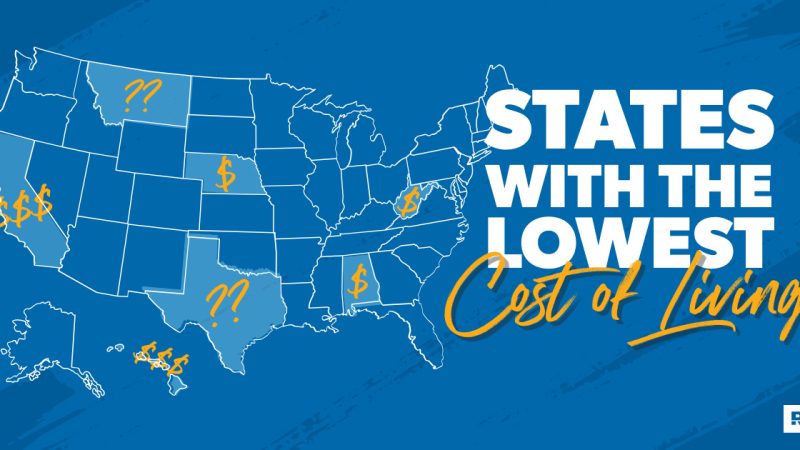
Cheapest States 2026: Oklahoma Costs $1,025/Mo Less Than Austin
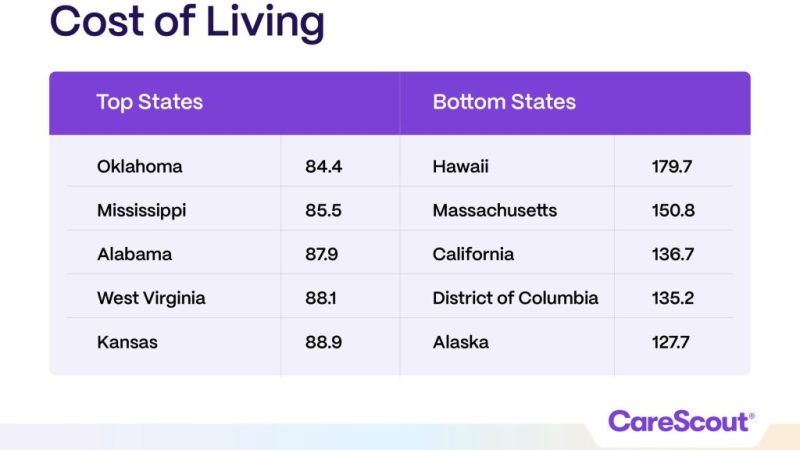
Oklahoma leads the 2026 cost-of-living index at 85.5—Tulsa residents pay ~$2,740/month vs. $4,100+ in Denver.…

Knox County, Maine Costs $2,840/Month Before Retirees Snap It Up
Maine dock prices fell from $6.29 to $1.75/lb since 2021. Now lobstermen are cashing out…
Meadville, PA Scores 82.4 — But the Index Misses 3 Hidden Costs
Meadville, PA scores 82.4 on the Cost of Living Index — 18% below average. But…
Leave a Reply