
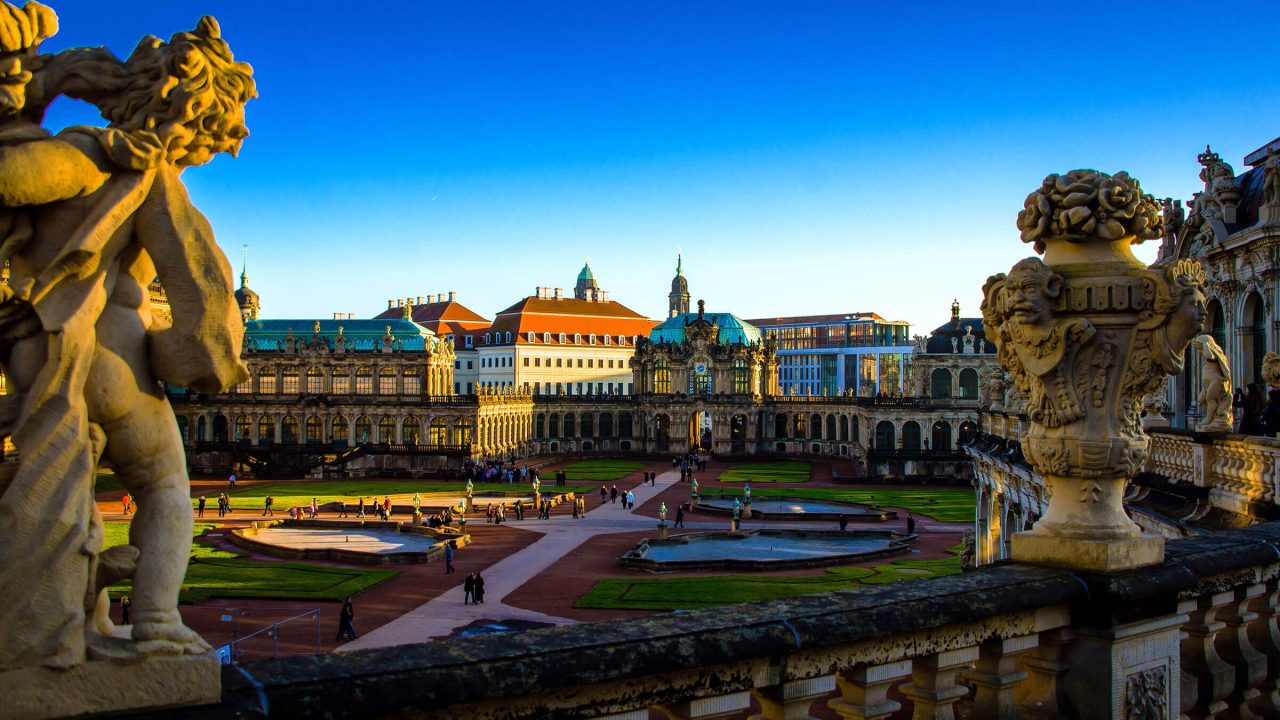
Here is a bold claim most travel writers refuse to make: Dresden does not need your nostalgia. The countless articles celebrating its baroque skyline, its Elbe River reflection, its phoenix-from-the-ashes war narrative — they have turned one of Germany’s most alive cities into a kind of elegant ruin people visit to feel sad and impressed. Dresden deserves better than that.
The city known as Elbflorenz, or “Florence on the Elbe,” is not merely a monument to reconstruction. It is a place where a 17th-century cathedral shares a skyline with provocative contemporary galleries, where Dresdner Stollen is sold next to experimental performance venues. The real debate is not whether Dresden is worth visiting. Of course it is. The debate is what kind of city Dresden actually is in 2026, and whether travelers are seeing it clearly.
The Divided Opinion: Museum City vs. Living Cultural Capital
Travel culture has sorted Dresden into a tidy category: baroque destination, war memorial, Christmas market. Mention the city and most people picture the Frauenkirche dome, the Semperoper opera house, the sweeping Canaletto view of the Elbe. These images are real and magnificent. They are also incomplete.
A vocal camp of cultural critics argues that Dresden has leaned too heavily into its historical identity, packaging tragedy and grandeur for tourist consumption. The February 13 war commemoration, the meticulously reconstructed Altstadt, the amber-lit Christmas market selling Stollen — all of it, they argue, risks turning a living city into a theme park of German memory.
On the other side, urban culture advocates point to Dresden’s thriving contemporary art scene, its university population, its festivals calendar for 2026, and its emerging neighborhoods as proof that the city is anything but frozen. The tension between these two readings shapes every visitor’s experience, whether they realize it or not.
| Dimension | Historic Dresden | Contemporary Dresden |
|---|---|---|
| Architecture | Baroque Altstadt, Frauenkirche, Semperoper | Kunsthaus Dresden, Kraftwerk Mitte arts complex |
| Cultural Anchor | Zwinger Palace, Katholische Hofkirche | Dresden Music Festival, contemporary gallery circuit |
| Visitor Profile | Heritage tourists, history enthusiasts | Art travelers, festival-goers, urban explorers |
| Food Identity | Dresdner Stollen, traditional Saxon cuisine | International dining, Neustadt neighborhood cafes |
| Best Season | December Christmas markets | Spring and summer festival season 2026 |
The Case for Dresden as Europe’s Greatest Heritage Destination
The argument for Dresden’s historical primacy begins with sheer scale. The Katholische Hofkirche, Dresden’s cathedral, fuses Roman and baroque architecture in a way that exists nowhere else on the continent. The altarpiece inside is the work of Anton Raffael Mengs, one of the 18th century’s most celebrated painters. This is not a replica or a restoration showpiece. It is the real thing.
The Zwinger Palace, the Semperoper, the Albertinum museum — these institutions hold collections that rival anything in Vienna or Paris. The Gemäldegalerie Alte Meister contains Raphael’s Sistine Madonna, one of the most reproduced paintings in Western art history. You cannot understand European visual culture without Dresden in the equation.
Then there is the reconstruction story itself. The Frauenkirche, destroyed in 1945 and rebuilt stone by stone between 1994 and 2005, stands as one of the most extraordinary acts of collective cultural memory in postwar Europe. Visiting it is not nostalgia. It is a confrontation with what civilizations choose to save and why.
“Dresden has been celebrated as a world heritage site filled with great art and architecture, renowned for its Saxon hospitality, seasonal Christmas market, and Stollen, a rich buttery fruit cake dusted in powdery white sugar.”
— People Also Ask, Google Search
The Christmas market alone draws hundreds of thousands of visitors annually. The Striezelmarkt, held at Altmarkt square, is considered Germany’s oldest Christmas market, with records tracing back to 1434. That is nearly six centuries of unbroken tradition. No amount of contemporary art programming competes with that kind of temporal weight.
The Case for Dresden as Germany’s Most Underestimated Contemporary Art City
Heritage advocates make a compelling argument. But they consistently undercount what is happening in Dresden right now. The city’s contemporary cultural infrastructure is genuinely world-class, and in 2026, it is more ambitious than ever.
The Kunsthaus Dresden operates as a dedicated center for international contemporary art, hosting rotating exhibitions that bring cutting-edge work from across Europe and beyond. The Kraftwerk Mitte complex, built inside a converted power station, now anchors a creative district that houses theater, opera, and experimental performance under one industrial roof. This is urban cultural regeneration at its most purposeful.
Dresden also carries what cultural analysts identify as a worldwide-unique art identity, shaped by its position as a center of Luther-era religious transformation and later as a Cold War-era East German city developing its own artistic traditions under pressure. That history produced a visual culture unlike anything in Munich or Hamburg.
The Dresden Music Festival, one of Germany’s premier classical and contemporary music events, brings international performers to the city each spring. The 2026 calendar includes vibrant festival programming that spans genres and disciplines, making it an extraordinary window for music-focused travelers. Dresden’s great music tradition, rooted in the Semperoper and the Dresdner Philharmonie, has never been just about the past.
What Visitor Data and Cultural Research Actually Show About Dresden
The objective picture of Dresden is one of extraordinary duality. Cultural travel research consistently identifies Dresden as one of Germany’s most visited cities, with its museum density per square kilometer among the highest in Central Europe. The city’s heritage layer is undeniably what draws the first wave of visitors.
| Venue / Experience | Type | Era / Origin | Primary Appeal | Visitor Perception | Reflects Living City? |
|---|---|---|---|---|---|
| Frauenkirche | Cathedral / Monument | Originally 1743, rebuilt 2005 | Baroque architecture, war resilience narrative | Iconic, emotional, essential stop | Partially — reconstruction story is modern |
| Semperoper | Opera House | 1878 (rebuilt 1985) | World-class opera and classical music | Prestigious, traditional, tourist-facing | Yes — active performances year-round |
| Kunsthaus Dresden | Contemporary Art Gallery | Founded 1991 | Provocative modern and experimental art | Lesser known, niche, undervisited | Strongly yes — avant-garde programming |
| Dresdner Neustadt | Bohemian Neighborhood | Developed post-reunification | Bars, street art, independent shops, live music | Hip, local, off the tourist trail | Yes — heartbeat of the creative scene |
| Albertinum | Modern & Contemporary Museum | Reopened 2010 | Romantic to contemporary German art | Respected but overshadowed by baroque sites | Yes — bridges historical and current art |
| Dresden Christmas Market | Seasonal Market | Traditional since 1434 | Stollen, crafts, festive atmosphere | Quintessential, charming, heavily touristed | Partially — tradition rather than innovation |
But repeat visitor data and traveler community feedback show something more complex. The travelers who return to Dresden, or who stay longer than a weekend, consistently cite the contemporary neighborhoods, the local restaurant scene, the festival calendar, and the sense of a city actively negotiating its identity as the factors that kept them. The baroque skyline brings people in. The living culture keeps them.
Dresden Elbland, the broader region surrounding the city, extends this duality outward. The Elbe Valley offers cycling routes, vineyard landscapes, and medieval castles within an hour of the city center. Cultural travelers and nature-focused visitors occupy the same geography without conflict. This regional coherence is rare among major European destinations.
The data also supports Dresden’s claim to be Germany’s most centrally located major cultural city in geographic terms. Positioned in the heart of Central Europe, it sits within comfortable reach of Prague, Berlin, and Leipzig. In 2026, direct rail connections make it a natural hub for multi-city European itineraries.
The Editorial Verdict: Dresden Is Not One City, It Is Several
The debate between historical Dresden and contemporary Dresden is a false choice, and travelers who accept that framing will miss the city’s actual texture. Dresden’s power comes precisely from the friction between its identities. A city that was obliterated in 1945 and chose to rebuild its baroque skyline stone by stone while simultaneously developing one of East Germany’s most distinctive artistic subcultures is not a city of simple answers.
The stronger argument, on balance, belongs to those who see Dresden as a living city first. The heritage is undeniable and unmissable. But heritage alone makes a monument, not a destination. What makes Dresden worth an extended stay in 2026 is the sense that you are watching a city actively figure out who it is, using materials that stretch from the 15th century to last Thursday.
Visitors who treat Dresden purely as a baroque heritage circuit will have a fine trip. Visitors who cross the river, explore the contemporary galleries, attend a festival, and eat somewhere that is not within sight of the Frauenkirche will have an encounter with a city that is genuinely surprising.
What the Dresden Debate Means for How We Talk About European Cities in 2026
The tension in Dresden is not unique to Dresden. Across Europe, cities built on deep historical identity are navigating the same pressure: how to honor the past without being imprisoned by it. Krakow faces it. Dubrovnik faces it. Bruges faces it. Dresden is simply one of the most extreme and instructive cases, because the destruction of 1945 forced a complete reckoning with what a city chooses to remember and what it chooses to build next.
The 2026 festival calendar and continued investment in contemporary cultural infrastructure suggest Dresden is committed to both tracks simultaneously. For travelers, that means the city rewards multiple types of attention. Come for the Semperoper. Stay for the Neustadt. Eat the Stollen at the Christmas market. Then find the gallery showing work you have never seen before, by an artist you do not yet know.
The real question Dresden poses is not whether history or modernity wins. It is whether travelers are willing to hold two versions of a city in their minds at once. Most destinations do not ask that of you. Dresden insists on it.


Leave a Reply