
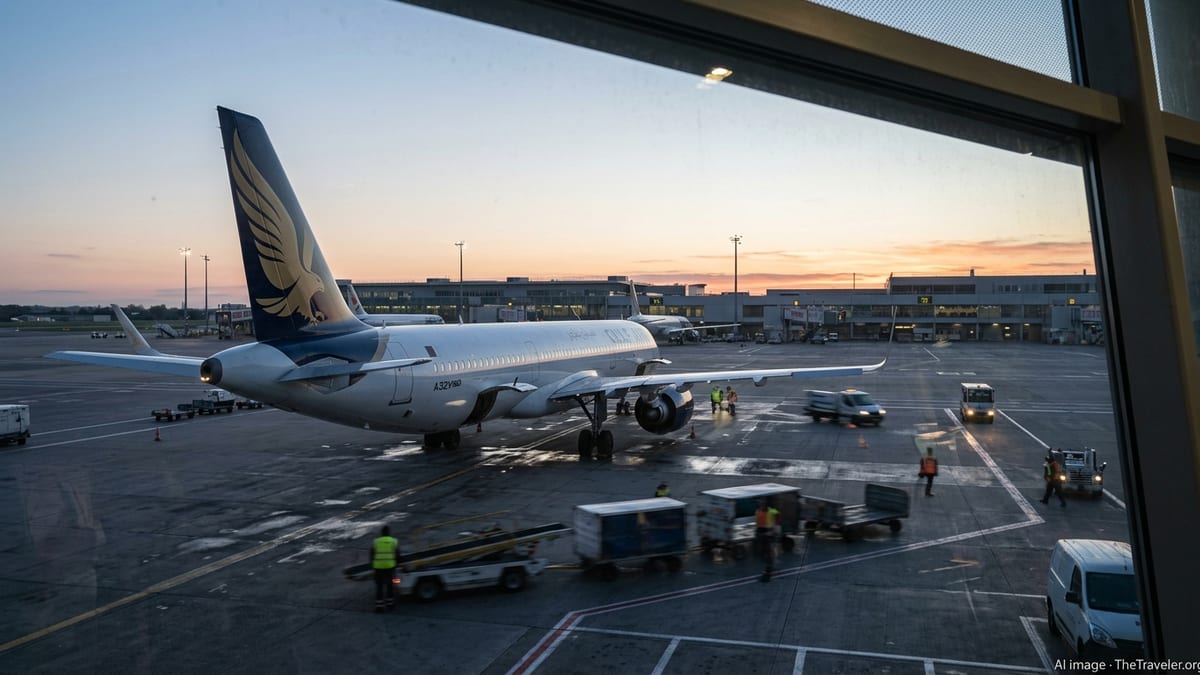
Bahrain’s national airline is refusing to let an airspace closure ground its global ambitions. With Bahrain International Airport shut due to ongoing airspace restrictions, Gulf Air has rerouted its international operations through King Fahd International Airport in Dammam, Saudi Arabia — and is now using that temporary base to expand its network rather than simply survive it.
The airline has announced the addition of two significant new routes operating via Dammam: flights to Paris Charles de Gaulle Airport (CDG) and Manila Ninoy Aquino International Airport (MNL). For passengers who rely on Gulf Air to connect Bahrain with Europe and Southeast Asia, the move signals that the airline is actively working to preserve — and in some ways strengthen — its international reach during an unusually disruptive period.
It’s a notable operational pivot. Rather than suspending routes until the situation normalises, Gulf Air is leaning into its temporary hub arrangement to keep key corridors open.
Why Bahrain’s Airspace Is Closed and What That Means for Travelers
Bahrain International Airport (BAH) is currently closed as a result of airspace restrictions affecting the country. The Bahrain Civil Aviation Affairs is working to address the situation, though no confirmed timeline for the airport’s reopening has been publicly announced.
For an airline like Gulf Air — which operates as Bahrain’s national carrier and depends heavily on BAH as its primary hub — this kind of closure creates immediate, cascading challenges. International routes can’t depart or arrive as normal. Passengers face uncertainty. And the airline must find a way to keep its network functioning without its home base.
The solution Gulf Air has implemented is to redirect international flights through King Fahd International Airport (DMM) in Dammam, Saudi Arabia. This cross-border rerouting keeps the airline’s global connections alive while the situation in Bahrain remains unresolved.
How Gulf Air Is Keeping Its Network Alive Through Dammam
King Fahd International Airport in Dammam is now serving as Gulf Air’s temporary operational hub. The airport, one of Saudi Arabia’s major international gateways, provides the infrastructure needed to handle Gulf Air’s rerouted traffic and support the addition of new destinations.
The two newly announced routes — to Paris and Manila — are being operated through this Dammam arrangement. Here’s what’s confirmed about the current network changes:
- Temporary hub: King Fahd International Airport (DMM), Dammam, Saudi Arabia
- New destination added: Paris Charles de Gaulle Airport (CDG), France
- New destination added: Manila Ninoy Aquino International Airport (MNL), Philippines
- Purpose: To maintain vital international air connections linking Bahrain with major global locations
- Status: Described as temporary, in response to the ongoing Bahrain airspace closure
The airline’s stated focus has been to minimise disruption for passengers and ensure that travel connections remain available throughout the closure period.
The Routes at a Glance
| Route | Destination Airport | Airport Code | Operating Hub | Status |
|---|---|---|---|---|
| Gulf Air to Paris | Charles de Gaulle Airport | CDG | King Fahd International Airport (DMM) | Temporary addition |
| Gulf Air to Manila | Ninoy Aquino International Airport | MNL | King Fahd International Airport (DMM) | Temporary addition |
| Gulf Air home base | Bahrain International Airport | BAH | — | Currently closed |
Who This Affects Most — and Why Paris and Manila Matter
The choice of Paris and Manila isn’t random. These are two destinations that represent very different but equally important passenger segments for Gulf Air.
Paris is one of Europe’s most significant aviation hubs and a major business and leisure destination. Maintaining a connection between the Gulf region and France — even via a rerouted path through Dammam — keeps an important European corridor open for travellers who would otherwise face significant disruption finding alternative carriers.
Manila represents a different but equally critical demand. The Philippines has one of the largest overseas worker populations in the Gulf region, and flights between the Gulf and Manila carry enormous passenger volumes driven by labour migration, family visits, and remittances. Suspending that route entirely would have affected thousands of travellers with limited alternative options.
By adding both destinations during the closure, Gulf Air is signalling that it understands the specific needs of its passenger base — and is making targeted decisions to protect the routes that matter most.
For passengers currently holding Gulf Air bookings, the key practical implication is that travel may now involve routing through Dammam rather than departing directly from Bahrain. Travellers are advised to check directly with Gulf Air for the most current information on their specific flights, as operational details may continue to evolve while the airspace restrictions remain in effect.
What Happens When Bahrain’s Airspace Reopens
The Dammam arrangement is explicitly described as temporary. Once Bahrain Civil Aviation Affairs resolves the airspace restrictions and Bahrain International Airport reopens, Gulf Air is expected to transition its operations back to its home base.
What remains to be seen is whether the Paris and Manila routes — introduced during this period — will continue to be served from Bahrain directly once normal operations resume.
The broader takeaway is that Gulf Air has demonstrated a degree of operational flexibility that many airlines struggle to execute during sudden disruptions. Using a cross-border airport as a functioning substitute hub, while simultaneously expanding the network to two new international destinations, is a significant logistical undertaking — and one that keeps the airline’s passengers connected during what could otherwise have been a period of complete operational paralysis.
For now, Gulf Air passengers travelling to or from Bahrain should expect Dammam to remain the point of departure for international flights until further notice.
Frequently Asked Questions
Why is Bahrain International Airport closed?
The airport is currently shut due to airspace restrictions affecting Bahrain. The Bahrain Civil Aviation Affairs is working to address the closure, but no confirmed reopening date has been announced.
Where are Gulf Air flights currently departing from?
Gulf Air has rerouted its international flights through King Fahd International Airport (DMM) in Dammam, Saudi Arabia, which is serving as a temporary operational hub.
Which new routes has Gulf Air added during the closure?
Gulf Air has temporarily added flights to Paris Charles de Gaulle Airport (CDG) and Manila Ninoy Aquino International Airport (MNL), both operating via Dammam.
Are the Paris and Manila routes permanent additions to Gulf Air’s network?
These routes are described as temporary additions in response to the airspace closure. Whether they will continue after normal operations resume has not been confirmed.
What should passengers with existing Gulf Air bookings do?
Passengers are advised to contact Gulf Air directly for the latest information on their specific flights, as routing and operational details may change while the airspace restrictions remain in effect.
Will Gulf Air return to Bahrain International Airport once the situation is resolved?
Yes, the Dammam arrangement is explicitly temporary, and Gulf Air is expected to return operations to its home base once the airspace restrictions are lifted.


Leave a Reply