
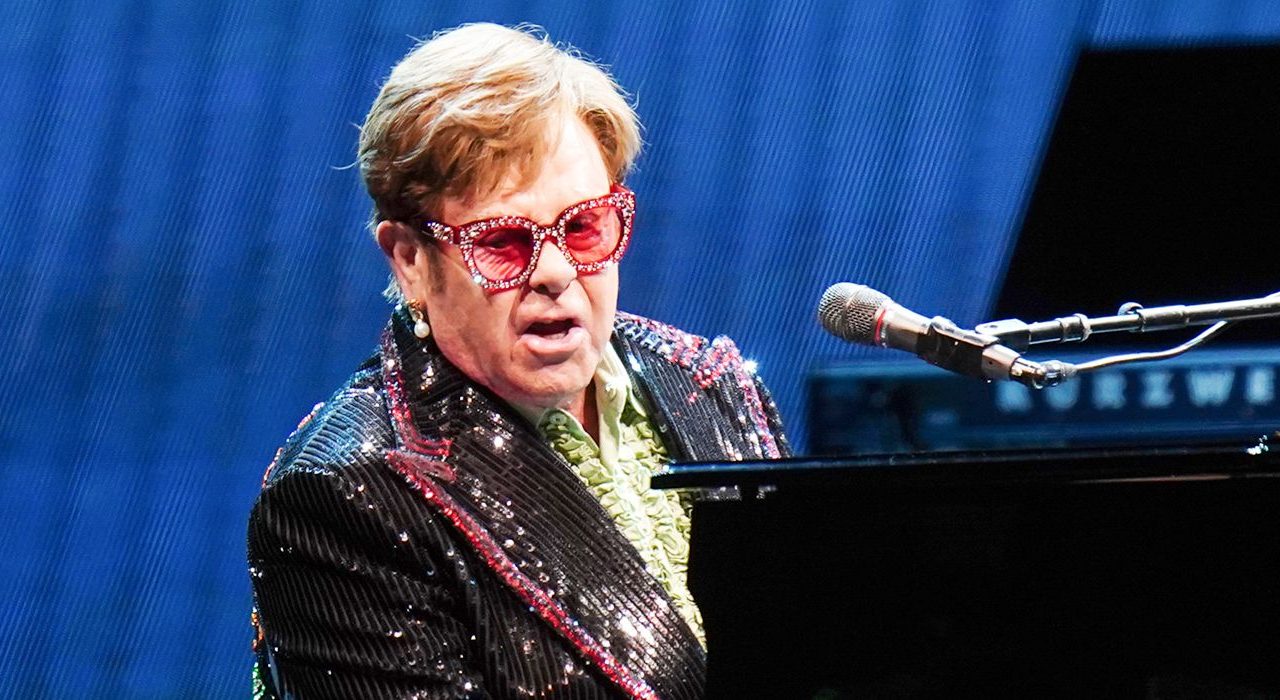
What does it take for a cover song to outshine the original? Elton John managed it — at least by one very specific and very prestigious measure — when his version of the Beatles’ psychedelic classic “Lucy in the Sky with Diamonds” climbed to the top of the Billboard Hot 100, a feat the Beatles themselves never achieved with that particular track.
It’s a remarkable piece of pop history that often gets overlooked in the broader conversation about Elton John’s extraordinary career. The man has had dozens of hits, multiple diamond-certified albums, and a farewell tour that lasted years. But tucked inside that catalog is a cover version that, by the numbers, did something the Fab Four couldn’t.
The story of how that happened — and why it still resonates — is worth telling properly.
The Beatles Wrote It, But Elton John Owned the Chart
“Lucy in the Sky with Diamonds” originally appeared on the Beatles’ 1967 album Sgt. Pepper’s Lonely Hearts Club Band, one of the most celebrated records in rock history. John Lennon wrote the song, inspired — he always maintained — by a drawing his son Julian made at school, not by LSD, despite what the initials in the title seemed to suggest to many listeners at the time.
The Beatles never released the track as a single in the United States, which meant it never had a shot at the Billboard Hot 100. Elton John changed that in 1974, when he recorded his own version and released it as a single. It reached number one.
That chart position isn’t just a trivia footnote. It represents something genuinely unusual in music history: a cover version of one of rock’s most iconic songs reaching the very top of the American charts, while the original never even entered the race.
Why Elton John’s Version Hit Differently
Elton John’s recording brought a looser, funkier energy to the song. Where the Beatles’ original leaned into studio experimentation and psychedelic abstraction, Elton’s take was more grounded — still dreamy, but built for radio. The arrangement had warmth and momentum that translated well to the AM dial dominating pop radio in the mid-1970s.
There’s also the context to consider. By 1974, Elton John was arguably the biggest pop star on the planet. His commercial instincts were razor-sharp, and his band could make almost anything feel like a hit. Covering a beloved Beatles track was a bold move, but Elton had the credibility and the audience to pull it off without it feeling like a cheap cash-in.
John Lennon himself reportedly approved of the recording — a detail that carries real weight, given how protective the former Beatles could be about their work.
What Makes a Number One the “Greatest” of All Time
The claim that this is the greatest Billboard number one of all time is, of course, a matter of opinion. Billboard has tracked chart-toppers since 1958, and the list of songs that have reached number one runs into the hundreds. Choosing one above all others depends entirely on what criteria you use.
But the argument for Elton John’s “Lucy in the Sky with Diamonds” rests on a combination of factors that few other chart-toppers can match:
- It is a cover of one of the most critically acclaimed songs ever written
- The original was never released as a US single, making the cover the definitive chart version
- It reached number one during one of the most competitive eras in pop music history
- The artist performing it was at the absolute peak of his commercial and creative powers
- It has endured in cultural memory long after many of its chart contemporaries have faded
Elton John’s Chart Legacy in Context
To understand what this number one means, it helps to see where it sits inside Elton John’s broader chart history. His run of success through the early-to-mid 1970s was staggering by any standard.
| Song | Year | Chart Position (US Billboard Hot 100) |
|---|---|---|
| Crocodile Rock | 1973 | No. 1 |
| Bennie and the Jets | 1974 | No. 1 |
| Lucy in the Sky with Diamonds | 1974 | No. 1 |
| Philadelphia Freedom | 1975 | No. 1 |
| Island Girl | 1975 | No. 1 |
Five number ones in roughly three years. That kind of sustained chart dominance is rare in any era. “Lucy in the Sky with Diamonds” sits right in the middle of that golden run, which is part of what makes it so significant.
The Beatles Connection That Makes This Story Richer
It would be easy to frame this as Elton John “beating” the Beatles, but that misses the spirit of what actually happened. Elton has spoken openly throughout his career about the profound influence the Beatles had on him. His decision to record “Lucy in the Sky with Diamonds” was an act of tribute as much as ambition.
The fact that John Lennon was reportedly supportive of the recording adds a layer of warmth to the story. This wasn’t a rivalry. It was one generation of British pop royalty paying homage to another — and the American public responding in the most concrete way possible: by making it the most popular song in the country.
That combination of artistic respect and commercial success is what separates this particular number one from so many others. It didn’t just top a chart. It connected two of the most important figures in rock history across a moment that still feels meaningful decades later.
Frequently Asked Questions
Did the Beatles ever release “Lucy in the Sky with Diamonds” as a single?
The Beatles did not release the song as a US single, which is why it never charted on the Billboard Hot 100 in their version.
When did Elton John’s cover of “Lucy in the Sky with Diamonds” reach number one?
Elton John’s version reached number one on the Billboard Hot 100 in 1974.
Where did the original Beatles song first appear?
The song originally appeared on the Beatles’ 1967 album Sgt. Pepper’s Lonely Hearts Club Band.
Who wrote “Lucy in the Sky with Diamonds”?
John Lennon wrote the song, reportedly inspired by a drawing his son Julian made at school.
Was Elton John’s cover well received by the Beatles themselves?
John Lennon was reportedly supportive of Elton John’s recording, though full details of his response have not been confirmed in the available source material.
Is Elton John’s version considered better than the original?
Whether it surpasses the original is a matter of personal taste, but by chart performance alone, Elton John’s cover achieved something the Beatles’ version never did in the United States.


Leave a Reply