
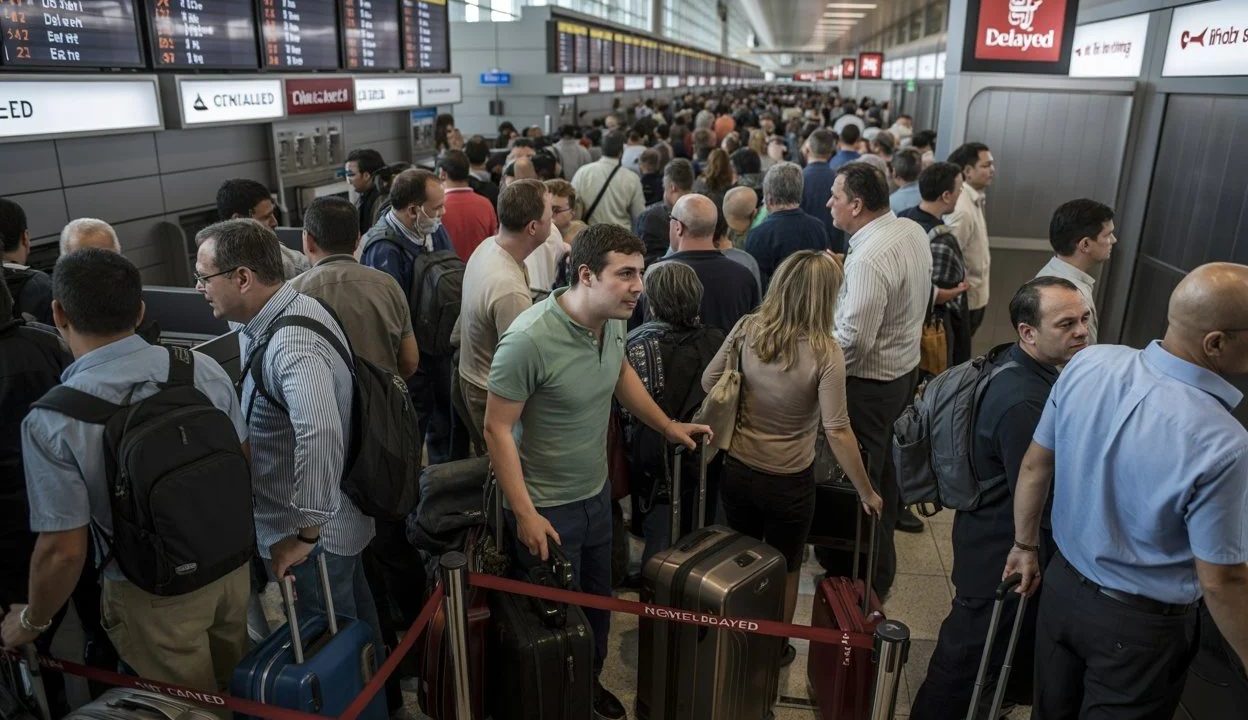
At least 16 Emirates flights have been cancelled in a matter of days, stranding passengers across some of the world’s busiest travel corridors — from Dubai to Cairo, London, Boston, and the Seychelles. For anyone with a booking on one of the world’s largest long-haul carriers right now, the disruption is real, ongoing, and far from resolved.
Flight tracking data from FlightAware and aviation industry reports confirmed the cancellations, which form part of a broader wave of disruption sweeping through the Middle East. The cause, according to available reporting, is a combination of military tensions and airspace safety concerns that have forced airlines to reroute, delay, or ground flights entirely.
This is not a routine weather event or a technical glitch. The scale and geography of the cancellations point to something more structural — and travelers who rely on Dubai as a connecting hub are caught directly in the middle of it.
What Is Driving the Emirates Flight Cancellations
The disruptions are tied to a rapidly shifting geopolitical situation across the Middle East that has resulted in widespread airspace closures. When airspace closes — whether due to military activity, conflict risk, or government restriction — airlines cannot simply reroute around it without significant cost, delay, or in some cases, cancellation altogether.
Emirates operates one of the most extensive long-haul networks in the world, with Dubai’s international airport serving as its central hub. That makes it particularly exposed when Middle Eastern airspace becomes unstable. A closure that might cause a minor detour for a European carrier can force Emirates to cancel or dramatically restructure dozens of routes simultaneously.
Aviation industry observers have noted that operational delays compound quickly in these situations. Ground crews, aircraft positioning, crew rest requirements, and slot availability at destination airports all cascade when a carrier is forced to absorb sudden route changes at scale.
Which Routes and Cities Are Affected by the Emirates Disruptions
The confirmed cancellations span multiple continents, hitting both leisure and business travel destinations. Based on available flight tracking data and industry reports, the affected routes include flights connecting Dubai to several major international cities.
| Departure Hub | Affected Destination | Region |
|---|---|---|
| Dubai (DXB) | Cairo | Middle East / North Africa |
| Dubai (DXB) | London | Europe |
| Dubai (DXB) | Boston | North America |
| Dubai (DXB) | Seychelles | Indian Ocean / Africa |
| Dubai (DXB) | Bangkok | Southeast Asia |
The breadth of these routes illustrates just how far the disruption reaches. This is not a regional blip — passengers travelling between Asia, Africa, Europe, and North America are all caught in the fallout, simply because their itinerary passes through Dubai.
- Total confirmed cancellations: At least 16 Emirates flights
- Primary cause: Military tensions and airspace safety concerns across the Middle East
- Data source: FlightAware flight tracking and aviation industry reports
- Countries directly impacted: UAE, Egypt, Seychelles, Thailand, United Kingdom, United States
What This Means for Passengers Right Now
If you have an Emirates booking through Dubai in the near term, the practical reality is that your flight could be cancelled, rerouted, or delayed with little notice. Travelers who have already been stranded are reportedly scrambling to rebook, facing limited availability on alternative carriers as demand spikes on competing routes.
Connecting passengers face a particular challenge. Many travellers use Dubai International Airport as a midpoint between continents — a flight from Bangkok to London via Dubai, for example. When the Emirates leg cancels, the entire itinerary collapses, and finding a replacement routing that works around closed airspace is genuinely difficult.
Those travelling for time-sensitive reasons — business commitments, medical appointments, visa requirements, or connecting cruise departures — face consequences that go well beyond inconvenience. The knock-on effects of a single cancellation in this environment can be significant and costly.
Passengers with affected bookings are generally advised to monitor Emirates’ official communications closely, check FlightAware for real-time status updates, and contact the airline directly about rebooking options. Travel insurance policies that include cancellation and disruption coverage may also be relevant for those facing out-of-pocket costs.
The Bigger Picture: Why Dubai’s Hub Status Makes This Worse
Dubai International is one of the busiest airports on the planet, and Emirates’ network is built around the hub-and-spoke model — meaning almost every long-haul flight touches Dubai. That efficiency is a competitive strength in stable conditions. In a geopolitical crisis, it becomes a single point of failure.
When Middle Eastern airspace tightens, carriers based in Europe or North America can often reroute with less disruption because their hubs sit outside the affected zone. Emirates does not have that option. Its entire operation is anchored in a region currently experiencing significant instability.
The current disruption is part of what reports describe as a larger pattern of disruption across the Middle East, suggesting this is not a one-day event. Airlines across the region are adjusting continuously as the geopolitical situation evolves.
What Travelers Should Watch For in the Days Ahead
The situation remains fluid. Airspace closures tied to military tensions do not follow predictable timelines, and airlines cannot publish reliable schedules until they know which routes are safe and legal to fly.
Emirates has not yet indicated when normal operations will fully resume, and the number of affected flights could change as the situation develops. Passengers booked on Emirates routes through Dubai in the coming days should treat their itineraries as provisional until confirmed by the airline.
For travellers currently stranded, the priority is direct communication with Emirates about rebooking and accommodation support. For those with upcoming bookings, checking the airline’s advisory pages and flight status tools frequently is the most reliable way to stay ahead of further changes.
Frequently Asked Questions
How many Emirates flights have been cancelled so far?
At least 16 Emirates flights have been confirmed cancelled, according to FlightAware flight tracking data and aviation industry reports.
Why is Emirates cancelling flights?
The cancellations are attributed to a combination of military tensions and airspace safety concerns across the Middle East, which have led to widespread airspace closures.
Which destinations are affected by the Emirates cancellations?
Confirmed affected routes include flights between Dubai and Cairo, London, Boston, Seychelles, and Bangkok, among others.
Will Emirates rebook stranded passengers on alternative flights?
How long will the disruptions last?
This has not yet been confirmed. The situation is described as rapidly changing and tied to ongoing geopolitical developments, with no clear end date reported.
Should I cancel my upcoming Emirates booking?
That decision depends on your specific itinerary and travel dates. Monitoring Emirates’ official channels and checking FlightAware for real-time updates is the most reliable approach until the situation stabilises.



Leave a Reply