
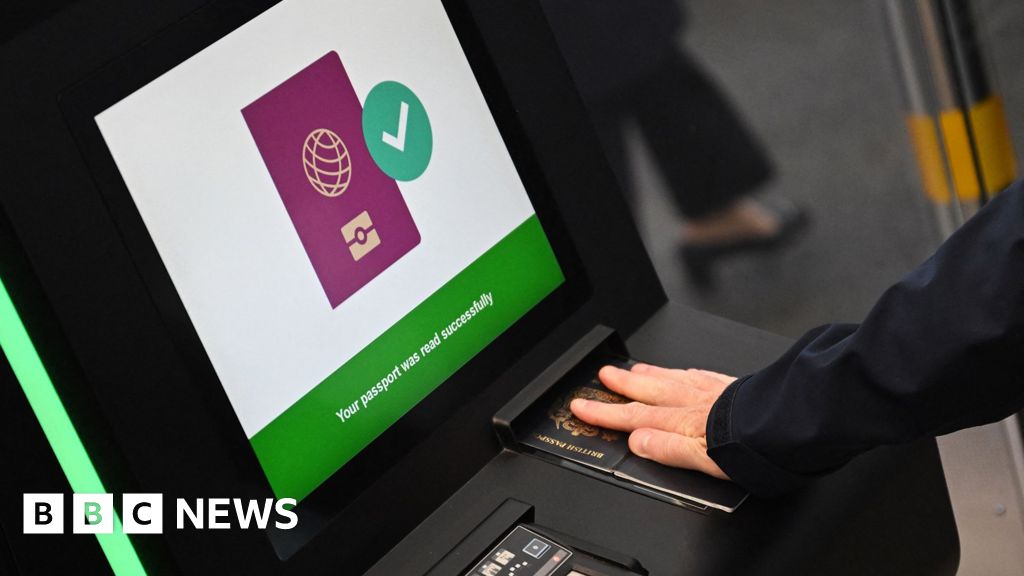
Three days ago, on April 10, 2026, the European Union rewrote the rules for crossing its borders. If you are an Asian traveler with Europe on your itinerary this year, the system you researched is already obsolete.
The Entry/Exit System, known as EES, went live across the Schengen Area on that date. It is biometric. It is digital. And it permanently replaces the passport stamp that has defined international travel for generations.
For tens of millions of visitors from China, India, Japan, South Korea, Thailand, Vietnam, and beyond, this is not a minor procedural update. It changes every step of the European border experience, from arrival to departure.
Fingerprints Replace Ink: What the EES Records at Every Schengen Crossing
The old system was analog by design. A border agent examined your passport, asked a few questions, and pressed an ink stamp into the page. That stamp recorded your entry date. The rest was up to you.
The EES replaces that entirely. According to the European Commission, the system records the entry, exit, and refusal of entry of every non-EU traveler each time they visit the Schengen Zone. The data collected includes four fingerprints, a digital facial photograph, and full passport details.
| Feature | Old Passport Stamp System | New EES Biometric System |
|---|---|---|
| Entry recording | Manual ink stamp | Digital biometric scan |
| Data collected | Date and port of entry | Fingerprints, facial image, passport data |
| Day tracking | Manual, traveler’s responsibility | Automatic, calculated in real time |
| Overstay detection | Inconsistent, subject to human error | Automatic flag at every crossing |
| Exit recording | Often not systematically tracked | Logged digitally at every exit point |
| Data retention | Stamps in passport only | Up to 3 years in EU central database |
Your biometric profile is stored in a central EU database. Every subsequent Schengen crossing links automatically to that profile. The system calculates precisely how many days you have spent in the Schengen Area, looking back up to three years.
For the first time, travelers can check their own remaining allowance through an official EU portal. The era of self-counting Schengen days by leafing through passport stamps is over.
Why the 90-Day Rule Just Got Much Harder to Accidentally Break
The Schengen Area’s 90-in-180-day rule has always been in force. You may stay a maximum of 90 days within any rolling 180-day period across all Schengen member states combined. Violating this rule carries serious consequences, including multi-year entry bans.
In practice, enforcement was inconsistent under the old system. Passport stamps could be misread, faded, or simply glossed over at busy border checkpoints. Some travelers overstayed without detection. The EES closes that gap completely.
As BBC reports, the system is designed to track precisely when non-EU citizens, including those from the UK, enter and leave the Schengen Area. The data does not fade. It is not subject to misreading. It updates in real time at every border point.
A confirmed overstay in the EES database will affect future visa applications and border entries automatically. The appeal process exists, but the burden of proof shifts entirely to the traveler.
Asian Travelers: The Largest Non-EU Visitor Group Now Under Biometric Tracking
The EES applies to all non-EU nationals entering the Schengen Area on short stays, including visa-free visitors and those holding Schengen visas. The affected population spans travelers from China, India, Japan, South Korea, Thailand, Vietnam, Indonesia, the Philippines, and dozens of other Asian nations.
Chinese tourists represent one of Europe’s largest non-EU visitor segments. Indian nationals traveling for business, education, and tourism form another significant group. Japanese and South Korean travelers, many of whom benefit from visa-free Schengen access, will now undergo biometric registration at their first crossing.
For visa-free travelers, biometric enrollment happens at the border on arrival during the first visit after EES activation. For those holding Schengen visas, the process is similar. First-time enrollees should plan for additional processing time at the border while the system creates their profile.
Major European airports, including Paris Charles de Gaulle, Amsterdam Schiphol, Frankfurt Airport, and Rome Fiumicino, have deployed dedicated EES processing lanes. EU officials have acknowledged that queue times during the system’s early weeks may run longer than usual, particularly at peak-hour crossings.
Your First EES Crossing: A Step-by-Step Look at What Now Happens at the Border

You Might Also Like

Vietnam’s First High-Speed Rail Will Reshape Northern Tourism
Vietnam's first high-speed rail — the largest infrastructure project in its history — is connecting…

Delhi Metro Blue Line: 5 Upgrades Changing How Millions Travel
Delhi Metro is upgrading 70 Blue Line trains by November 2027. Here are 5 major…
Social Security Payment Dates July 2026: What You Could Get at Every Claiming Age, Who May Qualify for More, and How to Apply, With Current Official Figures and Step-by-Step Help — Up to $2,976 a Month
If you are thinking about when to claim Social Security, July 2026 is a good…
Leave a Reply