
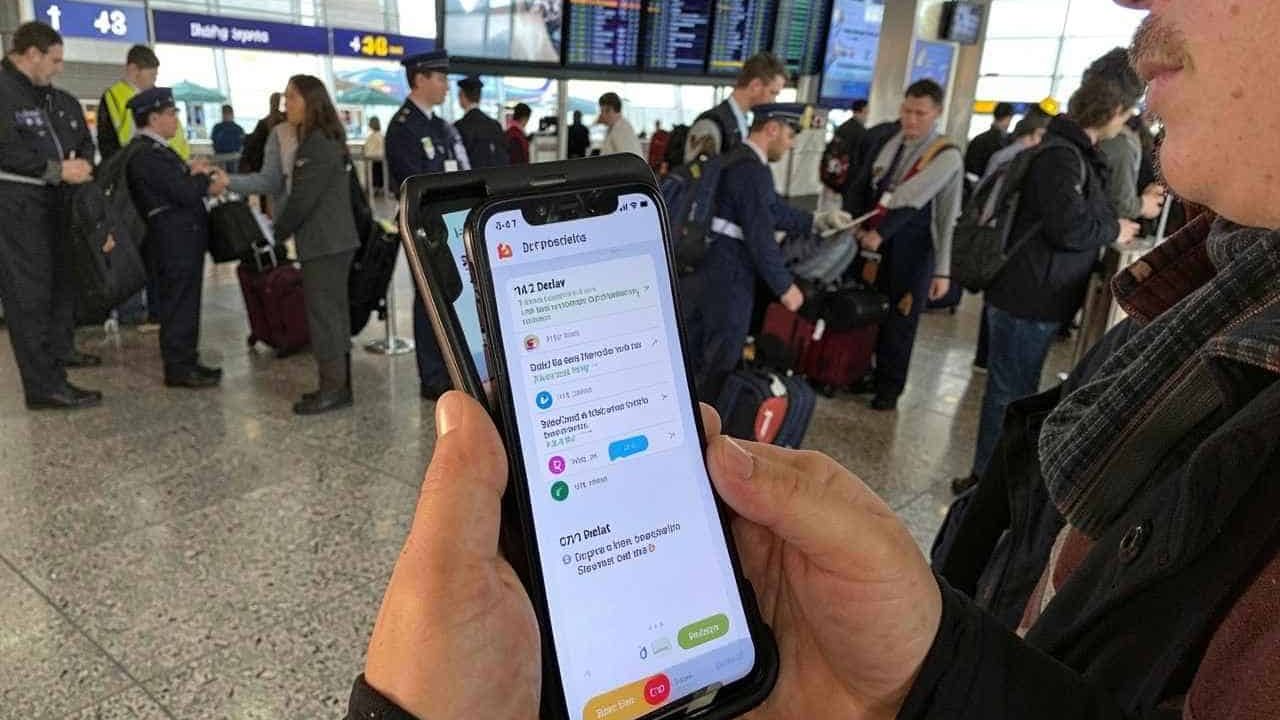
Flight cancellations and delays are surging across global aviation in 2026, and some of the world’s most recognized carriers — Air France, United Airlines, and Qatar Airways — are caught squarely in the turbulence. For travelers with upcoming trips, the disruptions are no longer rare inconveniences. They’ve become a real possibility on almost any given travel day.
A combination of geopolitical tensions, staffing shortages, and increasingly severe weather events has pushed the aviation system under unprecedented pressure. Airlines that operate vast international networks are especially exposed, since a disruption in one region can cascade across dozens of connecting routes within hours.
The result: passengers stranded at airports, scrambled rebooking queues, and a growing need for travelers to take a more proactive approach to managing their own journeys — including leaning heavily on flight tracking technology to stay one step ahead.
What Is Driving the Wave of Cancellations in 2026
The aviation industry has rarely faced this many stress points at the same time. Geopolitical instability has forced airlines to reroute or suspend flights across several key corridors, adding hours to journey times and straining crew scheduling. When a route gets suspended, the knock-on effects ripple through an airline’s entire network.
Staffing shortages — a problem that emerged sharply after the pandemic years and has never fully resolved — continue to limit how quickly airlines can recover from disruptions. When a flight cancels due to weather or airspace restrictions, finding a qualified crew to operate a replacement flight is not always straightforward.
Severe weather is the third major factor. Climate-driven weather events are becoming more frequent and more intense, grounding flights at airports that once rarely saw weather-related cancellations. For airlines like Air France, United Airlines, and Qatar Airways — all of which operate extensive hub-and-spoke networks — a single weather event at a major hub can trigger cancellations and delays across dozens of connecting flights.
Air France, United Airlines, and Qatar Airways: What Travelers Need to Know
Each of these three carriers brings a different exposure profile to the current disruption environment.
- Air France operates one of Europe’s most expansive international networks, making it particularly vulnerable to geopolitical disruptions that affect transatlantic and African routes.
- United Airlines is a major U.S. carrier with heavy exposure to domestic weather disruptions as well as transatlantic and transpacific routes affected by airspace restrictions.
- Qatar Airways is a key Middle East carrier whose routes through the region are directly affected by geopolitical instability in ways that few other airlines face.
| Airline | Network Type | Primary Disruption Risk |
|---|---|---|
| Air France | Major European international carrier | Geopolitical route suspensions, staffing |
| United Airlines | Major U.S. carrier with global reach | Severe weather at hubs, airspace restrictions |
| Qatar Airways | Key Middle East international carrier | Regional geopolitical instability |
Why Flight Tracking Apps Matter More Than Ever Right Now
In a disruption environment this unpredictable, waiting for an airline to notify you is no longer a reliable strategy. Flight tracking applications give travelers real-time visibility into what is actually happening to their flight — before the airline makes an official announcement.
These tools can show you whether your aircraft has even departed its previous city, whether a delay is building, or whether a cancellation looks likely based on crew positioning and aircraft routing data. That kind of advance warning gives you a window to act — to rebook, to call the airline before hold times spike, or to make alternative arrangements — while other passengers are still waiting at the gate.
Airport conditions have become increasingly unpredictable, and flight tracking apps turn that unpredictability into something manageable. Instead of being a passive participant in someone else’s chaos, a traveler with the right tools can make informed decisions in real time.
The Real-World Impact on Passengers and the Broader Travel Ecosystem
When airlines of the scale of Air France, United, and Qatar Airways experience significant disruptions simultaneously, the effects don’t stay contained. Hotels near major airports fill up with stranded passengers. Ground transport networks absorb overflow travelers trying to reach alternative airports. Travel insurance claim volumes rise. And the entire downstream travel economy — tours, cruises, car rentals, hotel bookings — absorbs cancellations and no-shows tied to missed flights.
For individual travelers, the most immediate consequence is the scramble to rebook. Airlines operating under pressure often have limited availability on alternative flights, which means passengers who act quickly after a cancellation are far more likely to secure a seat on the next available departure than those who wait.
Frequent international travelers are increasingly building disruption buffers into their itineraries — adding connection time, booking refundable fares where budgets allow, and monitoring their flights actively in the days before departure rather than simply showing up and hoping for the best.

What Travelers Should Do Before Their Next Flight
The current disruption environment isn’t expected to resolve overnight. Geopolitical instability, staffing constraints, and climate-driven weather patterns are all medium-to-long-term factors. Travelers planning trips on any of the affected carriers — or through airports in disruption-prone regions — should consider building a few practical habits.
- Download a reputable flight tracking app and set up alerts for your specific flight number well before departure day.
- Monitor your aircraft’s inbound flight the night before travel — if the plane isn’t where it needs to be, delays are likely.
- Know your passenger rights for the region you’re flying in, since compensation rules differ significantly between the U.S., Europe, and the Middle East.
- Keep airline customer service contact numbers saved and ready — hold times spike the moment a major disruption hits.
- Where possible, book morning flights, which statistically accumulate fewer delays than afternoon and evening departures.
The airlines themselves are working to manage disruptions as efficiently as possible, but the scale of the pressures they face in 2026 means passenger self-advocacy has never been more important.
Frequently Asked Questions
Which airlines are most affected by the 2026 flight cancellations?
Air France, United Airlines, and Qatar Airways are among the carriers significantly impacted by the surge in cancellations and delays in 2026.
What is causing the increase in flight cancellations?
The primary drivers are geopolitical tensions forcing route suspensions, ongoing staffing shortages, and more frequent severe weather events affecting major hub airports.
How can flight tracking apps help during disruptions?
Flight tracking apps provide real-time data on aircraft positioning and flight status, allowing travelers to identify likely delays or cancellations before official airline announcements and act faster to rebook.
Is Qatar Airways particularly exposed to geopolitical disruptions?
Yes — as a key Middle East carrier, Qatar Airways faces direct exposure to regional geopolitical instability that can affect its routes in ways that European and U.S. carriers do not experience to the same degree.
Will the disruptions continue throughout 2026?
The underlying causes — geopolitical instability, staffing shortages, and severe weather — are all medium-to-long-term factors, so a quick resolution has not been confirmed.
What should I do if my flight is cancelled by one of these airlines?
Act quickly to contact the airline or rebook online, as availability on alternative flights is limited during high-disruption periods; having the airline’s contact information ready in advance can significantly reduce your wait time.




Leave a Reply