
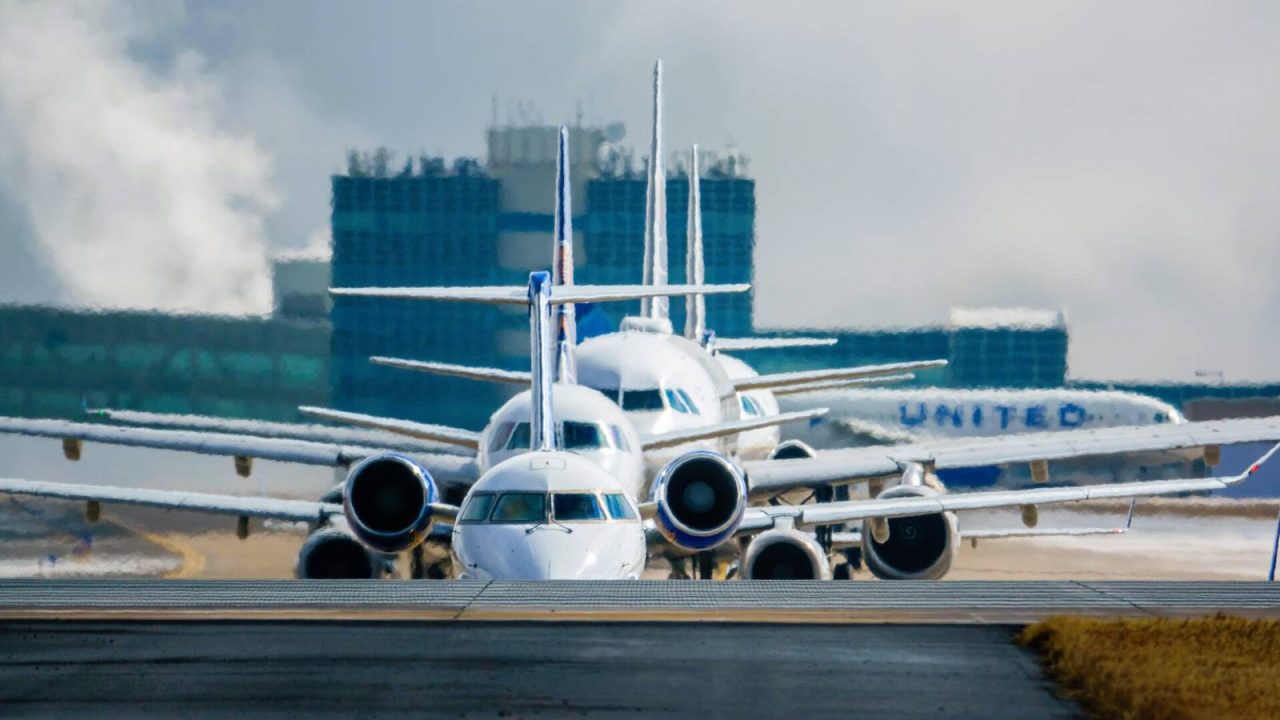
More than 600 flights have been canceled across the United States in a single day, and nearly 730 more are sitting on the ground waiting — leaving thousands of passengers stranded at gates, sleeping on terminal floors, and scrambling to rebook plans that may have taken months to arrange.
The disruptions are concentrated at some of the country’s most heavily trafficked airports, with Chicago O’Hare, Boston, Atlanta, and Miami all reporting significant operational strain. If you’re flying today — or someone you know is — here’s what the numbers actually look like and what you need to understand about what’s happening.
As of March 23, 2026, 623 flights have been canceled nationwide, with an additional 729 flights delayed. That’s a combined disruption count of more than 1,350 flights in a single day, affecting carriers and routes across the country.
What’s Happening at the Hardest-Hit Airports
Not every airport is absorbing equal pain. Chicago O’Hare International Airport — one of the busiest air travel hubs in the entire country — is among the most severely affected locations today.
At O’Hare alone, 39 flights have been canceled and 82 are delayed. For an airport that handles hundreds of departures and arrivals daily, that kind of disruption sends ripple effects across connecting routes nationwide. A cancellation at O’Hare doesn’t just affect Chicago passengers — it can strand travelers who were supposed to connect through the hub on their way to dozens of other cities.
Boston, Atlanta, and Miami are also named as major disruption points in today’s travel picture. These four cities together represent some of the most critical nodes in the U.S. air travel network, and when they struggle simultaneously, the pressure builds quickly across the entire system.
The Numbers Behind Today’s Flight Cancellations and Delays
Here’s a breakdown of what the data shows at Chicago O’Hare, the airport with the most detailed confirmed figures from today’s reporting:
| Airport | Cancellations | Delays |
|---|---|---|
| Chicago O’Hare (ORD) | 39 | 82 |
| Boston (BOS) | Confirmed affected | Confirmed affected |
| Atlanta (ATL) | Confirmed affected | Confirmed affected |
| Miami (MIA) | Confirmed affected | Confirmed affected |
| National Total | 623 | 729 |
The causes driving today’s disruptions include adverse weather conditions and operational setbacks affecting airlines across multiple hubs. Weather-related cancellations are particularly difficult for airlines to manage because they tend to cascade — one delayed inbound aircraft means the outbound flight on the same plane also gets pushed back or scrapped entirely.
- Adverse weather conditions at key hub airports
- Operational setbacks compounding the weather impact
- Cascading delays caused by aircraft and crew repositioning failures
- Multiple major airlines impacted across affected airports
Who Gets Hit Hardest — and Why It Matters to You
When numbers like these appear, it’s easy to treat them as abstract statistics. But each of those 623 canceled flights represents a plane full of people — business travelers missing critical meetings, families arriving too late for events they’ve planned around, passengers who booked nonrefundable hotels and rental cars at their destination.
The economic consequences of a day like this are significant. Airlines face costs from rebooking passengers, repositioning aircraft and crew, and offering compensation. Hotels near major airports often see last-minute demand spikes as stranded travelers seek overnight accommodation. And passengers themselves absorb costs in time, stress, and often money — especially those who purchased budget fares with limited flexibility.
Chicago O’Hare’s position as a national connecting hub makes its 39 cancellations and 82 delays especially damaging to the broader system. Travelers who weren’t even flying to or from Chicago may find their connections disrupted simply because their aircraft was supposed to arrive from O’Hare before continuing onward.
Boston, Atlanta, and Miami each play similarly outsized roles in regional and international routing. Atlanta’s Hartsfield-Jackson, for instance, is routinely ranked as one of the busiest airports on the planet — disruptions there don’t stay local for long.
What You Should Do If Your Flight Is Affected
If you’re traveling today or have someone flying through any of these cities, there are practical steps worth knowing right now:
- Check your flight status directly with your airline before heading to the airport — real-time updates from carriers are more reliable than third-party apps during active disruptions.
- Know your passenger rights. U.S. airlines are required to offer refunds for canceled flights, and many provide rebooking options at no additional charge during weather events.
- Contact your airline proactively rather than waiting in line at the airport. Phone queues and app chat tools are often faster than standing at a crowded customer service counter.
- Document everything — save receipts for any meals, transportation, or accommodations you’re forced to purchase because of a cancellation. Some airlines and travel insurance policies reimburse these costs.
- Check for travel waivers — airlines frequently issue fee-free rebooking waivers during widespread disruptions, and these are often posted on airline websites before they’re communicated directly to passengers.
What to Watch for as the Day Continues
Disruptions of this scale rarely resolve cleanly within a single day. Aircraft and crews that are out of position today will need time to reset, meaning some passengers may face knock-on delays into tomorrow even if weather conditions improve this evening.
Airlines typically work to prioritize their busiest and most revenue-critical routes when recovering from mass cancellation events, which means passengers on thinner or regional routes may wait longer for seats to open up. Anyone with flexible travel plans may benefit from voluntarily pushing a trip back by 24 hours if the airline offers that option without penalty.
The airports confirmed as affected — Chicago O’Hare, Boston, Atlanta, and Miami — should be monitored closely through the rest of today and into the early morning hours of tomorrow for updated cancellation and delay counts as the situation evolves.
Frequently Asked Questions
How many flights have been canceled in the U.S. today?
As of March 23, 2026, 623 flights have been canceled nationwide, with an additional 729 flights delayed.
Which airports are most affected by today’s disruptions?
Chicago O’Hare, Boston, Atlanta, and Miami are confirmed as major disruption points. Chicago O’Hare has reported 39 cancellations and 82 delays specifically.
What is causing today’s flight cancellations?
The disruptions are being attributed to adverse weather conditions and operational setbacks affecting airlines across multiple hub airports.
Which airlines are impacted?
Am I entitled to a refund if my flight is canceled today?
U.S. regulations generally require airlines to offer refunds for canceled flights. Passengers should contact their carrier directly to understand their specific options.
Will disruptions continue into tomorrow?
Large-scale cancellation events often produce knock-on delays the following day as airlines work to reposition aircraft and crews. Travelers should monitor their airline’s website for updates into tomorrow morning.




Leave a Reply