
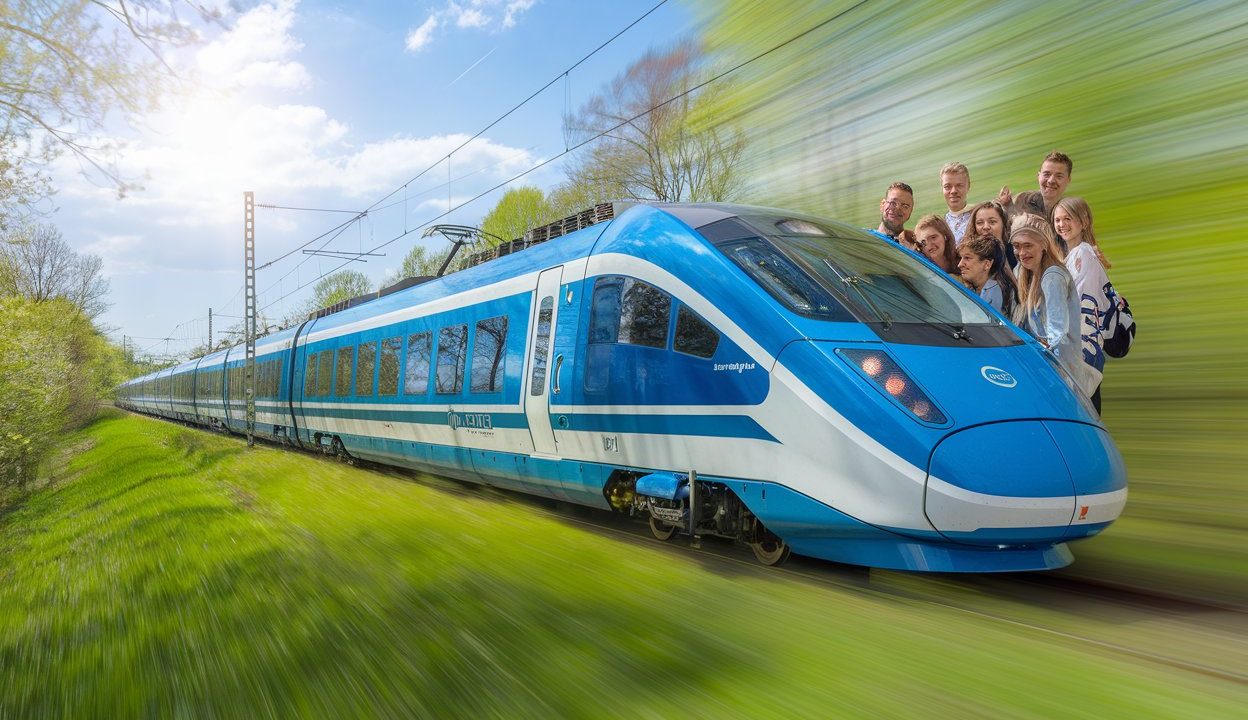
A train ticket from Amsterdam to Berlin for €10. That’s not a typo, a promotional gimmick buried in fine print, or a fare that disappeared before you could click “book.” It’s the opening offer from GoVolta, a Dutch startup that officially launched its Amsterdam-to-Berlin rail service on March 19, 2026 — and the travel world is paying close attention.
For years, travelers making the Amsterdam-Berlin run had exactly two realistic options: pay anywhere from €40 to €120 for a seat on a Deutsche Bahn ICE train, or squeeze into a budget flight and accept the carbon cost that comes with it. GoVolta is betting that a third way — radically affordable, environmentally friendlier rail travel — is exactly what the market has been waiting for.
The startup has already earned a pointed comparison: some are calling it the “EasyJet of rails.” That framing says a lot about both the ambition and the strategy at play here.
What GoVolta Is and Why It Launched Now
GoVolta was founded by Hessel Winkelman and Maarten Bastian, the same duo behind the successful sustainable travel platform GreenCityTrip. Their diagnosis of the problem is straightforward: the biggest obstacle to sustainable travel in Europe isn’t that people don’t want to take trains. It’s that trains are too expensive for a huge portion of the traveling public.
Budget airlines cracked open mass air travel in the 1990s by slashing prices to the floor and filling planes with passengers who had never flown before. Winkelman and Bastian appear to be applying that same logic to rail — with the added argument that trains are the greener choice, and that affordability is the missing ingredient to make them the default choice.
The service launched from Amsterdam Centraal, connecting directly to Berlin. The route covers one of Europe’s most traveled city-pair corridors, linking two capitals with major student populations, thriving arts scenes, and strong tourism demand year-round.
The €10 Ticket: What You Actually Need to Know
The headline fare of €10 is described as a “teaser” pricing tier — an entry-level price designed to attract first-time rail travelers and those who would otherwise default to a cheap flight. Standard fares on established carriers for the same route typically range between €40 and €120, which means even GoVolta’s higher price bands could represent a significant saving.
The primary target audience, according to the founders, includes students, backpackers, and budget-conscious families — demographics that have historically been priced out of comfortable long-distance rail and have ended up on planes as a result.
| Route | GoVolta Starting Fare | Typical Established Carrier Fare | Journey Type |
|---|---|---|---|
| Amsterdam to Berlin | €10 (teaser tier) | €40–€120 | International rail |
The comparison to EasyJet isn’t just about price — it’s about market positioning. EasyJet didn’t just offer cheap flights; it made flying feel accessible and normal for people who had never considered it. GoVolta appears to be pursuing the same psychological shift, but in the opposite direction: making long-distance train travel feel like the obvious, affordable choice rather than a premium splurge.
Who This Actually Affects — and How
If you’re a student in Amsterdam looking to spend a weekend in Berlin, or a traveler who has been watching flight prices creep up while worrying about your carbon footprint, GoVolta’s launch is directly relevant to your planning.
The service targets people who have historically faced a frustrating tradeoff: pay a lot for a comfortable, environmentally better train journey, or pay a little for a cramped, carbon-heavy flight. GoVolta’s pitch is that you no longer have to make that compromise.
- Students and backpackers gain access to a major European city-pair route at prices previously only available on budget airlines.
- Budget-conscious families can consider rail travel without the sticker shock that has traditionally pushed them toward flying.
- Environmentally aware travelers get an affordable option that aligns with their values — without having to pay a premium for it.
- Established carriers like Deutsche Bahn now face direct price competition on one of their busiest international routes.
The broader implication is significant. If GoVolta can sustain low fares and build ridership, it creates pressure on the entire European rail pricing structure — much the way budget airlines forced legacy carriers to rethink their pricing models in the early 2000s.
The “EasyJet of Rails” Label — Flattering or a Warning?
The EasyJet comparison cuts both ways. Budget airlines transformed travel access for millions of people, but they also introduced hidden fees, stripped-back services, and an industry model that prioritized volume over experience. Travelers drawn in by a €10 headline price will reasonably want to know what the full cost looks like once luggage, seat selection, and other add-ons are factored in.
GoVolta’s founders built their reputations on sustainable travel advocacy through GreenCityTrip, which suggests their brand identity is tied to something beyond pure price competition. But the details of what’s included at each fare tier — and how the service holds up under the operational pressures of running an international rail service — will ultimately determine whether the EasyJet comparison is a compliment or a cautionary tale.
The launch on March 19, 2026 marks only the beginning. The real test is whether GoVolta can maintain those fares, scale the service, and deliver a passenger experience that keeps people coming back.
What Comes Next for GoVolta
The Amsterdam-to-Berlin route is GoVolta’s maiden voyage, and it represents a direct challenge to the existing rail and aviation status quo on one of Europe’s busiest travel corridors. Whether the startup expands to additional routes, how it manages demand for its lowest-priced tickets, and how established carriers respond are all questions that will play out in the months ahead.
What’s already clear is that GoVolta has done something difficult: it has made people talk about taking the train. For a startup trying to shift travel habits at scale, that’s not nothing.
Frequently Asked Questions
What is GoVolta?
GoVolta is a Dutch startup that launched an international rail service between Amsterdam Centraal and Berlin on March 19, 2026, offering tickets starting at €10.
Who founded GoVolta?
GoVolta was co-founded by Hessel Winkelman and Maarten Bastian, who previously built the sustainable travel platform GreenCityTrip.
How does the €10 fare compare to other options on this route?
Standard fares on established carriers for the Amsterdam-to-Berlin route typically range between €40 and €120, making GoVolta’s entry-level price significantly lower.
Who is GoVolta targeting with its low fares?
The founders have identified students, backpackers, and budget-conscious families as their primary audience — travelers who have historically chosen budget flights over rail due to cost.
Are the €10 tickets available to everyone?
The €10 price is described as a “teaser” tier, meaning it represents the lowest available fare band rather than a guaranteed price for all bookings.
Will GoVolta expand to other routes?
This has not yet been confirmed in available reports. The Amsterdam-to-Berlin service is GoVolta’s inaugural route as of its March 2026 launch.




Leave a Reply