
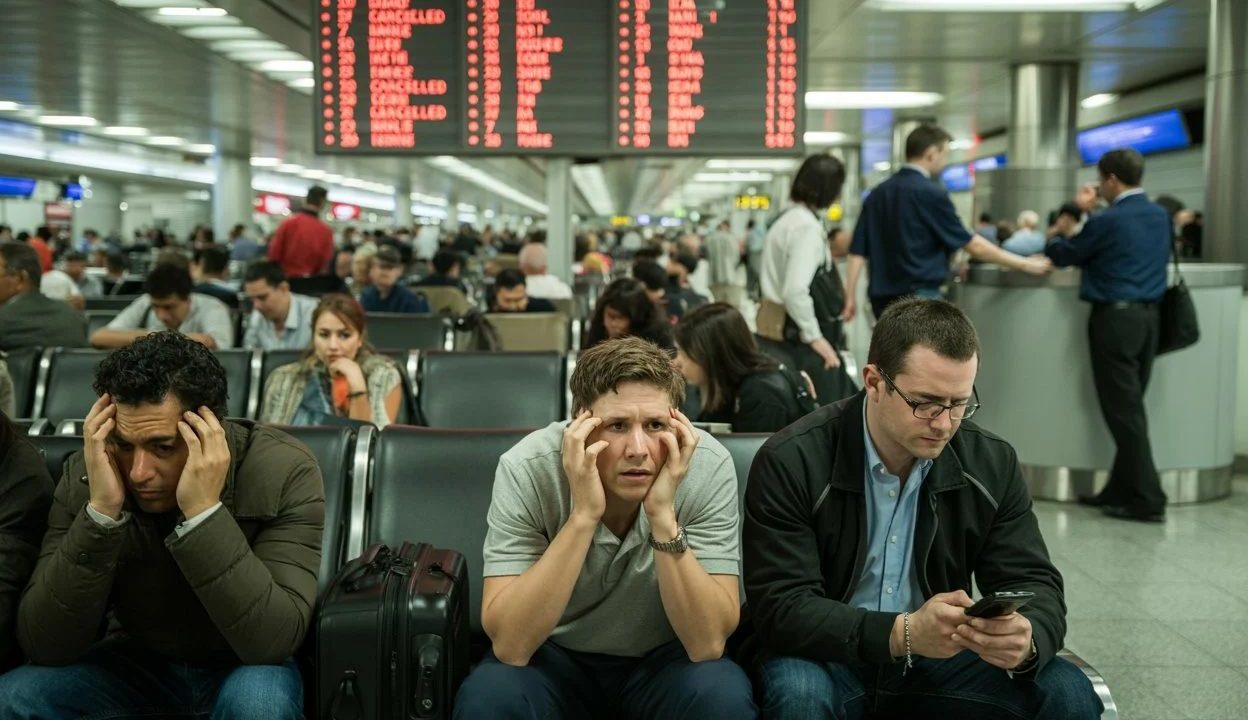
Twenty canceled flights. Passengers stranded across five major airports. One of the Gulf region’s most established carriers at the center of a disruption that travel observers are calling one of the most severe in recent memory for Gulf Air.
Travelers booked on Gulf Air flights found themselves without options at Bahrain International Airport and Dubai International Airport on March 20, 2026, as the Bahraini national carrier scrapped a significant number of scheduled departures and arrivals. The ripple effects spread quickly, leaving passengers at airports in Istanbul, Jeddah, and Abu Dhabi equally stranded and scrambling for answers.
If you have a Gulf Air booking — or you’re trying to reach someone who does — here is what is confirmed and what you need to know right now.
What Is Happening With Gulf Air Right Now
According to official flight tracking sources and airport operational advisories, Gulf Air (airline code: GFA) canceled approximately 20 scheduled flights on March 20, 2026. The cancellations affected both departures and arrivals, creating a two-sided problem: passengers couldn’t get out, and others couldn’t get in.
The disruption is centered on Bahrain International Airport, Gulf Air’s primary hub, and Dubai International Airport, one of the world’s busiest air travel gateways. But the impact quickly fanned out to other major regional airports — Istanbul, Jeddah, and Abu Dhabi — where passengers were left waiting with no confirmed alternative arrangements.
Officials have noted that the scale of these cancellations represents one of the most significant Gulf Air disruption events in recent memory, affecting scores of travelers across multiple countries simultaneously.
The Airports and Routes at the Center of This Disruption
The five airports most directly affected by the Gulf Air cancellations span three countries and cover some of the Middle East’s most heavily trafficked air corridors. Here is a breakdown of what is confirmed:
| Airport | Country | Role in Disruption |
|---|---|---|
| Bahrain International Airport | Bahrain | Primary Gulf Air hub — most cancellations originate here |
| Dubai International Airport | United Arab Emirates | Major secondary hub — significant arrivals and departures affected |
| Abu Dhabi Airport | United Arab Emirates | Passengers stranded awaiting connecting or direct Gulf Air services |
| Istanbul Airport | Turkey | Passengers stranded due to canceled inbound or outbound Gulf Air flights |
| King Abdulaziz International Airport, Jeddah | Saudi Arabia | Passengers stranded due to canceled Gulf Air services |
The geographic spread of this disruption is notable. These are not small regional airports — they are among the busiest aviation hubs in the Middle East and Europe, meaning the knock-on effects for connecting passengers are considerable.
Who Is Affected and What It Actually Means for Travelers
The immediate impact falls on anyone who had a confirmed Gulf Air booking for March 20, 2026. That includes passengers traveling for business, those on holiday itineraries, and individuals attempting to make international connections through Bahrain or Dubai.
For passengers already at the airport when cancellations were announced, the situation is particularly difficult. With 20 flights pulled from the schedule across multiple hubs simultaneously, alternative seats on other carriers become scarce quickly — and expensive.
Travelers at Bahrain International Airport face the most acute situation, given that it serves as Gulf Air’s home base. When a hub airport experiences mass cancellations, ground staff are overwhelmed, rebooking queues stretch long, and communication becomes inconsistent.
Those stranded at Istanbul, Jeddah, and Abu Dhabi face a different but equally frustrating challenge: they are away from Gulf Air’s primary support infrastructure, which can slow down rebooking assistance and access to accommodation vouchers or meal allowances.
- Passengers should contact Gulf Air directly through official channels as a first step
- Those with travel insurance should begin documenting expenses immediately — receipts for meals, accommodation, and alternative transport will be needed for claims
- Travelers booked through third-party agents or online platforms should also contact those providers, as they may have access to alternative inventory
- Checking directly with other carriers operating the same routes for available seats is advisable, particularly on routes between Bahrain, Dubai, and other Gulf destinations
- Passengers with onward connections should notify their connecting carriers of the delay to explore options for protecting those bookings
The Broader Picture: Why This Matters Beyond One Day of Flights
Gulf Air is Bahrain’s national carrier and one of the oldest airlines in the Middle East, with a route network that connects Bahrain to destinations across Asia, Europe, Africa, and the Gulf. A disruption of this scale — 20 cancellations in a single operational day, affecting five major airports — raises questions that go beyond the immediate inconvenience.
Travel observers note that mass cancellation events of this nature can reflect a range of underlying causes, from operational and technical issues to crew availability or scheduling challenges. The source of these specific cancellations has not been independently confirmed at the time of reporting.
What is clear is that passengers caught in the middle of this disruption are dealing with real, immediate consequences: missed meetings, disrupted holidays, stranded family members, and mounting unplanned costs.
What Affected Passengers Should Do Next
If you have a Gulf Air booking in the coming days, monitoring the situation closely is essential. Flight disruptions of this scale sometimes resolve quickly; others signal longer-running operational issues that affect subsequent days of flying.
For those already stranded, the priority should be securing accommodation if an overnight stay becomes necessary, keeping all receipts, and formally lodging a disruption claim with Gulf Air. Passengers flying within or to and from countries with strong aviation consumer protection frameworks may be entitled to compensation or care obligations under local regulations — this varies by departure country and route.
Travelers who have not yet departed and hold Gulf Air tickets for the coming days are advised to check their flight status directly through Gulf Air’s official website or airport operational boards before heading to the airport.
Frequently Asked Questions
How many Gulf Air flights were canceled on March 20, 2026?
Approximately 20 flights were canceled, according to official flight tracking sources and airport operational advisories confirmed by reporting on this event.
Which airports are most affected by the Gulf Air cancellations?
The five airports confirmed as affected are Bahrain International Airport, Dubai International Airport, Istanbul Airport, King Abdulaziz International Airport in Jeddah, and Abu Dhabi Airport.
Why did Gulf Air cancel so many flights?
The specific cause of the cancellations has not been confirmed in the available source material. Passengers should contact Gulf Air directly for the most current information.
What should I do if I am stranded at one of these airports?
Contact Gulf Air through official channels immediately, keep all receipts for additional expenses, and check with your travel insurer about coverage for disruption-related costs.
Will Gulf Air provide hotel accommodation or meals for stranded passengers?
This has not been confirmed in the available reporting. Passengers should ask Gulf Air ground staff directly about care entitlements and document any assistance offered or denied.
Is Gulf Air still operating other flights today?
Travelers should check their individual flight status directly with Gulf Air or through airport information boards.


Leave a Reply