
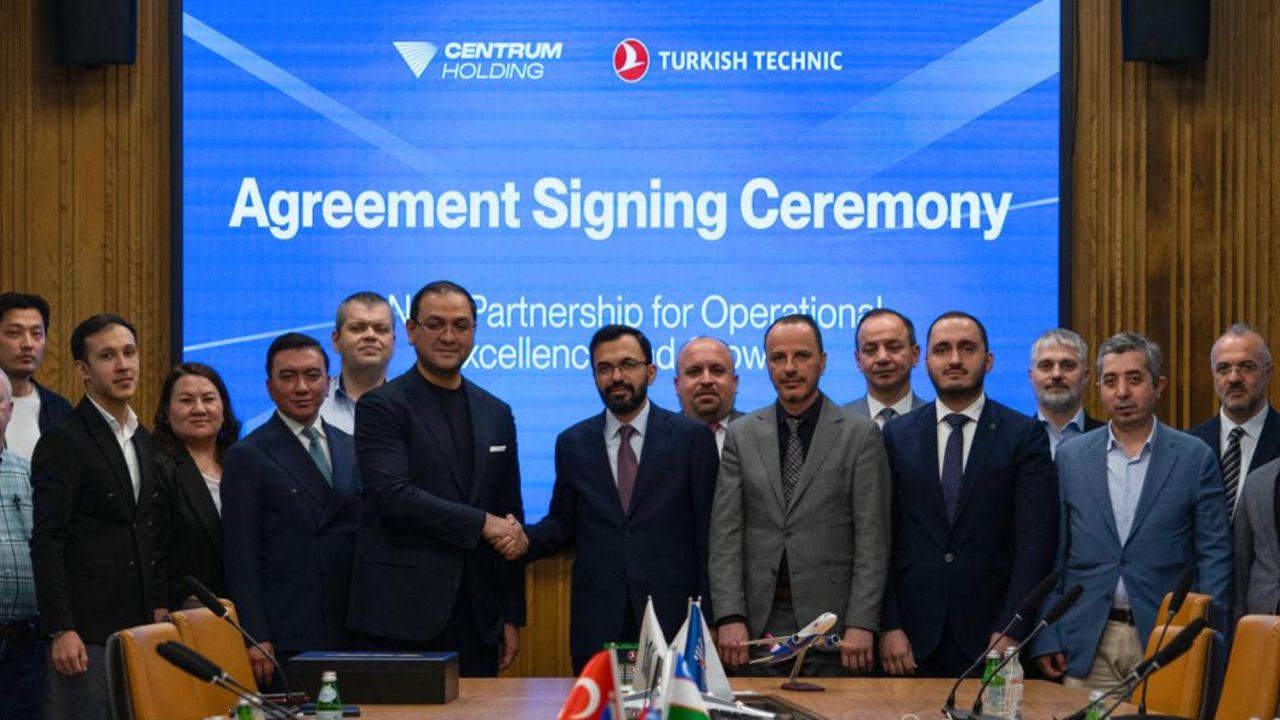
One of the world’s leading aircraft maintenance providers has made its first move into Central Asia — and the partnership it just announced could reshape how aviation in Uzbekistan operates for years to come.
Turkish Technic, a globally recognized name in aircraft maintenance, repair, and overhaul (MRO) services, has signed a multi-year component pool agreement with Centrum Air, the largest private airline in Uzbekistan. The deal marks Turkish Technic’s first formal entry into the Uzbek aviation market and signals a broader push to extend its footprint across the Central Asian region.
For Centrum Air, the timing could not be more strategic. As the airline continues to grow its fleet and expand its route network, having reliable access to a deep inventory of aircraft components — backed by one of the most established MRO providers in the world — removes one of the most common operational headaches in the industry: parts availability.
What This Agreement Actually Covers
At the center of this deal is a component pool arrangement — a type of agreement where an airline gains access to a shared inventory of aircraft parts held by the MRO provider. Rather than purchasing and warehousing every component independently, Centrum Air can draw from Turkish Technic’s vast parts supply on a fast, reliable basis.
This kind of arrangement is particularly valuable for a growing airline. Maintaining a full in-house stock of components is expensive and logistically complex. A pool agreement reduces that burden while ensuring that critical parts are available when and where they are needed, keeping aircraft in service and minimizing costly delays on the ground.
Turkish Technic brings significant weight to this arrangement. As one of the world’s top MRO providers, the company holds an extensive inventory and has built a reputation for quick, dependable parts delivery — qualities that translate directly into operational reliability for its airline partners.
Who Is Centrum Air — and Why This Deal Matters for Uzbekistan
Centrum Air is not just any regional carrier. It is the largest private airline in Uzbekistan and operates as a subsidiary of Centrum Holding, an international logistics and transportation conglomerate. That backing gives it both the ambition and the resources to grow — but growth at scale requires equally strong support infrastructure.
Uzbekistan’s aviation sector has been on an upward trajectory, driven by rising demand for both domestic and international travel, improving airport infrastructure, and a broader push to modernize the country’s transport networks. Against that backdrop, partnerships with globally experienced operators become critical.
By aligning with Turkish Technic, Centrum Air gains more than just spare parts. It gains access to decades of technical expertise, established supply chains, and a partner with proven experience supporting airline fleets across multiple continents.
| Detail | Information |
|---|---|
| Agreement Type | Multi-year component pool agreement |
| Parties Involved | Turkish Technic and Centrum Air |
| Centrum Air Status | Largest private airline in Uzbekistan |
| Parent Company | Centrum Holding (international logistics and transportation conglomerate) |
| Turkish Technic’s Role | Global MRO provider supplying component inventory and parts services |
| Geographic Significance | Turkish Technic’s first entry into Uzbekistan’s aviation market |
The Real-World Impact on Passengers and Operations
For travelers flying with Centrum Air, this agreement has a direct, practical effect — even if it plays out quietly behind the scenes. Aircraft maintenance and parts availability are among the leading contributors to flight delays and cancellations. When an airline has fast, dependable access to the components it needs, the entire operation runs more smoothly.
Fewer delays. Fewer cancellations. More predictable schedules. That is the downstream benefit of exactly the kind of supply chain partnership that Centrum Air and Turkish Technic have now formalized.
For Uzbekistan’s aviation industry more broadly, the deal carries a different kind of significance. It demonstrates that international MRO providers now see Central Asia as a serious and growing market — not a peripheral one. That recognition tends to attract further investment and partnerships, creating a virtuous cycle that benefits the entire regional aviation ecosystem.
Centrum Air’s ability to maintain seamless operations as it scales its fleet is also important for the competitive dynamics of Uzbekistan’s airline market. A well-maintained, reliable fleet strengthens the carrier’s position and raises the standard for what passengers in the region can expect.
- Reliant on independently managed component sourcing without a dedicated global MRO pool partner.
- No confirmed formal relationship with a top-tier international maintenance and overhaul provider.
- Fleet expansion ambitions constrained by the complexity of managing parts supply independently.
- Access to Turkish Technic's vast component pool inventory with fast and reliable parts supply services.
- Backed by one of the world's leading MRO providers with a multi-year formal agreement in place.
- Operational continuity supported as Centrum Air grows its fleet and expands its market presence.
What Happens Next for Both Companies
This agreement is described as a multi-year arrangement, meaning the relationship between Turkish Technic and Centrum Air is built for the long term. As Centrum Air continues to expand its fleet, the scope of that cooperation is likely to deepen naturally — more aircraft means more components, more maintenance cycles, and more opportunities for the partnership to deliver value.
For Turkish Technic, this is just the opening move in what could become a broader Central Asian strategy. Uzbekistan is a logical starting point — it has the region’s most dynamic private airline sector and a government that has been actively working to modernize its aviation infrastructure. Establishing a strong first foothold here positions Turkish Technic well for any future opportunities that emerge across the wider region.
Industry observers will be watching to see whether this component pool agreement eventually expands into other areas of MRO cooperation — such as line maintenance, base maintenance, or engineering services. That kind of evolution is common in long-term airline-MRO relationships, and both parties have the scale and ambition to go further.
Frequently Asked Questions
What is a component pool agreement?
A component pool agreement gives an airline access to a shared inventory of aircraft parts held by an MRO provider, allowing it to source components quickly without maintaining a full in-house stock.
Who is Centrum Air?
Centrum Air is the largest private airline in Uzbekistan and a subsidiary of Centrum Holding, an international logistics and transportation conglomerate.
Has Turkish Technic worked in Uzbekistan before?
No — this agreement marks Turkish Technic’s first venture into Uzbekistan’s aviation sector.
How long will the agreement last?
The deal is described as a multi-year agreement, though the specific duration has not been publicly confirmed.
What does Turkish Technic do?
Turkish Technic is one of the world’s leading providers of aircraft maintenance, repair, and overhaul services, offering component inventory, parts supply, and technical support to airlines globally.
Will this affect Centrum Air’s flight reliability?
Improved access to aircraft components through Turkish Technic’s inventory is expected to support more seamless operations for Centrum Air as it grows its fleet.



Leave a Reply