
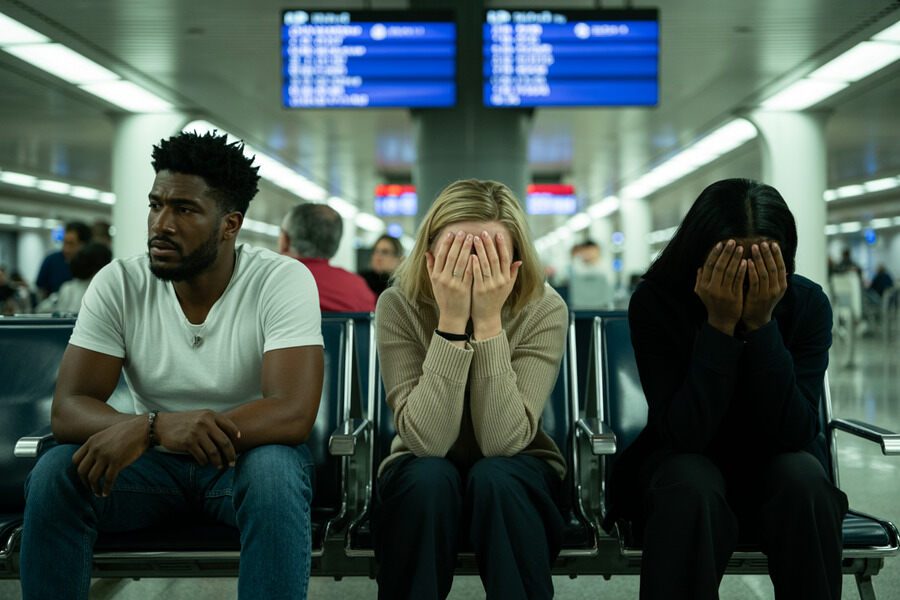
Four hundred and twenty flights delayed. Twenty cancelled outright. Hundreds of passengers stranded across six countries with little warning and even less clarity about when they would reach their destinations. What unfolded at London Heathrow Airport was one of the most significant single-day disruption events the hub has seen in recent memory.
The airlines involved read like a who’s who of European aviation: Lufthansa, SAS, British Airways, Finnair, Eurowings, and Air France were all caught up in the chaos, alongside several other carriers. The fallout spread far beyond Heathrow’s terminals, leaving travelers stranded in Iceland, Switzerland, Norway, Germany, France, and Ireland — destinations that, under normal circumstances, are among the most straightforward connections out of London.
If you were flying through Heathrow on the day this hit, or if you have travel booked through the airport in the coming weeks, here is what happened and what it means for you.
What Triggered the Heathrow Travel Crisis
According to available reporting, the disruptions were caused by a combination of factors hitting simultaneously: operational challenges, weather conditions, and airspace congestion. When any one of those elements appears on its own, airlines can usually absorb the impact. When all three converge at the world’s busiest international airport, the ripple effects become almost impossible to contain.
Heathrow operates with very little slack built into its schedule. The airport runs at close to full capacity on most days, which means a delay in one wave of departures cascades quickly into the next. Aircraft are not in the right positions, crews hit their maximum allowable working hours, and gates back up. What starts as a weather hold in the morning can still be disrupting flights well into the evening.
That appears to be exactly what happened here. The scale — 420 delays against a single day’s operation — points to a systemic breakdown rather than isolated incidents affecting individual routes.
Which Airlines and Destinations Were Hit Hardest
The disruption was not limited to one terminal or one airline group. Carriers from across the spectrum of European aviation were affected, covering a wide range of destinations that millions of travelers use regularly for both business and leisure travel.
| Airline | Affected Destinations (Confirmed) |
|---|---|
| British Airways | Multiple European routes |
| Lufthansa | Germany |
| Eurowings | Germany |
| Air France | France |
| Finnair | Iceland, Norway, Ireland (via connections) |
| SAS | Norway, Scandinavia |
The geographic spread is striking. Passengers were left stranded not just in major hubs like Frankfurt or Paris, but in smaller markets including Iceland and Norway — places where onward travel options are more limited and rebooking can take considerably longer.
- 420 flights delayed across the affected period
- 20 flights cancelled entirely
- Hundreds of passengers left without confirmed onward travel
- Disruptions confirmed across Iceland, Switzerland, Norway, Germany, France, and Ireland
Why Heathrow Disruptions Hit Passengers Harder Than Most Airports
London Heathrow is not just a busy airport — it is one of the world’s primary long-haul connection points. Many of the passengers caught in this disruption were not simply trying to get from London to Paris. They were mid-journey, using Heathrow as a transit hub between continents, with onward connections already booked and, in some cases, non-refundable plans waiting at the other end.
When a connection is missed at Heathrow, the consequences compound quickly. A traveler flying from North America to Switzerland, for example, does not just need a new flight to Zurich — they may need accommodation in London, a new connecting ticket, and coordination with whatever is waiting for them at the final destination. The airport’s size and complexity can make that process feel overwhelming, particularly when hundreds of passengers are all trying to solve the same problem at the same moment.
Critics of how major hub airports manage capacity have long pointed to this vulnerability. When an airport operates at or near 100% capacity day after day, there is no buffer. Any disruption becomes a crisis almost immediately.
What Passengers Stranded in This Disruption Should Know
If you were among those affected by these delays or cancellations, your rights depend largely on where your flight was departing from and which airline you were flying with.
Passengers flying on routes departing from the United Kingdom are covered under UK261, the post-Brexit equivalent of the EU’s flight compensation regulation. Under this framework, airlines are generally required to offer rebooking, a refund, or compensation depending on the length of the delay and the distance of the route. Flights departing from EU member states fall under the original EU261/2004 regulation, which provides similar protections.
In practice, what this means is:
- You are entitled to meals and refreshments during significant delays at the airport
- If you are delayed overnight, the airline should cover reasonable accommodation
- For cancellations, you are entitled to a full refund or rebooking on the next available flight
- Compensation payments may apply for delays over a certain threshold, depending on route distance
The key word is “entitled.” In practice, passengers often have to actively claim these rights rather than having airlines volunteer them. Keep all receipts for any expenses incurred during the disruption.
What the Scale of This Event Says About European Air Travel Right Now
A disruption touching six major airlines across six countries in a single day is not simply a bad weather story. It raises serious questions about how much resilience is built into the European air travel network — and whether airports like Heathrow are structurally capable of absorbing shocks without triggering widespread passenger misery.
Observers have noted that the combination of tight scheduling, high passenger volumes, and the interconnected nature of modern aviation means that disruptions at a single major hub can now propagate across an entire continent within hours. The passengers stranded in Reykjavik or Oslo did not experience a local problem — they experienced the downstream consequences of congestion thousands of miles away.
Whether this event leads to any meaningful operational changes at Heathrow or among the affected carriers remains to be seen. What is clear is that the hundreds of travelers caught in the middle had little recourse but to wait.
Frequently Asked Questions
Which airlines were involved in the Heathrow disruptions?
Lufthansa, SAS, British Airways, Finnair, Eurowings, and Air France were among the airlines confirmed to have been affected, alongside several other carriers.
How many flights were delayed or cancelled?
According to available reporting, 420 flights were delayed and 20 were cancelled during the disruption event.
Which countries were affected by the passenger strandings?
Passengers were reported stranded across Iceland, Switzerland, Norway, Germany, France, and Ireland.
What caused the Heathrow flight disruptions?
The disruptions were attributed to a combination of operational challenges, weather conditions, and airspace congestion occurring simultaneously.
Are passengers entitled to compensation for these delays?
Passengers on flights departing the UK may be covered under UK261, while those on EU-departing flights may be covered under EU261/2004 — both frameworks provide rights to rebooking, refunds, and in some cases financial compensation, though specific eligibility depends on route and delay length.
Has Heathrow Airport or any of the airlines issued a formal statement?
No official statements from the airport or the named airlines have been confirmed in the available source material at this time.



Leave a Reply