
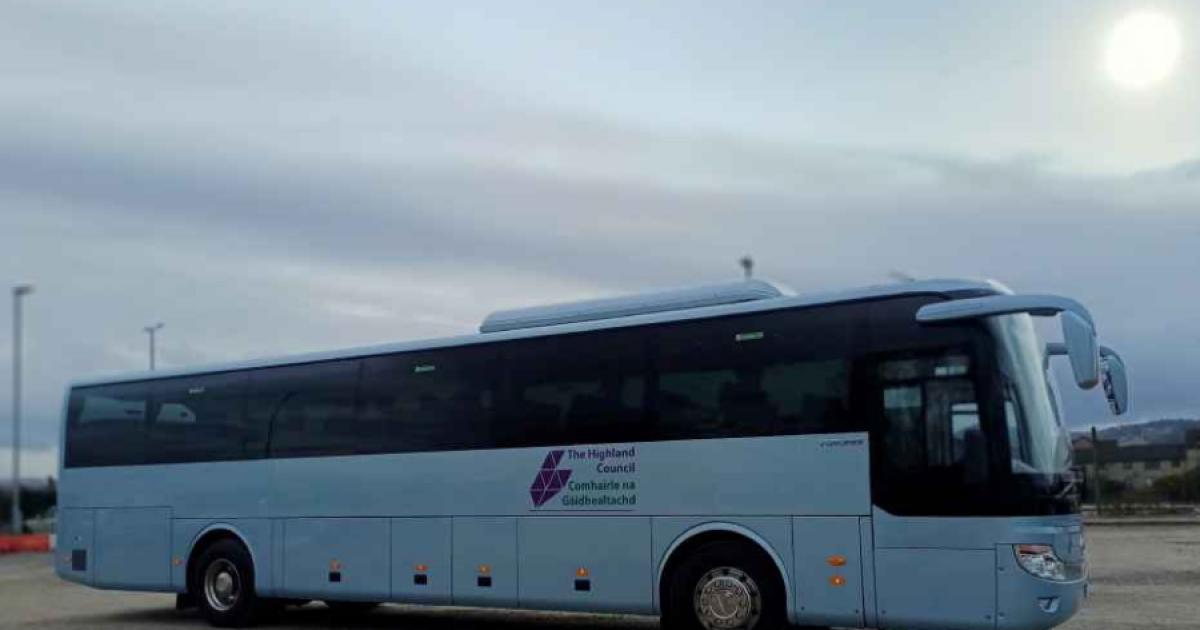
A fully electric bus has entered regular public service in the Scottish Highlands — a region where rugged geography, harsh winters, and scattered communities have historically made sustainable transport one of the hardest puzzles to solve. The arrival of this zero-emission vehicle marks what officials describe as a significant milestone in Scotland’s broader push to decarbonise public transport, particularly in areas where green infrastructure has lagged behind urban centres.
The development is backed by national green funding and sits within an accelerating policy framework designed to phase out diesel-powered buses across Scotland. For Highland communities, it represents more than an environmental statement — it signals a practical shift in how people move through one of Britain’s most challenging landscapes.
The Highland Council’s move places it at the front of a growing wave of Scottish local authorities embracing zero-emission fleet transitions, supported by government-backed programmes specifically designed to make electric buses viable outside of major cities.
Why the Highlands Were Such a Difficult Place to Start
Most zero-emission transport rollouts in the UK have begun in cities — where charging infrastructure is easier to install, routes are shorter, and passenger numbers justify the investment more readily. The Highlands present a fundamentally different challenge.
The region covers a vast geographic area with low population density, long inter-community routes, and weather conditions that can put significant strain on battery performance. Advocates for rural electrification have long argued that if electric buses can work in the Highlands, they can work almost anywhere in Scotland.
That argument is now being tested in real service conditions. The Highland Council’s decision to bring the first fully electric bus into operation reflects both confidence in the technology and the availability of dedicated funding that makes the economics workable for a local authority operating in a challenging environment.
The Scottish Government Funding Behind the Transition
The electric bus joining Highland service is supported through the Scottish Government’s Zero Emission Bus Challenge Fund, known as ScotZEB. This programme was specifically designed to accelerate the replacement of diesel buses with zero-emission alternatives across Scotland, with funding available to both urban and rural operators.
ScotZEB represents a dual-track approach — combining national financial backing with local operational planning — that transport strategists across the UK now point to as a model for decarbonising public transit beyond city limits.
The fund acknowledges that rural operators face higher per-vehicle transition costs and more complex infrastructure requirements than their urban counterparts. By targeting support at councils like Highland, the Scottish Government is signalling that zero-emission transport is not just a city policy — it is intended to reach every community.
| Factor | Detail |
|---|---|
| Funding Programme | Scottish Government Zero Emission Bus Challenge Fund (ScotZEB) |
| Operating Authority | Highland Council |
| Vehicle Type | Fully electric bus (zero-emission) |
| Service Area | The Scottish Highlands |
| Policy Framework | Scottish and UK green transport strategy |
| Primary Goal | Reduce carbon emissions and improve air quality in rural and urban areas |
What This Means for Passengers and Communities Across the Region
For people who rely on bus services in the Highlands — whether for commuting, accessing healthcare, or connecting to larger towns — the shift to electric vehicles carries real day-to-day implications. Electric buses are significantly quieter than diesel alternatives, produce no direct exhaust emissions, and generally offer a smoother ride.
Air quality in rural areas is often assumed to be less of a concern than in cities, but communities situated along busy through-routes or in valley settings can experience localised pollution from diesel engines. The removal of tailpipe emissions from public bus routes directly benefits residents in those areas.
There is also an economic dimension. Electric buses have lower fuel and maintenance costs over their operational lifetime compared to diesel vehicles. For a council managing tight budgets across a large geographic area, that long-term saving matters — even if the upfront capital cost is higher.
Supporters of the programme argue that the Highlands deployment also builds critical local knowledge about operating electric fleets in demanding conditions, knowledge that can inform future procurement and infrastructure decisions across rural Scotland.
What Comes Next for Zero-Emission Transport in Scotland
The Highland Council’s first electric bus in service is described not as an endpoint but as the beginning of a rapidly expanding strategy. Officials have framed this as part of a broader transition, with the expectation that the fleet will grow as funding, infrastructure, and operational experience develop.
Across Scotland, the pressure to decarbonise public transport is intensifying. Both Scottish Government policy and UK-wide green transport commitments are pushing local authorities to accelerate timelines for moving away from diesel. The Highlands deployment adds practical evidence to the case that rural areas can be part of that transition — not just afterthoughts once cities have been sorted.
The next phase will likely involve expanding charging infrastructure across the region, assessing battery performance across different route lengths and seasonal conditions, and determining which additional services are best suited for electric operation. The data gathered from this first vehicle in service will be central to those decisions.
For Scotland’s broader zero-emission ambitions, every electric bus that successfully operates in a challenging environment like the Highlands strengthens the argument that a full diesel phase-out is achievable — not just desirable.
Frequently Asked Questions
What is the ScotZEB fund?
ScotZEB stands for the Scottish Government’s Zero Emission Bus Challenge Fund, a programme designed to support the replacement of diesel buses with zero-emission alternatives across Scotland, including in rural areas.
Is this the first electric bus to operate in the Scottish Highlands?
Yes, based on available information, this is described as the first fully electric bus to enter regular public service under Highland Council operation.
Why is it significant that this is happening in the Highlands specifically?
The Highlands present particularly difficult conditions for electric vehicles — long routes, low population density, and harsh weather — making a successful deployment there a meaningful proof of concept for rural zero-emission transport.
Who is funding the electric bus programme?
The programme is backed by the Scottish Government through the ScotZEB fund, as part of a wider national and UK green transport policy framework.
Will more electric buses be added to Highland routes?
Officials have described this as part of a rapidly expanding strategy, suggesting further electric buses are planned, though specific numbers and timelines have not been confirmed in available information.
How do electric buses benefit Highland communities?
Electric buses produce no direct exhaust emissions, are quieter than diesel vehicles, and have lower long-term fuel and maintenance costs — benefits that extend to both passengers and residents along bus routes.



Leave a Reply