
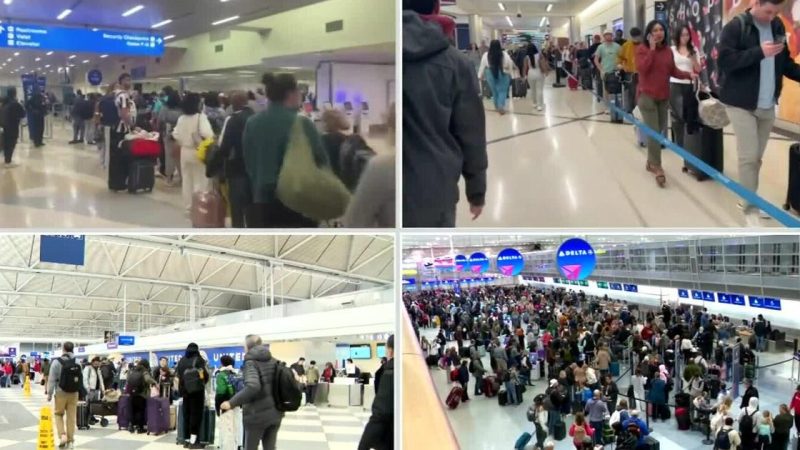
Travelers passing through Houston’s George Bush Intercontinental Airport are facing some of the worst security delays in the country right now — with wait times stretching up to four hours just to get through a TSA checkpoint. The cause isn’t a technical failure or a sudden surge in bookings. It’s a government shutdown, and the workers responsible for keeping those lines moving simply aren’t showing up because they aren’t being paid.
What’s unfolding at Bush Intercontinental has become one of the most visible flashpoints of the ongoing federal funding crisis. The airport, already one of the busiest in the southern United States, is being hit especially hard by a combination of high passenger volume and a significant spike in TSA staff callouts — workers who are choosing, or in many cases being forced by financial hardship, to stay home rather than work without a paycheck.
For anyone with a flight out of Houston, the situation is both urgent and deeply frustrating. And there’s no clear end date in sight.
Why Houston’s Biggest Airport Is Struggling More Than Most
Government shutdowns have disrupted airports before, but Bush Intercontinental is standing out from the national picture in a particularly painful way. The airport faces a triple burden: it handles an enormous volume of daily passengers, its TSA workforce has a notably high callout rate compared to other airports, and many of those security employees are under serious financial strain from going without pay.
TSA agents are considered essential federal workers, which means they are legally required to continue working during a shutdown — but they do so without compensation until the government reopens and back pay is authorized. For workers living paycheck to paycheck, that’s not a sustainable arrangement. The result is a growing number of no-shows, and the lines reflect it.
Airport officials and TSA unions have both acknowledged the staffing crisis publicly, but acknowledgment hasn’t translated into shorter lines. Travelers are left to absorb the consequences of a political standoff that has nothing to do with them and everything to do with their ability to catch a flight.
The Scale of the Disruption at a Glance
The disruptions at Bush Intercontinental aren’t isolated incidents — they reflect a systemic breakdown in how the airport is functioning during the shutdown. Here’s what travelers are currently dealing with:
- Security wait times of up to four hours reported at peak periods
- TSA staffing shortages driven by workers not reporting due to unpaid labor
- A higher-than-average callout rate among Houston TSA employees compared to other airports nationally
- Mounting frustration among passengers with limited options for recourse
- Airport officials and TSA unions working to communicate reasons behind delays, but without resolution
| Factor | Status at Bush Intercontinental |
|---|---|
| Maximum reported wait time | Up to 4 hours |
| Primary cause of delays | TSA worker callouts due to unpaid shifts |
| Callout rate vs. national average | Higher than most airports |
| Government response | Ongoing — shutdown not yet resolved |
| Traveler options | Limited — no bypass available for standard screening |
Who Gets Hurt When TSA Lines Break Down
The people bearing the heaviest burden here aren’t politicians or agency heads — they’re everyday travelers who booked flights weeks or months ago, often for reasons that can’t be rescheduled. Business trips, family emergencies, vacations, medical appointments. A four-hour security line doesn’t care about any of that.
Missed flights are a real and growing risk. When lines stretch to that length, even passengers who arrive at the airport two or three hours early can find themselves watching their departure gate close. And unlike a weather delay, a government shutdown-related miss may not trigger the same airline compensation or rebooking protections travelers expect.
The TSA workers themselves are also victims of this situation. These are federal employees who are legally obligated to show up for work but are doing so — when they do — without pay. The financial pressure on security staff is directly driving the callout surge, creating a feedback loop where fewer workers mean longer lines, which means more passenger anger directed at the very employees who are themselves struggling.
Airport officials have tried to manage expectations, and TSA unions have been vocal about the unfairness of the situation. But neither group has the authority to end the shutdown or restore paychecks. That decision sits elsewhere.
What Needs to Happen Before Things Get Better
The path forward is straightforward in theory and complicated in practice. The security delays at Bush Intercontinental — and at airports across the country — will not meaningfully ease until the government shutdown ends and TSA workers begin receiving their paychecks again.
Until that happens, the callout rate is likely to remain elevated or worsen. Workers who are already stretched financially have limited incentive to keep absorbing the cost of unpaid labor, and no administrative fix at the airport level can substitute for a fully staffed security workforce.
For travelers, the practical advice is simple even if the situation isn’t: arrive as early as possible, check TSA wait time apps before leaving for the airport, and build extra time into any connection. If you have TSA PreCheck or CLEAR, those lanes may offer some relief, though they are not immune to staffing pressures either.
The broader resolution — a funded federal government — remains in the hands of lawmakers. Until that changes, Houston’s airport will keep making headlines for all the wrong reasons.
Frequently Asked Questions
Why are TSA lines so long at Houston’s George Bush Intercontinental Airport right now?
TSA workers are not being paid during the government shutdown and many are not reporting for their shifts, causing severe staffing shortages and wait times of up to four hours.
How long are the current TSA wait times at Bush Intercontinental?
Passengers have reported waits of up to four hours to clear security at the airport during the current disruption.
Are other airports experiencing the same problems?
Yes, the partial government shutdown has impacted TSA staffing at airports across the United States, though Bush Intercontinental has been identified as one of the most severely affected due to its high passenger traffic and elevated callout rate.
Will TSA workers eventually receive back pay for the shifts they are working?
Historically, federal workers have received back pay after shutdowns end, but this has not yet been confirmed for the current situation.
What can travelers do to avoid missing their flights?
Arriving significantly earlier than usual is the most reliable precaution, as lines are unpredictable and standard arrival windows may not be sufficient during the current staffing shortage.
When will the TSA situation at Houston’s airport return to normal?
The delays are directly tied to the government shutdown, and normal operations are not expected to resume until the shutdown ends and TSA employees begin receiving pay again.


Leave a Reply