
▶ Read transcript
Here’s what you need to know about Scenic’s 2027 European river cruise collection and whether the premium price tag actually holds up.
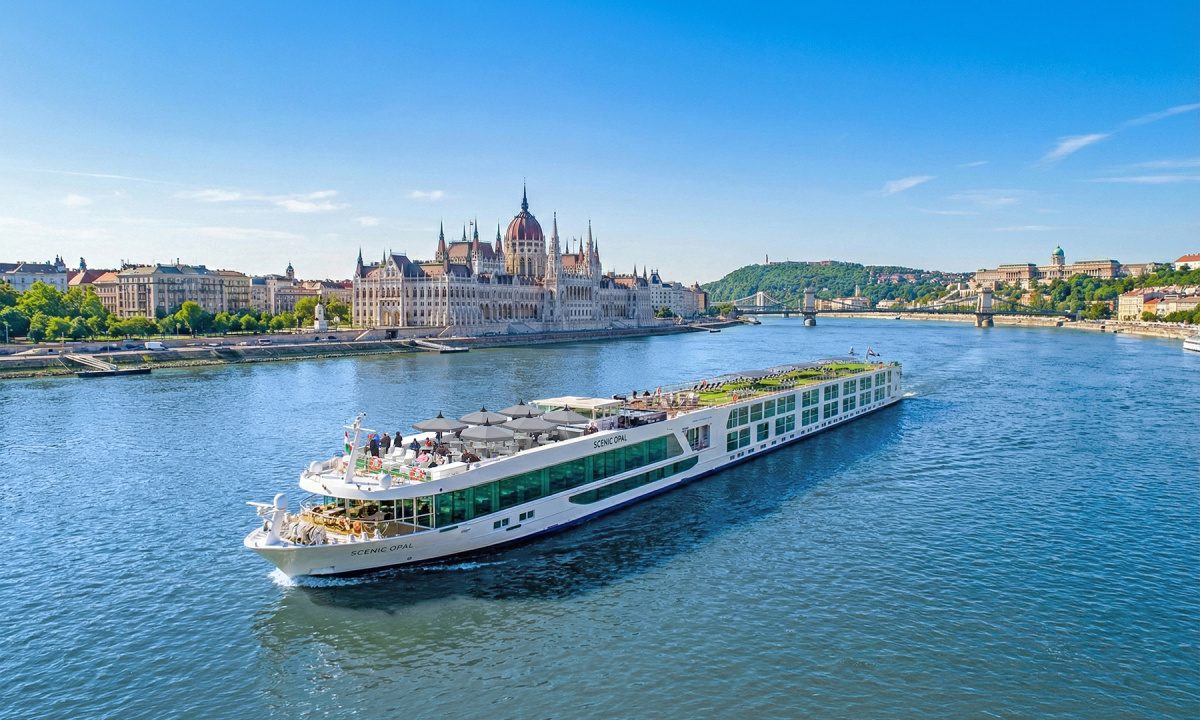
Scenic just launched what it’s calling a luxury revolution across four rivers — the Danube, Rhine, Seine, and Douro. The headline additions are culinary-themed sailings, a brand-new ship built specifically for Portugal’s Douro River, and extended land journeys that take you beyond what any ship can reach by water alone.
The all-inclusive pricing model is a genuine selling point. Unlike most ocean cruises, Scenic bundles excursions, drinks, and specialty dining into the base fare, which softens the sticker shock once you do the math.
That said, critics have a point. A new ship and some food-themed evenings on the same classic routes don’t quite add up to a revolution. Competitor AmaWaterways launched similar 2027 offers at the same time, suggesting this may be as much about market competition as genuine innovation.
Before booking, compare the full bundled cost against competitors line by line — the value story only works if you actually use what’s included.
Roughly one in three luxury travelers now ranks river cruising above ocean cruising as their preferred way to explore Europe — a seismic shift that has quietly reshaped the travel industry over the past decade. That statistic matters right now because Scenic just dropped its most ambitious offering yet: a 2027 European river cruise collection spanning the Danube, Rhine, Seine, and Douro, marketed explicitly as a ‘luxury revolution.’ The phrase is bold. The pricing is bolder. And the debate it has ignited among travel enthusiasts is surprisingly fierce.
On one side: devotees who believe Scenic’s new collection represents the pinnacle of immersive, all-inclusive European travel. On the other: a growing chorus of critics who argue that ‘luxury revolution’ is marketing language masking incremental upgrades at eye-watering price points. Both sides have compelling evidence. Neither is entirely wrong.
The Scenic 2027 Collection: Four Rivers, One Big Promise
The 2027 program introduces culinary-themed sailings, a brand-new ship on Portugal’s Douro River, and extended pre- and post-cruise land journeys across three new itineraries. Scenic positions all of this under a single, sweeping promise: blending luxury accommodation, cultural exploration, and scenic travel into one seamless experience.
The four rivers are not chosen randomly. Each represents a distinct travel personality. The Danube threads through Central Europe’s imperial capitals. The Rhine winds past medieval castles and vineyard terraces. The Seine floats passengers through the cultural heartland of France. The Douro, arguably the most dramatic of the four, cuts through Portugal’s rugged wine country in a landscape that feels almost cinematic.
| River | Key Highlights | New 2027 Feature | Travel Personality |
|---|---|---|---|
| Danube | Vienna, Budapest, Bratislava | Culinary-themed sailings | History & architecture lovers |
| Rhine | Castles, vineyards, Basel | Extended land journeys | Scenic landscape seekers |
| Seine | Paris, Normandy, Giverny | Cultural immersion packages | Art & culture enthusiasts |
| Douro | Porto, Régua, Salamanca | New dedicated ship | Wine & adventure travelers |
The company also launched an Insider Sale earlier in 2026, offering limited-time savings on European river cruise departures. That move suggests demand management is already a factor, even before the 2027 season opens. Scenic is not filling empty ships; it is curating waitlists.
The Case That Scenic’s 2027 Pricing Reflects Genuine Value
Supporters of the premium positioning point to something concrete: Scenic’s track record of industry recognition. At the inaugural World Cruise Awards in 2022, Scenic Eclipse was named Best Cruise Ship for Dining, Asia’s Best River Cruise Ship, and Europe’s Best River Cruise Line. That is not one award. That is a sweep.
The all-inclusive model is another pillar of the pro-Scenic argument. Unlike ocean cruises where excursions, beverages, and specialty dining carry separate charges, Scenic bundles these into the base fare. For travelers who have been burned by cruise line nickel-and-diming, this model is genuinely appealing. The sticker price looks high until you account for what it actually covers.
The culinary-themed sailings on the 2027 Danube itineraries also represent a meaningful product evolution. Gastronomy tourism is one of the fastest-growing travel segments globally. Designing entire sailings around regional food culture, rather than treating meals as an afterthought, signals that Scenic is responding to documented traveler demand rather than manufacturing novelty.
“We are consistently recognised as the leading luxury cruise line and tour operator by respected consumer publications and industry groups.”
— Scenic, on its positioning in the luxury river cruise market
The extended pre- and post-cruise land journeys are perhaps the most underappreciated element of the 2027 collection. River cruise ships are inherently limited by geography. A ship cannot sail to Salzburg or the Loire Valley. But a well-designed land extension can. By integrating three new overland itineraries, Scenic is effectively expanding the geographic footprint of each cruise without adding sea days.
The Case That ‘Luxury Revolution’ Is Mostly Marketing
Critics are not dismissing the product. They are questioning the framing. The term ‘luxury revolution’ implies a fundamental reimagining of river cruising. What Scenic has actually announced is: a new ship on the Douro, some themed sailings, and land extensions. These are meaningful additions. They are not revolutionary.
The pricing concern is real and demographic. River cruising has historically skewed toward older, wealthier travelers. Scenic’s premium positioning doubles down on that demographic rather than expanding the market. Younger affluent travelers, who increasingly prioritize experiential authenticity over polished luxury, may find the product’s aesthetic language dated even if the hardware is new.
There is also the question of river access. All four rivers in the 2027 collection are established, heavily trafficked waterways. The Danube, Rhine, and Seine have been core river cruise routes for decades. A ‘revolution’ built on the same four rivers as every previous collection requires more justification than a new ship and some food-themed evenings.
Critics also note that the Insider Sale launched in 2026 for European departures creates a pricing paradox. If the product commands a premium because of its exclusivity and luxury positioning, why is there a ‘limited-time’ discount sale running simultaneously? The answer, likely, is yield management. But it complicates the brand narrative.
What the Data on River Cruise Growth Actually Shows
The global river cruise market has been on a sustained upward trajectory. European river cruising in particular has recovered strongly from pandemic-era disruptions, with capacity and passenger numbers both climbing. The competitive landscape has also intensified, with multiple operators investing in new ships and product differentiation across the same core European routes.
What the data consistently shows is that all-inclusive pricing models outperform à la carte models in customer satisfaction scores for river cruising. Travelers report higher overall satisfaction when they do not have to make financial decisions mid-voyage. Scenic’s model aligns with this finding, which gives the premium pricing some empirical grounding.
The gastronomy tourism data is also relevant. Research from multiple tourism bodies has shown that food and drink experiences rank among the top three motivators for international travel. Designing sailings around culinary themes is not a gimmick; it is a response to documented preference data. The 2027 Danube culinary sailings are better understood as product-market fit than as marketing theater.
The Douro, meanwhile, is genuinely underserved relative to its appeal. Portugal’s wine country has seen significant tourism growth, and river cruise capacity on the Douro has lagged behind demand. A new, purpose-built ship addresses a real supply gap. That is a data-driven investment, not a branding exercise.
Scenic 2027 Verdict: Revolution Is the Wrong Word, but the Product Is Right
The ‘luxury revolution’ label is overreach. Scenic knows it. The travel press knows it. Experienced river cruise travelers definitely know it. But overreach in marketing language does not invalidate the underlying product decisions, and the 2027 collection makes several genuinely smart moves.
A new ship on the Douro addresses real capacity constraints. Culinary-themed sailings respond to documented traveler preferences. Extended land journeys expand geographic value without requiring new waterway access. The all-inclusive model, backed by award recognition and strong satisfaction data, remains one of the more honest pricing structures in premium travel.
The critics are right that this is evolution, not revolution. The supporters are right that evolution, done well, is worth paying for. The debate itself reveals something more interesting: the river cruise market is mature enough that marketing language now outpaces product innovation. That is a challenge for the entire industry, not just Scenic.
What the Scenic 2027 Debate Means for the Future of River Cruising
The framing battle around Scenic’s 2027 collection is a preview of where premium travel marketing is heading. As product differentiation becomes harder on established routes, operators will increasingly compete on narrative, identity, and emotional positioning rather than hardware or geography. ‘Luxury revolution’ is an early, clumsy attempt at that shift.
The more interesting implication is for younger affluent travelers. If river cruise operators want to expand their demographic base beyond the traditional 60-plus cohort, culinary themes and new ships are necessary but not sufficient. The experience design, the social texture of the voyage, and the digital integration will matter just as much as the stateroom square footage.
Scenic’s 2027 collection is a strong product wrapped in inflated language. The travelers who book it will likely have a genuinely excellent time. The travelers who dismiss it based on the marketing overreach may be making a mistake. And the operators who watch Scenic’s occupancy rates for 2027 will learn something important about whether ‘luxury revolution’ sells, even when everyone knows it is not quite true.
The real revolution in river cruising may not come from a new ship or a themed menu. It may come the day an operator decides to stop calling everything a revolution.
Frequently Asked Questions

You Might Also Like
Đà Nẵng Is Turning 1,100 Tonnes of Daily Garbage Into Real Power
Every single day, the city of Đà Nẵng generates more than 1,100 tonnes of garbage…

Thailand’s 2026 Visa Rethink: What 30-Day Limits Mean for You
Thailand is reviewing its visa-free policy in 2026, possibly cutting stays from 60 to 30…
Norwegian Jade Is Sailing Lima to San Diego and the Route Changes Everything
A cruise that links two continents, passes through one of the world’s greatest engineering feats,…
Leave a Reply