
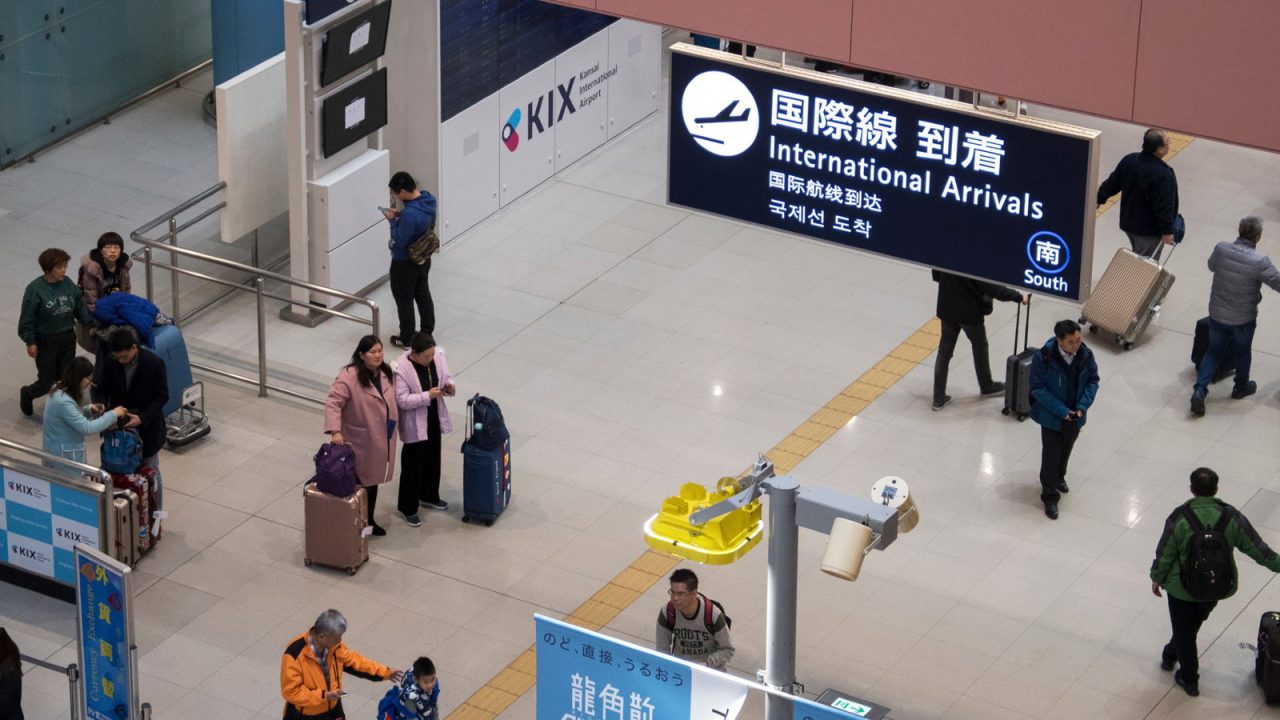
Thirty-one million. That was the number of international visitors Japan recorded in a single recent year, a figure that would have seemed almost fictional to a Tokyo hotel manager just a decade ago. Today, that number keeps climbing, and the engine behind much of the surge is surprisingly quiet: a visa-free travel framework that now covers 74 countries, including some of the world’s most outward-traveling populations.
Among those 74 nations: the United States, the United Kingdom, South Korea, Australia, Germany, and Canada. Together, those six countries alone represent hundreds of millions of potential travelers who can book a flight to Osaka or Kyoto without once filling out a visa application.
A Small Decision With a Very Long Journey
Maya, a 34-year-old graphic designer from Chicago, had wanted to visit Japan for eleven years. She kept a folder on her desktop labeled “Japan Someday,” stuffed with saved articles about Arashiyama bamboo groves and ramen shops in Sapporo. The folder sat untouched for most of a decade.
“I always assumed it would be complicated,” she said, describing the mental barrier that kept the trip theoretical. “I thought there’d be forms, waiting periods, maybe an interview.”
There wasn’t. As a U.S. citizen, Maya discovered she could enter Japan visa-free. She booked a three-week trip to Tokyo, Hiroshima, and Kyoto in early 2026. The only paperwork involved was her passport renewal. The mental mountain turned out to be a speed bump.
Her experience mirrors a shift happening across all 74 visa-exempt countries. The friction of international travel, once a significant deterrent, has been quietly removed for a substantial portion of the global middle class.
| Country | Visa-Free Stay (Typical) | Notes |
|---|---|---|
| United States | Up to 90 days | Tourism and short-term business |
| United Kingdom | Up to 90 days | Tourism and short-term business |
| South Korea | Up to 90 days | Among Japan’s top source markets |
| Australia | Up to 90 days | Strong growth market |
| Germany | Up to 90 days | Major European source country |
| Canada | Up to 90 days | Tourism and short-term business |
The Architecture Behind the Open Door
Japan’s visa-free framework didn’t happen overnight. It developed through decades of bilateral agreements, reciprocal arrangements, and deliberate policy choices by Japan’s Ministry of Foreign Affairs. The 74-country list reflects both longstanding diplomatic ties and more recent strategic decisions to position Japan as an accessible global destination.
South Korea stands in a unique position among the 74. Geographically close, culturally intertwined, and sharing one of the most active short-haul travel corridors in Asia, South Korean visitors have long been among Japan’s most frequent tourists. The visa-free arrangement between the two nations underpins a tourism relationship measured in millions of crossings per year.
Germany and the broader European contingent within the 74 nations represent a different kind of traveler. Average trip lengths from Europe to Japan tend to run longer, driven partly by the cost and distance of the journey. German visitors, in particular, have developed a reputation among Japanese tourism boards as high-spend, culturally engaged travelers who venture well beyond Tokyo’s traditional circuits.
Australia’s inclusion reflects a growing Pacific-facing tourism relationship. Australian travelers have shown increasing appetite for Japan’s ski resorts, particularly in Hokkaido, where Niseko has become something close to an Australian cultural outpost during winter months.
When Access Creates Its Own Problems
The story of Japan’s visa-free boom has a more complicated side. In Kyoto, the pressure of overtourism has become a civic conversation. Narrow lanes in Gion, once quiet enough to hear wooden sandals on stone, now fill daily with crowds that residents describe with a mix of economic gratitude and cultural unease.
Some neighborhoods have introduced entry restrictions. Certain viewpoints in Fujikawaguchiko, near Mount Fuji, erected barriers in 2024 after social-media-driven crowds became unmanageable. The same open-access policy that fills ryokans and sake bars also tests the physical and social capacity of places that weren’t designed as mass attractions.
“The passport barrier is gone, but Japan is still figuring out what it means to welcome everyone while preserving the things that made everyone want to come in the first place.”
— Travel industry observer, Tokyo, 2026
For Maya, this tension was visible but not overwhelming. She had done enough research to avoid peak periods in the most crowded spots. She spent one morning at Fushimi Inari at 5:30 a.m., before the tour buses arrived, walking among the orange torii gates in near-silence. “That was the Japan I’d saved in my folder,” she said. “But I had to work to find it.”
The Numbers Behind the Narrative
Japan’s tourism sector has become a significant economic pillar, with inbound tourism contributing substantially to GDP and supporting employment across hospitality, transport, and retail. The visa-free framework is one of several policies credited with accelerating growth, alongside the depreciation of the yen, which has made Japan considerably more affordable for visitors holding dollars, pounds, and euros.
The combination of accessible entry and favorable exchange rates created a particular moment in Japanese tourism history. Travelers who had considered Japan expensive found the arithmetic suddenly shifted. A week in Tokyo, once a luxury proposition for many American travelers, became comparable in cost to a European city break.
Canada’s position in the 74 is perhaps less discussed but economically meaningful. Canadian travelers, disproportionately concentrated in major urban centers with large Japanese-Canadian communities, have long maintained cultural and familial ties to Japan. The visa-free arrangement reinforces existing travel patterns while also opening doors for first-time visitors without any pre-existing connection.
What Happens When the Door Stays Open
Maya came home from Japan with 2,400 photographs and a conviction that she had made a mistake. Not in going, but in waiting eleven years to go. “The folder on my desktop was the dumbest thing I ever did,” she said, laughing. “I kept it as a fantasy instead of just buying a ticket.”
The visa-free framework is partly responsible for that shift in thinking, even if it operates invisibly. Removing a bureaucratic barrier doesn’t guarantee a trip happens. But it removes one more reason to say “not yet.”
For the 74 countries now holding that access, the question is no longer whether Japan is reachable. It’s whether the Japan that arrives in the imagination, formed from years of photos and films and secondhand stories, survives contact with the real thing. Sometimes it doesn’t. Sometimes it exceeds it.
Maya’s 5:30 a.m. walk through Fushimi Inari suggests the second outcome is still possible, if increasingly something you have to earn through planning rather than luck. The open door is wide. What’s behind it still depends on how you choose to look.



Leave a Reply