
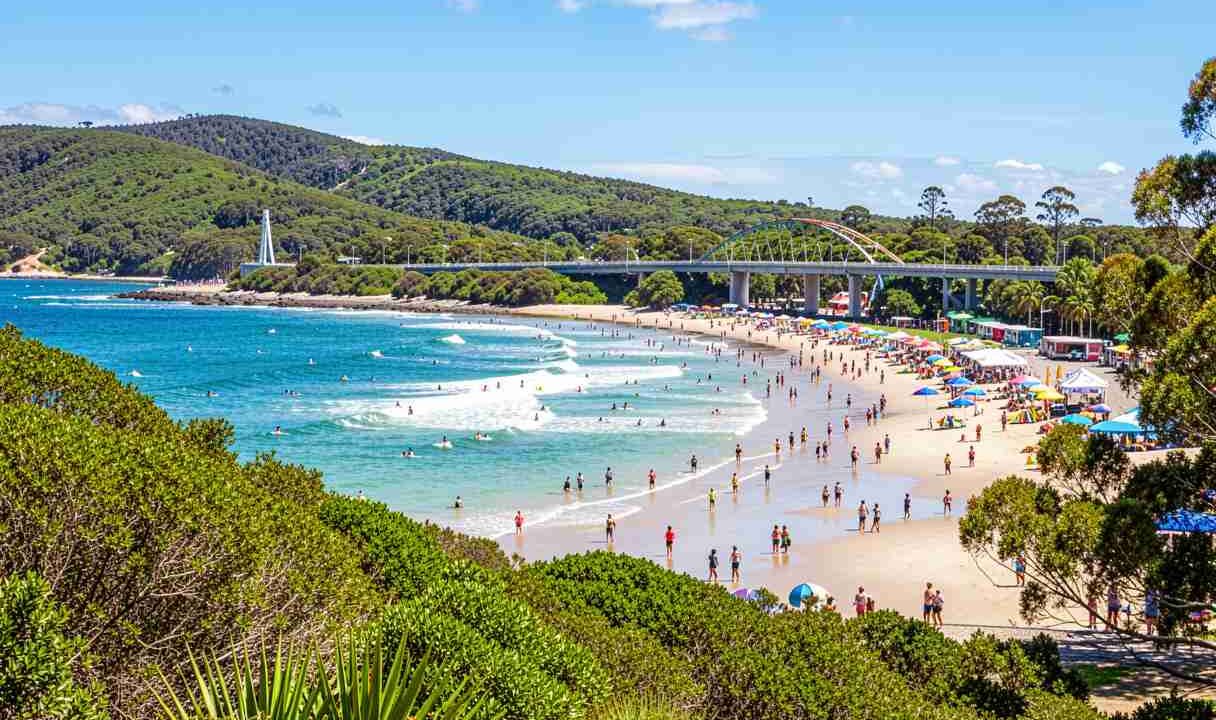
Port Stephens, a coastal region roughly two hours north of Sydney, is making a serious play to become one of Australia’s most talked-about travel destinations in 2025 — and local government is putting real infrastructure investment behind that ambition.
The Port Stephens Council has released its Six-Month Progress Report covering July to December 2025, offering residents and visitors a detailed look at what the region has been building, improving, and planning. The report covers everything from road upgrades to tourism development, framing Port Stephens as a destination that is actively investing in the experience of getting there — and staying longer once you arrive.
For anyone considering a trip to regional New South Wales, this report signals something worth paying attention to: a council that is treating tourism infrastructure as a genuine priority, not just a line item.
What Port Stephens Council Is Actually Doing — and Why It Matters
The progress report is designed to be a transparency tool — a way for the council to show residents and stakeholders exactly where resources are going and what has been accomplished in a defined window of time. That kind of accountability reporting is common in well-run local governments, but what stands out here is the specific focus on infrastructure that directly benefits visitors.
Road upgrades are among the headline projects. The report confirms the completion of pavement rehabilitation on Medowie Road and Clarence Town Road — two routes that serve as key access corridors for people moving through the region. Better roads mean easier access for tourists driving from Newcastle or Sydney, and they reduce wear-and-tear frustrations that can quietly shape whether visitors return.
The council’s framing is clear: improving local infrastructure is not just a service to residents. It is a direct investment in the visitor economy. When roads are smoother, access is easier, and the overall impression of a destination improves — even if travelers never consciously register the upgrade.
Key Projects Confirmed in the July–December 2025 Report
Based on what the progress report confirms, here is a structured look at the major initiatives covered in the second half of 2025:
| Project / Initiative | Type | Status |
|---|---|---|
| Pavement rehabilitation — Medowie Road | Road Infrastructure | Completed |
| Pavement rehabilitation — Clarence Town Road | Road Infrastructure | Completed |
| Tourism positioning and destination development | Tourism Strategy | Ongoing |
| Community engagement and transparency reporting | Governance | Active — six-month cycle |
The report covers a six-month window, which means a second progress report for January to June 2026 would logically follow. The council appears committed to a regular reporting cadence, which gives both residents and potential investors a clearer picture of momentum over time.
What This Means If You Are Planning a Visit to Port Stephens
Port Stephens already has genuine drawcards — the famous sand dunes at Stockton Beach, dolphin-watching cruises in the bay, and a string of small coastal towns that offer a quieter alternative to the Gold Coast or Byron Bay. What has sometimes held the region back is the perception that regional infrastructure lags behind the natural appeal.
The council’s current direction suggests that gap is being actively closed. Completed road works on key routes like Medowie Road and Clarence Town Road are practical improvements that reduce travel friction for visitors arriving by car — which, in a region like Port Stephens, is the majority of tourists.
For families planning a New South Wales road trip, or for travelers looking for a coastal escape that does not require a flight, Port Stephens is increasingly making a strong case. The infrastructure investment signals that the council understands what drives repeat visitation: ease of access, reliable roads, and a sense that the destination takes itself seriously.
Officials have noted through the progress report that community development and tourism enhancement are being pursued together — a sign that the region is thinking about sustainable growth rather than short-term visitor numbers alone.
What Happens Next for Port Stephens in 2026
The July to December 2025 report is, by design, a snapshot — not an endpoint. With the reporting cycle running on a six-month basis, a follow-up report covering the first half of 2026 is expected to emerge later this year. That report will likely reveal whether the road works completed in late 2025 are part of a broader multi-year infrastructure program or a series of targeted fixes.
The council’s stated goal of positioning Port Stephens as a premier travel destination suggests that further tourism-related investments are on the horizon. Whether that means new visitor facilities, expanded walking or cycling trails, or additional road upgrades has not yet been confirmed in the current report.
What is clear is that the council is treating this as a long-term project — and that the second half of 2025 was used to lay groundwork, both literally and strategically, for what comes next.
Frequently Asked Questions
What is the Port Stephens Council Six-Month Progress Report?
It is a transparency document released by Port Stephens Council covering key milestones, infrastructure projects, and community development initiatives over a defined six-month period — in this case, July to December 2025.
Which roads were upgraded as part of the July–December 2025 report?
The report confirms completed pavement rehabilitation works on Medowie Road and Clarence Town Road.
Is Port Stephens a good destination for Australian travelers in 2025?
The council is actively investing in infrastructure and tourism positioning, which signals growing confidence in the region as a travel destination — though individual experiences will depend on specific interests and travel style.
How often does Port Stephens Council release progress reports?
Based on this report, the council operates on a six-month reporting cycle, meaning a follow-up report covering January to June 2026 would be expected later in the year.
Are there more infrastructure projects planned beyond road works?
The current report does not confirm specific future projects beyond what was completed in the July–December 2025 period. Further details are expected in subsequent progress reports.
Where is Port Stephens located?
Port Stephens is a coastal region in New South Wales, Australia, approximately two hours north of Sydney, known for its bay, beaches, and sand dunes.




Leave a Reply